REVIEW · VALLETTA
Valletta: Self-Guided Audio Tour, Map and Directions
Book on GetYourGuide →Operated by Ugide Malta audio tours · Bookable on GetYourGuide
Valletta walks well when you have a plan. This self-guided route pairs a printable map with downloadable MP3 audio tracks so you can move at your pace and still hit the big highlights like St. John’s Co-Cathedral, Fort Saint Elmo, and Palazzo Parisio. I also like that the narration is built around directions, so you are not wandering around trying to remember what you meant to see.
One drawback to consider: the download/playback experience can be a little clumsy, and at least one user noted the files may not play smoothly in order.
If you like starting clean, this one starts at the Valletta Main Gate and gives you a set plan in English for a 2-hour window. Just remember the MP3 player is not included, so you’ll want your own device or phone setup ready before you begin.
In This Review
- Key things to know
- Starting at Valletta Main Gate: timing your 2-hour route
- Downloading the audio and using the printable map (without fuss)
- The route, track by track: City Gate to Freedom Square
- Museum of Archaeology and St. John’s Co-Cathedral: the story part
- Grand Master’s Palace and Auberge de Castille: focus your attention
- Fort Saint Elmo to Siege Bell Monument: reading the defenses
- Lower and Upper Barracca Gardens: where you can slow down
- Saint George’s Square, National War Museum, and the art-and-memory stops
- Merchants Street to Castellania and Palazzo Parisio: the route gets more local
- Auberge de Castille, Victoria Gate, and the last stretch of highlights
- What you get for $9: the value equation
- Who this self-guided Valletta audio tour suits best
- Final verdict: should you book it?
- FAQ
- Where do I start the Valletta audio tour?
- Is this a guided tour with a person leading the walk?
- How long is the experience?
- What do I need to listen to the audio tracks?
- How many audio tracks are included?
- What language is the audio guide in?
- What major landmarks are covered on the route?
- Is there a map included with the tour?
Key things to know
- Start point is Valletta Main Gate, so you can begin right away without guessing
- 29 MP3 tracks cover introductions and a route that strings key sights together
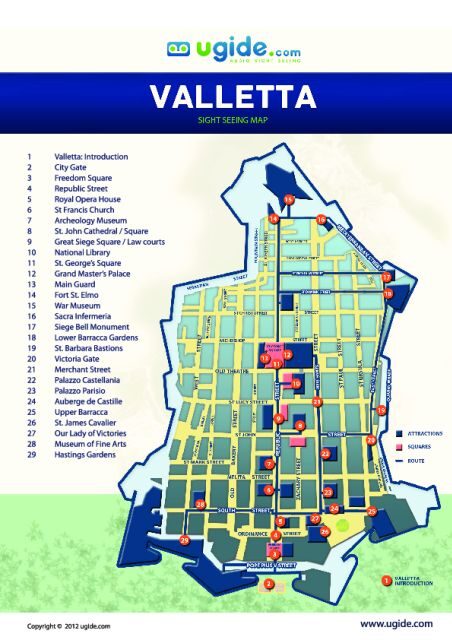
- Printable map and directions help you stay oriented and keep momentum
- Not a guided tour: you’ll control timing, but you also handle navigation yourself
- Major stops include St. John’s Co-Cathedral, Grand Master’s Palace, Auberge de Castille, and Fort Saint Elmo
Starting at Valletta Main Gate: timing your 2-hour route
This tour is designed for a practical reality: you want to see Valletta without turning the whole day into a complicated logistics exercise. The total duration is listed as 2 hours, and the route is set up around 29 separate audio tracks that you can run as you walk.
I like that it feels built for real pace decisions. Want to linger at a garden stop like Lower Barracca Gardens? You can pause the audio and stay put. Want to skip ahead to a landmark that interests you more? The route is meant to be flexible.
That said, the 2-hour timeframe is a clue. If you stop for long breaks, you may finish later than the listed duration. I would treat 2 hours as a solid target for walking steadily and catching the core narration at each stop.
You can also read our reviews of more guided tours in Valletta


Downloading the audio and using the printable map (without fuss)
The audio guide comes to you so you can download it onto a personal MP3 player or mobile device and listen anytime. After booking, you receive instructions on how to download the audio guide, plus a printable map to follow the route.
This setup has a clear advantage: you do not need cellular service or an active internet connection while you are walking, as long as you have the files downloaded in advance. It also means you control the volume and what you listen to, which is great in a city where streets can get busy.
Now, the caution. One review flagged that downloads can be clumsy and that tracks may feel out of sequence unless you navigate the downloaded files. My practical advice is to test everything before you leave your hotel or cruise area. Put the audio on your device, open the files once, and confirm you can reach track numbers easily while walking.
The route, track by track: City Gate to Freedom Square
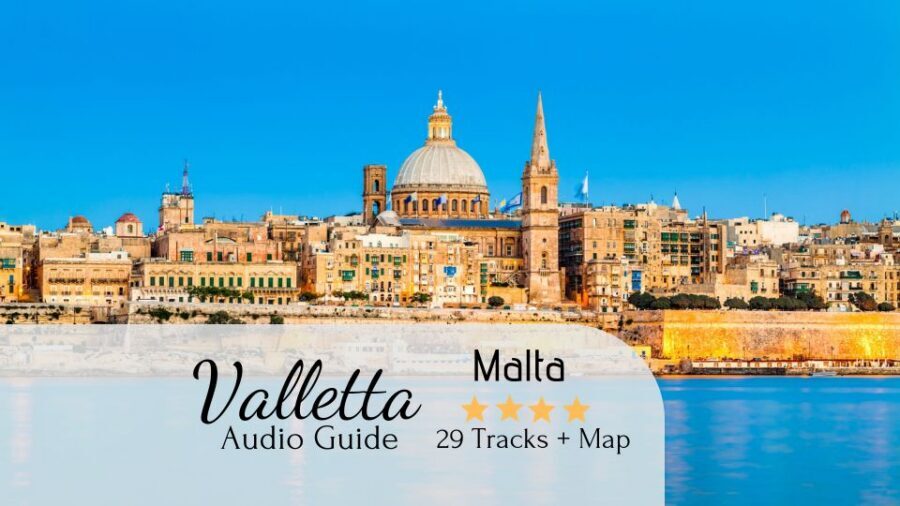
The first part of your audio walk is meant to get your bearings and help you connect street names to real spots. It starts with a Valletta Introduction, then moves to City Gate, Freedom Square, and Republic Street.
Why that order matters: City Gate and Freedom Square are natural anchors. If you start there, your brain grabs the city layout faster, and the rest of the walk feels less like a scavenger hunt. Republic Street then acts like a connector, helping you move from one cluster of sights to the next without losing time.
The narration also includes the Royal Opera House and Saint Francis Church early in the sequence. I like this pacing because it mixes big-name landmarks with smaller, quieter stops. It keeps the walk from feeling one-note, and it gives you variety while you build momentum.
Museum of Archaeology and St. John’s Co-Cathedral: the story part
After you move through the street-and-square area, the route transitions into the heavy-hitter sites. You’ll pass by the Museum of Archaeology and then reach St. John’s Co-Cathedral, with Great Siege Square and the National Library also in the mix.
This is where the audio shines as a guide for meaning, not just location. The overview specifically calls out descriptions that explain and direct you to highlights, and it also emphasizes the Knights of St. John and their story. So the narration is doing more than reading off labels—it’s connecting the places to why they matter.
A practical tip: when you reach St. John’s Co-Cathedral, treat that audio segment like your main lecture of the walk. If you listen only to quick fragments through the earlier tracks, you’ll miss what the guide is building toward here.
Grand Master’s Palace and Auberge de Castille: focus your attention
Next you hit Grand Master’s Palace and Main Guard, followed by the National War Museum. After that, the route moves into the fort and siege-era highlights with Fort Saint Elmo and the Sacra Infermeria.
This section is valuable because it clusters major governance, military, and order-related landmarks together. The audio tracks include descriptions and directions, which helps you avoid the common mistake of seeing impressive buildings without fully understanding where you are in the story.
The route also includes Auberge de Castille. That pairing makes sense because it keeps related themes close, instead of scattering them. If you want the most payoff for your listening time, aim to give your full attention here. Your brain will thank you later when the names start sticking.
A few more Valletta tours and experiences worth a look


Fort Saint Elmo to Siege Bell Monument: reading the defenses
Now the walk turns more outward toward the city’s fortifications. Fort Saint Elmo appears on the track list, then you continue to Siege Bell Monument and later into Bastions, Gate areas, and the defensive viewpoints.
Even without adding extra facts that go beyond the audio guide’s purpose, the value here is clear: the route is built to show you how these sites relate to each other. The guide’s job is to help you move between them in a way that feels coherent, and the track sequence supports that.
One thing I’d watch for is energy level. These segments are where you may do more climbing or longer sightline walking depending on where your route naturally takes you. If you notice your pace slowing, it’s okay to skip one audio track and save it for a quieter moment later.
Lower and Upper Barracca Gardens: where you can slow down
The route includes Lower Barracca Gardens and Upper Barracca Gardens. These are good “breather” points because they give you a moment to reset during a concentrated run of landmarks.
I like how the audio list places gardens between major palace/cathedral sections and the fortress and gate areas. It keeps you from feeling like you are only going from point A to point B with no pause for air or photos.
Also, if you are walking with a plan to finish everything, gardens are where you can decide. Want to spend extra time here? You can. Want to keep moving? The map and directions help you continue without getting stuck.
Saint George’s Square, National War Museum, and the art-and-memory stops
Your track list includes Saint George’s Square, National War Museum, and then later Museum of Fine Arts. It also includes Our Lady of Victories and Saint James’ Cavalier, plus Hastings Garden.
This part of the route works best if you listen in a “selective but present” way. Not every stop will grab you equally, and that’s fine. The guide’s structure lets you stay flexible: you can give full attention to the stops that match your interests and treat the rest as place labels with a bit of context.
If you are someone who likes museums but does not want the stress of a strict itinerary, this audio walk is a helpful bridge. It can help you decide which museum stop to go deeper into later.
Merchants Street to Castellania and Palazzo Parisio: the route gets more local
As you continue, the track list turns to Merchants Street, Castellania, and Palazzo Parisio. This shift matters because it changes the feel of your walk from major monuments to a more street-level experience.
I find these kinds of segments are where self-guided tours help most. You are moving through real city lanes while the audio tells you what to look for and where to go next. It’s less about checking boxes and more about building a mental map of Valletta.
If you care about old-town atmosphere, this portion is where you are likely to enjoy the walk even if you do not sit down anywhere. You get context while still moving through the city at walking speed.
Auberge de Castille, Victoria Gate, and the last stretch of highlights
Auberge de Castille appears again as one of the key track points, along with Victoria Gate and Saint Barbara Bastions. Then the tour rounds out with Our Lady of Victories, Saint James’ Cavalier, Museum of Fine Arts, and Hastings Garden.
This ending sequence is useful because it gives you multiple “signature” types of stops: gates, bastions, and cultural sites. If you time your listening well, the final audio segments can pull together what you’ve seen and help you connect the route you followed.
Practical suggestion: as you approach the end, do not keep skipping tracks just because you think you will finish later. The last segments are often where the guide helps you make sense of how the stops relate.
What you get for $9: the value equation
At $9 per person for 2 hours and 29 MP3 audio tracks plus a map, this is strong value if you want guided structure without a live guide. You are paying for two things: navigation support and narration that tells you what you are looking at as you walk.
If you were to hire a private guide for the same time, the cost would be dramatically higher. Even a small-group guided tour can cost more just for someone telling you where to go. Here, you get that same “what is this and why is it here” function, but with the freedom to pause and move on your terms.
The one value trade-off is the drawback mentioned earlier: audio downloads and playback can be slightly fiddly. That means you should treat setup time as part of the experience. If you arrive with your device ready and tracks downloaded, you keep the value. If you arrive with only half-ready audio files, you may lose time troubleshooting.
Who this self-guided Valletta audio tour suits best
This works especially well if you want control. You can follow the map and directions to maximize your tour, but you are not locked into someone else’s schedule. That is ideal when you are tired, when your walking pace varies, or when you want to spend extra time on specific highlights.
It also suits visitors who like to preview a city before going deeper. One person described downloading the walking tour ahead of time to get familiar with Valletta and then using the audio as a guide while walking, with photos checked online for each stop. That approach makes the audio route feel like a planning tool as well as an on-the-ground companion.
I would also say it fits well for a short visit. If you’re trying to see a lot in a limited window, the 29-track structure gives you a clear route backbone.
If you strongly prefer a human guide who can answer questions in real time, this is not that. Since it is not a guided tour, you’ll rely on the audio tracks and your own navigation skills.
Final verdict: should you book it?
Yes, I think you should book this if you want a low-cost, self-paced way to see major Valletta highlights in about 2 hours. The combination of 29 MP3 tracks, directions, and a printable map is exactly what you want when you care about both places and context.
Hold off only if you know you hate tech setup or you tend to start tours without testing downloads. If you spend 10 minutes making sure the tracks play correctly on your device, this audio walk becomes a smart, practical way to get oriented and enjoy Valletta on your own terms.
FAQ
Where do I start the Valletta audio tour?
Start at the Valletta Main Gate.
Is this a guided tour with a person leading the walk?
No. It is not a guided tour. You receive instructions after booking to download the audio guide and a printable map to follow.
How long is the experience?
The duration is 2 hours.
What do I need to listen to the audio tracks?
You’ll need your own MP3 player or you can listen on your mobile device. An MP3 player is not included.
How many audio tracks are included?
You get 29 audio tracks in MP3 format.
What language is the audio guide in?
The audio guide is available in English.
What major landmarks are covered on the route?
The route includes stops such as St. John’s Co-Cathedral, Fort Saint Elmo, Grand Master’s Palace, Auberge de Castille, and Palazzo Parisio, plus public gardens like Lower Barracca Gardens.
Is there a map included with the tour?
Yes. You receive a Valletta map with directions as part of the tour materials.