REVIEW · VALLETTA
The Original Valletta Walking Tour
Book on Viator →Operated by Colour my Travel · Bookable on Viator
Valletta makes sense fast on foot. This 3-hour Valletta walking tour is an efficient way to get oriented in Malta’s UNESCO capital, with a guide who connects the buildings to the people who built them.
I love the small group size capped at 25, which makes it feel personal instead of like a rush job. And I also love how the route mixes big names—like St. John’s Co-Cathedral—with payoff viewpoints such as Upper Barrakka Gardens.
One consideration: the tour includes lots of standing for stories and photos. If you tire quickly on your feet, wear supportive shoes and plan for a slower pace at each stop.
In This Review
- Key highlights worth showing up for
- Price and Logistics: What You Pay for (and What You Don’t)
- Meeting at the New Parliament Building: How to Find Your Group Easily
- From Valletta City Gate to the New Parliament Entrance: Getting Oriented Fast
- Pjazza Teatru Rjal Ruins and Our Lady of Victories Church: Malta’s Big Stories in Small Spaces
- Il-Berga ta’ Kastilja and Baroque Architecture: What to Notice Without Needing a Guidebook
- Upper Barrakka Gardens Over Grand Harbour: The View Stop That Resets the Day
- Auberge d’Italie and Palazzo Parisio: Where Art Meets Power and the Past Still Shows
- St. John’s Co-Cathedral: The Stories Behind the Artists You’ll Spot
- St. George Square and the Grand Master’s Palace Area: Siege Memory and Civic Pride
- Walking Comfort, Timing, and What to Bring for a Smooth 3 Hours
- Who This Tour Is Best For (and Who Might Want Another Option)
- Is It Good Value at $26.60? My Take on the Math
- Should You Book the Original Valletta Walking Tour?
- FAQ
- How long is the Valletta walking tour?
- Where do I meet the guide?
- Where does the tour end?
- Is the tour in English?
- What’s the maximum group size?
- Is hotel pickup or drop-off included?
- Are there any admissions included?
- Can I use a mobile ticket?
- Are service animals allowed?
- What is the cancellation policy?
Key highlights worth showing up for
- A tight first-timer route through Valletta’s most important landmarks in about 3 hours
- UNESCO capital context tied to the Knights of St John and Malta’s later layers
- Outside-view stops for major sites, with some optional entry add-ons
- Grand Harbour viewpoints from Upper Barrakka Gardens (great photo moment)
- A small-group feel (max 25) that keeps questions easy to ask
Price and Logistics: What You Pay for (and What You Don’t)
The price is $26.60 per person for about 3 hours, and that’s the headline reason this tour works. You’re not paying for transport or complicated scheduling. You’re paying for a guide to compress a lot of Valletta meaning into one morning, with a route that makes it easier for you to keep exploring on your own afterward.
What’s not included matters. A few stops are listed as admission not included, so you’ll be looking at key buildings from the outside and learning what to notice. If you want to go inside specific sights like St. John’s Co-Cathedral or the Grand Master’s Palace, you’ll likely need separate tickets.
Also, there’s no hotel pickup. You meet at the New Parliament Building area and you finish at St. George’s Square, right in the center. That means you’re using local walking time well, instead of getting shuttled around.
You can also read our reviews of more walking tours in Valletta



Meeting at the New Parliament Building: How to Find Your Group Easily
Your meeting point is the New Parliament Building, Republic St, Valletta. That’s helpful because it’s a modern, easy-to-spot landmark—useful in a city where streets can twist and signage can be tricky.
Here’s the practical tip I’d actually follow: if you’re arriving from Valletta’s cruise area, use the elevator up rather than trying to brute-force the hill. In one helpful firsthand tip from a past participant, the elevator is about 1 euro for return. It can cut down your stress right before a walking tour.
If your phone map tries to send you wildly off-course, don’t panic. A few people said the walking directions led them in the wrong direction. Instead, anchor yourself on Republic St and the modern parliament area.
And if you use messaging apps, consider having WhatsApp ready. One participant specifically recommended loading it in case you need to contact the guide quickly.
From Valletta City Gate to the New Parliament Entrance: Getting Oriented Fast
The tour starts at Valletta City Gate, the classic symbolic entrance into the old city. Even if you’re only seeing it briefly, it matters because it frames how Valletta was designed: built to be defended, shaped by rulers, and organized to hold power in stone.
The next move is the New Parliament stop. It’s not just a random modern building. It’s a reminder that Valletta didn’t stop after the Knights of St John. You’re standing at a junction between old and new, which makes the rest of the walk click faster. Once you understand the city’s layers, you start spotting meaning everywhere: why streets feel the way they do, why certain squares matter, and why fortifications show up in key places.
Expect a short setup from your guide at the start—enough history to give you a lens for everything you’ll see next. It also helps that guides can be strong characters in their delivery. Names that have popped up for this walk include Mario, Matthew, Giulia, and Carmal/Carmel, with stories ranging from art-and-architecture detail to professor-style explanation.
Pjazza Teatru Rjal Ruins and Our Lady of Victories Church: Malta’s Big Stories in Small Spaces
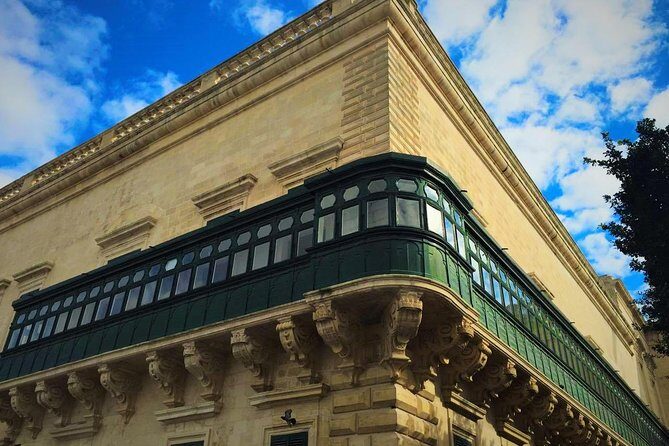
After the orientation, you hit the part of Valletta that feels like a living museum: historic sites packed into tight streets and small squares.
One stop is Pjazza Teatru Rjal, where you learn the story behind famous ruins. You’ll hear what used to be here and why it matters in Valletta’s timeline. Ruins can be frustrating on your own—you see stone, but you don’t know what it used to mean. With a guide, those shapes become clues instead of decoration.
Then you’ll visit Our Lady of Victories Church. This stop is built around a very specific question: which famous hero of Malta’s history is buried here. That kind of detail is exactly why a guided walk is worth it. It turns a church you might otherwise breeze past into a moment with emotional and historical weight.
Il-Berga ta’ Kastilja and Baroque Architecture: What to Notice Without Needing a Guidebook
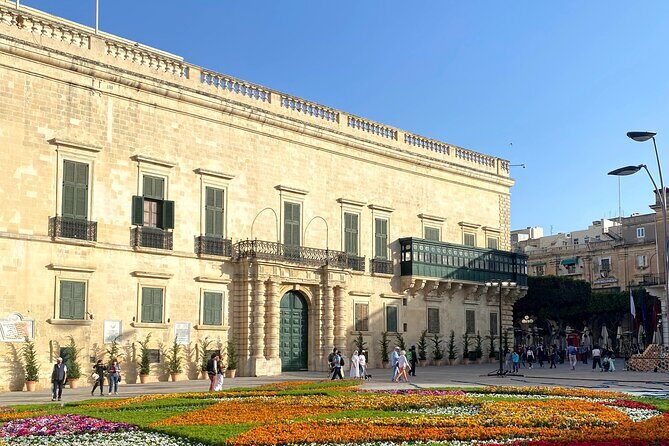
The walk shifts into architecture and identity. At Il-Berga ta’ Kastilja, you focus on the stunning façade of an important edifice. This is where I like that the tour doesn’t drown you in names only. The guide points out what to look at—materials, design choices, and why certain looks became “power language” for the Knights’ presence.
Valletta’s Baroque style can feel like overload if you’re not guided. But on this route, it stays readable because it’s connected to what the building represented. You’re not just seeing pretty fronts. You’re learning why the city’s look developed the way it did.
You’ll also notice how the guide keeps connecting the Knights era to later moments in Malta’s history, so you’re not stuck thinking Valletta is only about one period. That’s a big win for first-timers.



Upper Barrakka Gardens Over Grand Harbour: The View Stop That Resets the Day
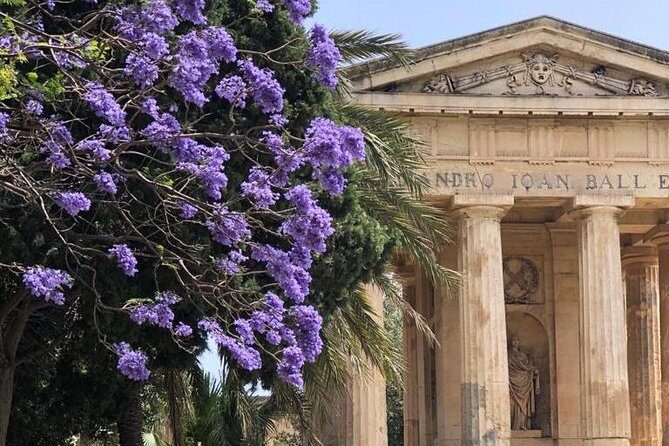
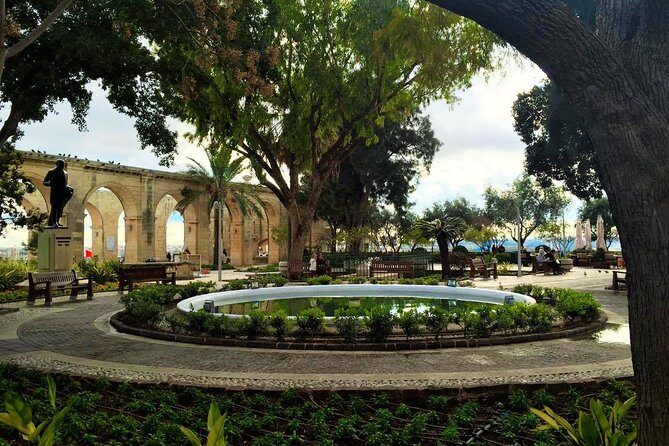
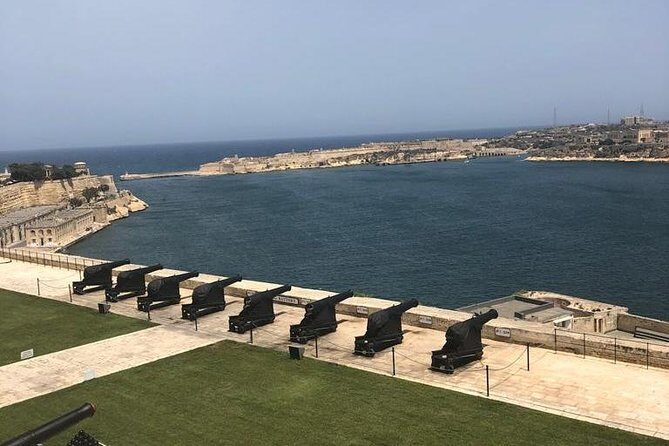
Then comes the payoff: Upper Barrakka Gardens. You get time here—about 30 minutes—which is generous for a walking tour. This isn’t just a quick photo stop. It’s a chance to sit, absorb the view, and let the guide’s history land while you look out over the Grand Harbour.
The tour uses the viewpoint strategically. You’ll hear about Valletta’s role as European Capital of Culture in 2018, and you’ll connect that cultural moment to the city’s long story of defense, governance, and art.
Even if you’re not a “gardens” person, this stop works because it gives you a visual anchor. Once you’ve seen the harbor from the heights, the rest of the walk makes more geographic sense.
Auberge d’Italie and Palazzo Parisio: Where Art Meets Power and the Past Still Shows
After the gardens, the tour goes into the city’s institutional feel—places where art, governance, and wealthy influence overlap.
One stop is Auberge d’Italie, noted as the new Museum of Fine Arts area. Admission here is not included, so you’ll likely see what you need from outside and learn what you’d gain inside. Even if you don’t enter, this is still valuable because it helps you understand why these auberges (lodging-houses for the Knights) were more than accommodation—they were cultural and political symbols.
You’ll also visit Palazzo Parisio. Again, admission details are not included, but you’re meant to understand what makes the palace historically significant, including which world-famous historical figure once spent time living here.
I like stops like this because they teach you how to travel smarter after the tour. After you know what’s worth your time inside, you’re not wasting hours guessing.
St. John’s Co-Cathedral: The Stories Behind the Artists You’ll Spot
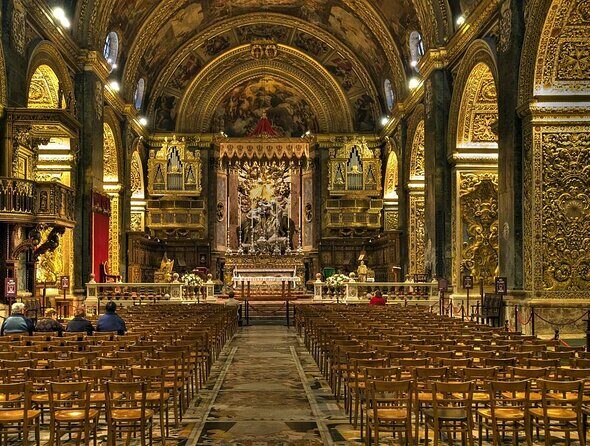
Next up is St. John’s Co-Cathedral, one of Valletta’s most famous landmarks. Admission is not included here, but the guide focuses on what you should pay attention to, especially the artworks and the stories behind the artists whose works are depicted there.
If you’re the type who likes art, this stop can turn your whole experience. Even from the outside and in pre-entry framing, you’ll start thinking about symbolism and style. On a guided walk, you’re not just there to say you saw it—you learn what details matter so you recognize them if you go inside later.
If you’re not planning to enter, don’t skip the stop anyway. The guidance helps you see the cathedral as the center of a wider worldview, not just a photo moment.
St. George Square and the Grand Master’s Palace Area: Siege Memory and Civic Pride
The tour ends with the kind of central placement that makes Valletta feel walkable and cohesive.
You’ll visit St. George Square, the main square, and it functions like a reset point. By then, you’ve heard enough history that the square stops feeling generic. You know what the city values and why certain spaces matter.
Then you’ll move on to Grand Master’s Palace, described as having importance throughout the centuries. Admission is not included, but the tour prepares you. Instead of approaching the palace as a single visit item, you understand its role as a seat of power and a reference point in Valletta’s political story.
Along the way, you’ll also hear about other historic siege-related markers such as the Great Siege Monument, the Siege Bell Memorial, and the Fort St. Elmo area. These points make Valletta’s defense story feel real. They’re not abstract. You can connect them to the city’s shape and walls as you walk.
Walking Comfort, Timing, and What to Bring for a Smooth 3 Hours
This is a morning departure and it’s built to feel doable for most people. That said, it’s still a walking tour through a city of steps and tight streets, and there are plenty of photo-and-story pauses.
From the experience itself, the biggest “physical” thing is standing. One person noted that the guide went deep and the story moments required patience and time on your feet. So bring shoes you can stand and walk in for a while.
Timing-wise, the stop lengths are short and realistic—often 5 to 10 minutes—with longer time at Upper Barrakka Gardens. That pattern helps you keep energy up. You’re not stuck in one place for hours.
A small pro move: plan to do your biggest interior entries after the tour, not before. Since some sights have admissions not included, you’ll know which ones are worth your money and time once your guide has explained what to look for.
Who This Tour Is Best For (and Who Might Want Another Option)
This tour fits best when you want a smart overview without exhausting your schedule. It’s ideal for first-time visitors to Valletta or anyone with limited time who still wants to feel oriented.
I’d also recommend it if you like structure. Valletta can feel overwhelming at first glance—lots of architecture, lots of churches, lots of stone. A guided route gives you a mental map and a story thread.
On the flip side, if you already know Valletta well or you prefer spending your time entirely inside major attractions, this walk may feel like too many outside stops. The tour is about helping you understand what you’ll see next, not replacing paid entry tickets.
Is It Good Value at $26.60? My Take on the Math
For $26.60, you get a guided route through the city’s key highlights with a small group, plus history that’s tied to specific places. That’s what makes the price feel reasonable.
You’re also getting flexibility. Because the walk ends near the center at St. George’s Square, you can keep moving afterward with a clearer sense of what to prioritize.
If you’re visiting for the first time, this kind of tour often pays off later. Once you know why certain buildings exist and what siege-era or Knights-era stories connect to them, you explore with more confidence. You also spend less time “wandering,” because your route gave you a set of anchors.
Should you book it if you’re only in Valletta for a short window? Yes—this one is designed for exactly that.
Should You Book the Original Valletta Walking Tour?
Book it if you want a fast, story-driven introduction to Valletta without paying for private transport. The small group size, the major landmarks, and the harbor viewpoint add up to a tour that helps you explore better the rest of your trip.
Skip it only if you’re set on going inside lots of major attractions during the same 3 hours. Since admissions for some stops aren’t included, you’ll likely need separate tickets if you want maximum interior time.
If you’re aiming to understand the city quickly, this is one of the most practical ways to do it.
FAQ
How long is the Valletta walking tour?
It’s listed as about 3 hours.
Where do I meet the guide?
You meet at the New Parliament Building, Republic St, Valletta, Malta.
Where does the tour end?
The tour ends at St. George’s Square (VGX7+JCW, Republic St, Valletta).
Is the tour in English?
Yes, the tour is offered in English.
What’s the maximum group size?
The tour has a maximum of 25 travelers.
Is hotel pickup or drop-off included?
No, hotel pickup and drop-off are not included.
Are there any admissions included?
Admission is not included for some stops, including places like the Museum of Fine Arts area at Auberge d’Italie and the major interior sites such as St. John’s Co-Cathedral and the Grand Master’s Palace.
Can I use a mobile ticket?
Yes, the tour includes a mobile ticket.
Are service animals allowed?
Yes, service animals are allowed.
What is the cancellation policy?
You can cancel for a full refund up to 24 hours before the experience starts.