REVIEW · MALTA
Valletta City of Gentlemen guided walking tour
Book on Viator →Operated by Silvia -Excursiones en Malta · Bookable on Viator
Valletta gives you its story in two hours. This Valletta City of Gentlemen walking tour is a smart way to orient yourself fast: you start at the iconic Triton Fountain, then move through the harbor viewpoints at the Barrakka Gardens, down toward Strait Street, and finish near St. George’s Square. I especially liked the tight group size (max 15) and the way guide Julia can turn stones and statues into clear stories you actually remember. One thing to consider: you’ll be on your feet for the full route, and the tour needs good weather to run.
For about $23.23 per person, you get a guided walk that links landmarks you’ve probably heard of—Grandmaster’s Palace, St John’s Co-Cathedral, and the Parliament of Malta—into one coherent route. The photos practically write themselves at the viewpoints, but you’ll also want comfortable shoes and a plan for sun or shade because you’re moving through open areas.
In This Review
- Key highlights to know before you go
- Starting at Triton Fountain: the ideal Valletta kickoff
- Upper Barrakka Gardens: classic harbor views with quick context
- Lower Barrakka Gardens and the Siege Bell: where old stories meet modern space
- Strait Street, The Gut: from red-light past to modern dining
- Outside the Grandmaster’s Palace: a government seat you can still feel
- The best part: why this 2-hour walk works for first-timers
- Price and value: paying about $23.23 for direction, context, and a guide
- What to expect on the ground: shoes, pace, and photo timing
- Who this tour suits best (and who should choose something else)
- Should you book the Valletta City of Gentlemen tour?
- FAQ
- How long is the Valletta City of Gentlemen guided walking tour?
- Where does the tour start and when?
- Where does the tour end?
- How much does the tour cost?
- How big is the group?
- What’s included in the ticket price?
- Do I need to buy admission tickets for the stops?
- What should I know about weather and cancellations?
Key highlights to know before you go
- Small group (15 max) keeps the pace friendly and the Q&A real
- Harbor viewpoints at Upper and Lower Barrakka Gardens deliver classic Valletta panoramas
- Triton Fountain backstory goes beyond the photo with details on its creation
- Sacra Infirmaria context explains what the Knights of St John were doing there
- Strait Street history connects The Gut’s past to today’s restaurant-and-bar vibe
- A guided route for orientation so you’re not just ticking off names
Starting at Triton Fountain: the ideal Valletta kickoff
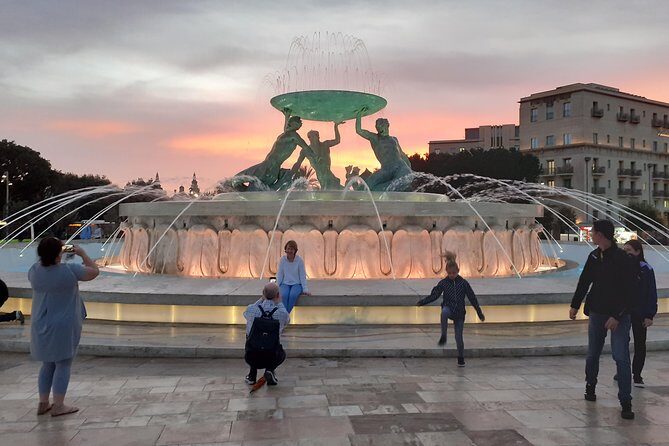
Most walks in Valletta start with a photo. This one starts with a point of reference. Your meeting point is at the Triton Fountain area (Vjal Nelson, Il-Furjana), and you kick off at the actual fountain—free to see, with no rushing to buy tickets.
Here’s why that matters: Triton Fountain isn’t just a pretty landmark. It was designed and constructed between 1952 and 1959 under multiple governing bodies, and it was conceived with sculptor Chevalier Vincent Apap. That kind of context changes how you look at the fountain. Instead of thinking, That’s just where everyone meets, you start noticing the city’s layers—how Malta’s civic identity shows up in public art.
From the start, you also get a guide who helps with navigation through local language barriers. That’s more useful than it sounds. Valletta is compact, but street names and local phrasing can confuse first-timers, especially when you’re trying to read signs and keep your bearings at the same time. In a group of 15, the guide can keep you pointed in the right direction without turning it into a chaotic herding exercise.
You can also read our reviews of more walking tours in Malta


Upper Barrakka Gardens: classic harbor views with quick context
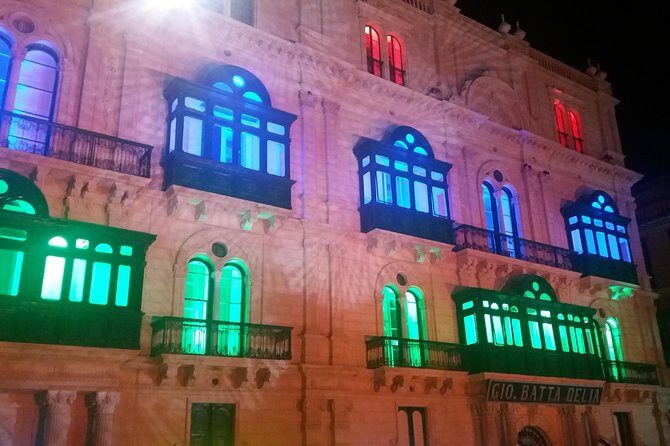
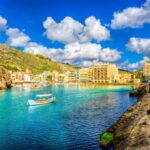
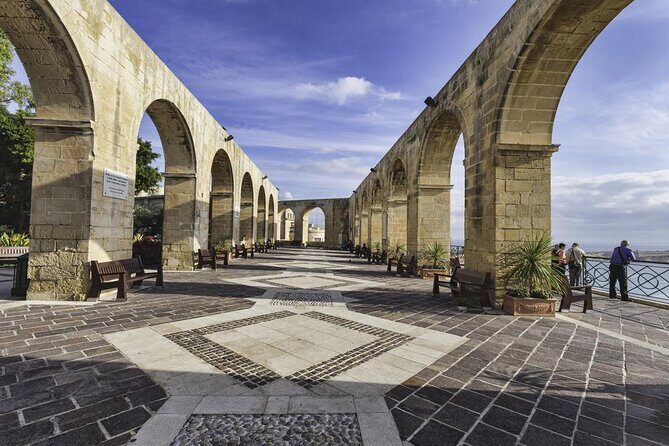
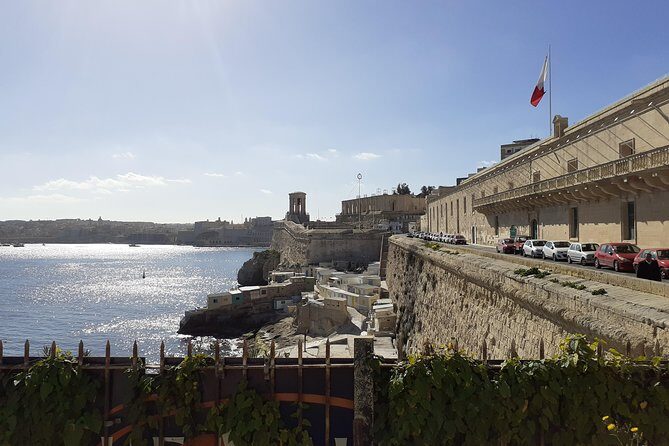
Next is Upper Barrakka Gardens, and it really is made for the “stop, look, and breathe” moment. This viewpoint is set up for panoramic views over Malta’s Grand Harbor and toward the historical area of the Three Cities.
What you’re getting here isn’t only scenery. You’re also getting the city’s geography explained in plain language: where ships pass, where fortifications sit, and how Valletta’s position made it strategically important. That’s the kind of information that makes the rest of the walk click. When you later see buildings and walls, you’ll know what you’re looking at and why it was built where it is.
The route also keeps the timing tight—about 15 minutes at this stop. If you’re worried about spending half a day “waiting for photos,” this is the opposite approach. You’ll have time to get your bearings and take pictures, but you won’t lose momentum.
Lower Barrakka Gardens and the Siege Bell: where old stories meet modern space
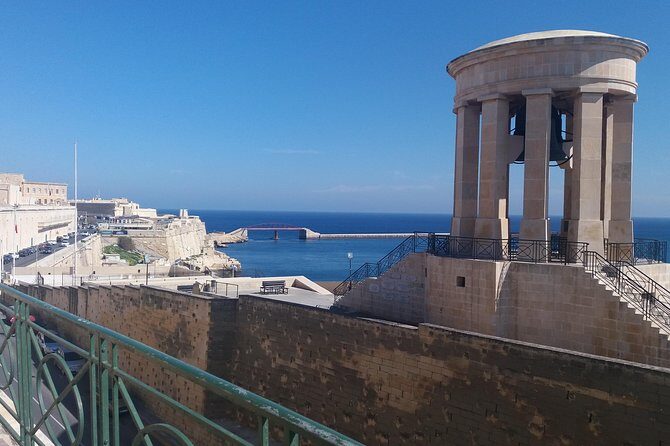
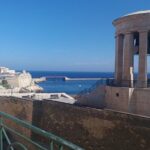
Then you move to Lower Barrakka Gardens, another viewpoint, but with a different mood and different details. From here, you look toward the entrance of the Grand Harbor and toward two named features: the Siege Bell and the Sacra Infirmaria.
This stop is where the tour earns its name: City of Gentlemen. The Sacra Infirmaria—the old hospital connected to the Knights of St John—was built to heal the sick and wounded. The key detail I’d carry with me is that it was described as providing care without distinction of creed, race, or social status. That’s a human story, not a trivia story. It changes how you think about “the Knights” from myth-level romance into real-world organization and compassion.
Today, the old hospital space holds the Mediterranean Conference Center, described as the largest conference hall in the Mediterranean Sea. It’s a good example of Valletta’s pattern: a place created for one purpose (health and care) later becomes a venue for a completely different kind of gathering. If you like cities where the past is still physically present, this is the sort of stop that makes you slow down.
You get about 15 minutes here too. That’s enough time to take in the sightline(s), listen to the story, and still move on before you start feeling like a tourist marinating in one viewpoint.
Strait Street, The Gut: from red-light past to modern dining
After the harbor views, you head to Strait Street, historically known as The Gut. This was the city’s red light district. In today’s Valletta, those older bars and haunts have been revamped and turned into trendy places to dine and wine.
I like this stop because it keeps Valletta from becoming all palaces and cathedrals. Yes, you’re seeing Grandmaster-era power. But you’re also seeing what life looked like when the city’s walls were doing their job and people were doing theirs too. A place can have multiple identities over time, and Strait Street shows that clearly.
The tour gives you about 10 minutes here. That brief timing works well because it’s more about orientation and understanding the “why” than about lingering in one strip. If you’re planning to come back later (you probably will), you’ll know exactly what street to search for when you want the more adult-nightlife version of Valletta without guessing.
Outside the Grandmaster’s Palace: a government seat you can still feel
Next comes a view from the outside of the Palace of the Grand Master. It’s described as having been used ever since as the seat of government in Malta. Even from outside, it lands as a statement: power, permanence, and authority all in one block.
This matters because you’ll already have that Knights of St John context from the Sacra Infirmaria stop. When you look at the palace afterward, it’s easier to understand the system—how the same organization or worldview can show up in places for leadership and places for care.
The tour route also includes stops/landmarks connected to St John’s Co-Cathedral and the Parliament of Malta. The key is the sequencing: you don’t just hear about famous buildings as separate icons. You experience them as connected parts of how Valletta governed itself and organized its public life.
You can also read our reviews of more guided tours in Malta





The best part: why this 2-hour walk works for first-timers
This is built as a 2-hour introduction, which is the sweet spot for Valletta if you want value without dragging yourself all day. A lot of cities sell “big day tours.” This one stays focused.
Here’s what I think works in your favor:
- You get multiple vantage points (Upper and Lower Barrakka Gardens) without losing your schedule.
- You move from broad views to street-level history (Strait Street) so the tour doesn’t feel like one long “look at this view” loop.
- A maximum of 15 travelers helps keep attention on individuals. It also makes it easier for the guide to correct the group when you’re threading through small streets.
Also, the tour uses a mobile ticket, which is convenient if you’re juggling phones, maps, and photos. Start time is 11:00 am, and you’ll end back in central Valletta near St. George’s Square, right by Republic Street.
If you’re the kind of traveler who likes to understand where you are as you walk (not only at the end of a day), this format fits.
Price and value: paying about $23.23 for direction, context, and a guide
At $23.23 per person, this doesn’t feel like a “tourist tax” because what you’re actually buying is time with a guide plus interpretation at the stops. The route also includes free admission at the featured stops—Triton Fountain, the gardens, and other points along the way—so most of your cost is for the human component.
In plain terms: you could wander Valletta on your own and take pictures. But you’d miss the quick, specific stories that make landmarks click. You also wouldn’t get the same help navigating local language barriers.
And that’s where guide quality matters. In the best review, Julia is praised as fantastic—very knowledgeable and personable—and as a strong storyteller. That kind of guide can turn a short walk into a memory, not a blur of monuments.
So, the value question is simple: do you want context as you go? If yes, this price makes sense for a tight 2-hour plan.
What to expect on the ground: shoes, pace, and photo timing
This is a walking tour, and the expectation is that most people can participate, as long as you’re able to walk. You should plan on comfortable shoes. Valletta’s streets can feel steep and uneven depending on where you end up, and you’ll spend time at viewpoints where standing still also matters.
Also plan around weather. This experience requires good weather. If conditions are poor, it can be rescheduled or refunded. That’s a big deal in Malta, where a change in wind or rain can affect whether outdoor walking routes are enjoyable—or even possible.
Timing is another practical point. The stops are relatively short (often around 10–15 minutes). That’s great if you like pace. If you’re someone who needs a slow walk and long pauses, you may find yourself thinking, Wait—I could spend more time here. The workaround is simple: do your guided orientation first, then return later on your own to linger.
Finally, the tour is described as near public transportation. So if you’re staying outside the immediate Valletta core, you’re not locked into one awkward access point.
Who this tour suits best (and who should choose something else)
I’d recommend this tour if you fit one of these categories:
- You’re a first-time visitor and want a fast orientation with named landmarks.
- You want a guide to handle the “what am I looking at” part so you can enjoy the walk.
- You like viewpoints but don’t want a half-day devoted to only one area.
- You prefer smaller groups and better interaction.
You might choose a different option if you want long cathedral time, museum time, or deep interior access. This tour focuses on walking, viewpoints, and landmark context, not on extended inside visits based on what’s described.
Should you book the Valletta City of Gentlemen tour?
Book it if you want a smart, focused Valletta intro with views, stories, and a route that makes the main sites feel connected. The biggest selling points are the small group size, the guided context at the gardens and historical landmarks, and the fact that the walking time stays reasonable.
Skip it (or compare alternatives) if you don’t like walking, struggle with outdoor conditions, or you’re hoping for long stays inside major buildings. But if you’re ready for a short, well-paced history-and-views walk—this is a strong choice.
FAQ
How long is the Valletta City of Gentlemen guided walking tour?
It’s approximately 2 hours.
Where does the tour start and when?
It starts at Triton Fountain (Vjal Nelson, Il-Furjana, Malta) and begins at 11:00 am.
Where does the tour end?
It ends at St. George’s Square (Republic St, Valletta, Malta), near the Grandmaster’s Palace area.
How much does the tour cost?
The price is listed as $23.23 per person.
How big is the group?
The tour has a maximum of 15 travelers.
What’s included in the ticket price?
It includes a tour guide.
Do I need to buy admission tickets for the stops?
The featured stops listed for admission are free.
What should I know about weather and cancellations?
The tour requires good weather. If it’s canceled due to poor weather, you’ll be offered another date or a full refund. Free cancellation is available up to 24 hours before the start time.