REVIEW · MALTA
The Dark History of Valletta – Walking Tour
Book on Viator →Operated by Dark Malta Tours · Bookable on Viator
Valletta has a way of hiding secrets in plain sight. This walking tour turns Malta’s capital streets into a story map, with dark tales (from a strange lovesick letter to boys who never came out) and real historical references tied to the city’s founder, Jean de Valette. I especially like the storytelling pacing—each stop feels like a scene with a little cliff-edge drama—and the fact that the walking route finishes in a prime spot for food and drinks.
There is one real consideration: the route is hilly and you’ll be walking down and back up. If you’re not up for slopes, plan for slower steps and comfortable shoes.
In This Review
- Key highlights you’ll feel during the walk
- Two hours in Valletta: what you’re really paying for
- Meet at Tritons’ Fountain, then walk into the center of things
- The core stop: Valletta streets turned into a dark story trail
- Oliver Starkey and that party-running-knight energy
- A lovesick letter that lands right before murder
- The church story: over a hundred boys who never came out
- Jean de Valette and the meaning of the grotesque statue
- Hilly walking: how to plan for the down-and-up route
- Guide style that keeps the stories moving
- Group size and value: small enough to feel personal
- Weather and timing: keep your plan flexible
- Who should book this dark-history Valletta walk
- Should you book the Dark History of Valletta walking tour?
- FAQ
- How long is the Dark History of Valletta walking tour?
- What does the tour cost?
- What language is the tour offered in?
- Where do I meet for the tour?
- Where does the tour end?
- Is there a mobile ticket?
- How large is the group?
- Is the tour suitable for most people?
- What happens if the weather is poor or I need to cancel?
Key highlights you’ll feel during the walk
- Oliver Starkey’s 1990s parties and the neighbors who finally got some peace
- A lovesick letter tied to a murder story that gets chilling fast
- The church story about boys who entered and never came out
- Jean de Valette facts that add clarity to Valletta’s origin story
- A grotesque statue with hidden meanings you’ll understand by the end of the tour
- Small group size (up to 35) that helps the guide keep the flow moving
Two hours in Valletta: what you’re really paying for
The price is $24.03 per person for about 2 hours, and that’s a fair deal when you’re buying something rare: a guided walk where the city feels alive, not just looked at. This isn’t a long “museum-style” experience. It’s paced for the street—short stops, vivid storytelling, and quick turns through the parts of Valletta that most people skim past.
The other value point is how the stories connect. You don’t just get spooky anecdotes thrown at you. The tour links names, symbols, and local details—so your brain doesn’t just go wow, that’s creepy. It goes: wait, that makes sense in this city.
Also, the setup is simple. You get a mobile ticket, and the tour is offered in English. That matters because you’re not wasting time figuring out logistics in the middle of walking through a historic city.
If you want a calm, quiet stroll, this won’t be your vibe. If you want your history with a pulse—good. That’s the tone.
You can also read our reviews of more walking tours in Malta



Meet at Tritons’ Fountain, then walk into the center of things
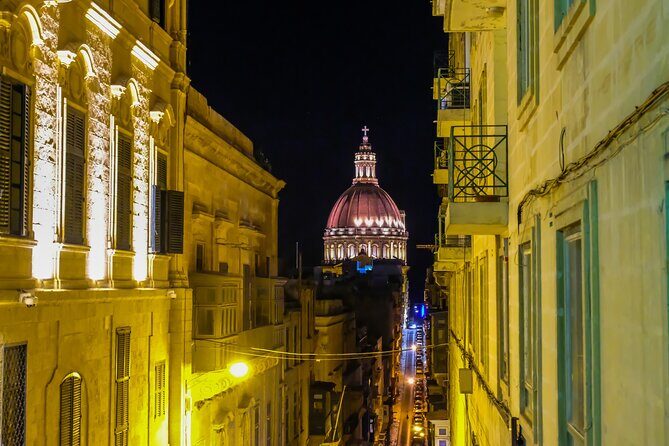
You start at Tritons’ Fountain (VGW5+783), on Vjal Nelson, in Il-Furjana. That’s helpful because it’s a landmark-style meeting point, not a vague street corner. It’s also listed as near public transportation, which makes it easier to build around the rest of your day.
The tour ends at the Grand Master’s Palace in Valletta. And the timing of that ending is smart: you finish right where you can keep moving without needing extra transit. The tour ends close to bars and restaurants, so you can grab a drink or a bite while the stories are still fresh.
Practical note: because you’re ending at a big central landmark, it’s easier to plan your next step—hotel, dinner, or a follow-on walk—without backtracking across Valletta’s hills.
The core stop: Valletta streets turned into a dark story trail
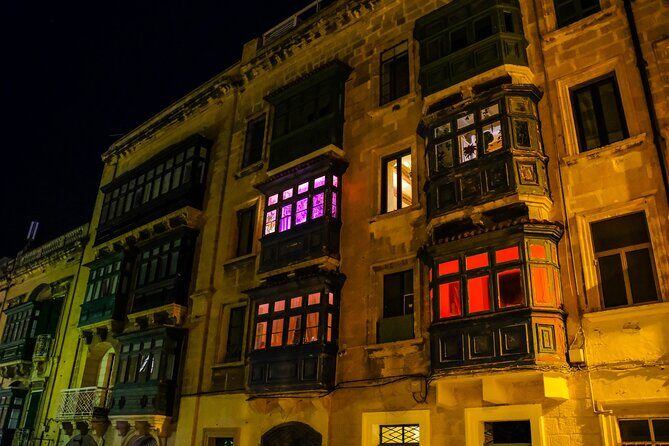
The tour focuses on Valletta’s streets with one main stop area where the guide brings several stories together. You’ll hear multiple threads, and the best part is how they’re layered so you get more than one spooky idea.
Oliver Starkey and that party-running-knight energy
One of the standout storylines is Oliver Starkey, a knight from the 16th century whose ghost gets described in an unexpectedly modern way. The tale says he threw parties in the 1990s—part creepy, part absurd—and that he was eventually persuaded to stop disturbing the neighbors.
You’ll get a lot out of this story if you like folklore that feels specific to a place, not generic “haunted European castle” stuff. It’s the kind of legend that reminds you cities collect personalities over centuries.
It also sets the mood for the rest of the walk: you’re not just collecting facts; you’re collecting atmosphere.
A lovesick letter that lands right before murder
Another story revolves around a lovesick man’s letter sent to his lover shortly before he murdered her. That’s the point where the tour shifts from weird-to-eerie and keeps tightening.
Why this works as a walking-tour story: it’s easy to picture as you’re on the streets. You’re not stuck reading text at a desk. The guide’s narrative keeps moving, so the details feel like they belong to Valletta’s corridors and corners.
If you’re sensitive to darker themes, keep that in mind. The tour is designed for “dark history” content, and this isn’t candy-coated.
You can also read our reviews of more historical tours in Malta



The church story: over a hundred boys who never came out
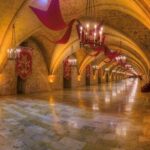
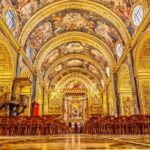
Then you get one of the grimhold legends: a story about over a hundred boys who entered a church and never came out.
This is exactly the kind of tale that makes you look at a city differently. Even if you treat the story as legend rather than literal fact, the emotional effect is real. You’ll start noticing how places hold stories—sometimes because something happened, and sometimes because people needed a story to explain loss.
It’s also a good example of why this tour is worth doing even if you’ve been to Malta before. Valletta’s landmarks are famous, but these kinds of street-level connections are the stuff you usually miss.
Jean de Valette and the meaning of the grotesque statue
Not all of the tour is just spooky legend. You’ll also learn about Jean de Valette, the founder of Malta’s capital city. That’s a key part because it gives the tour more balance. You get a founder’s story alongside the darker myths, so the city feels anchored in real names and real origins.
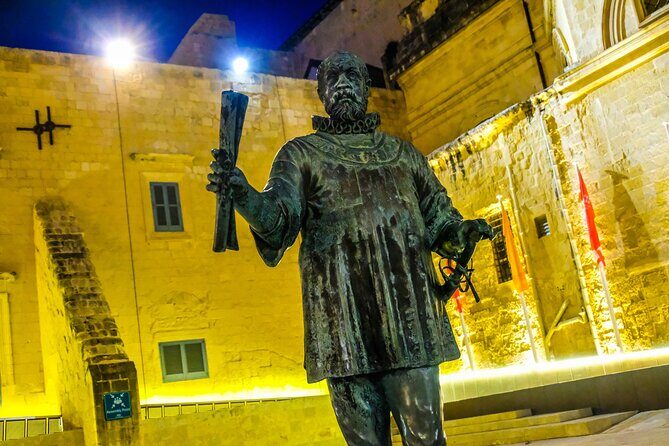
Then comes the detail many people remember afterward: a grotesque statue that watches over people in Valletta from above. The guide explains the hidden meanings behind it, and that’s one of the best uses of a guided walk—someone else’s interpretation helps you notice what you’d otherwise walk right past.
If you love “why is that figure there?” type answers, this is where you’ll get your money’s worth. It turns a visual detail into something you can actually place in the city’s story.
Hilly walking: how to plan for the down-and-up route
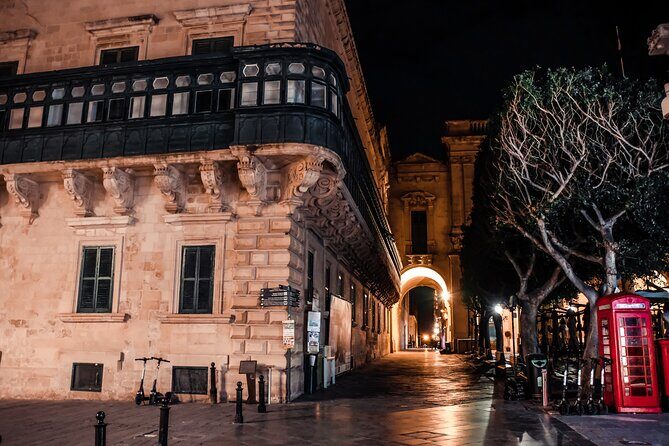
One of the clearest practical points is physical. Valletta is hilly, and the walk includes going down toward the bottom and then back up.
That’s why I’d treat this as a shoes-and-pace kind of experience, not a sit-and-watch one. You don’t need to be an athlete, but you do need to be comfortable walking on slopes for the duration.
A few tips that will help:
- Wear shoes with grip. Smooth soles on stone can be slippery.
- Bring water if you’re the type who runs warm. The tour itself is only about 2 hours, but hills add effort.
- Go slow on descents. Your legs will thank you on the climb back.
Good news: it’s listed that most people can participate, and service animals are allowed. That suggests the route isn’t built for extreme endurance, just real walking.
Guide style that keeps the stories moving
The tour succeeds or fails on one thing: the guide’s storytelling rhythm. In particular, I liked how one guide, Mario, was described as a strong storyteller who could piece separate moments into one flow.
The best detail is the pacing. Stories don’t feel like random facts; they’re set up like scenes, with a cliffhanger feel that pushes you to the next stop. That helps you stay engaged the whole time, even when you’re walking between points.
There’s also the practical side of good guiding. One family ran late due to traffic tied to an event, and Mario called to confirm where they were. He stalled for them and filled that waiting time with extra stories rather than letting the group go dull and impatient. That kind of response matters on a city walk, because timing always has surprises.
And the result? Even though it’s a couple hours, it doesn’t feel like a slog. It feels like you’re moving through a sequence of mini-adventures.
Group size and value: small enough to feel personal
The tour caps at 35 people, and that’s a sweet spot. Large groups can swallow a story. Smaller groups keep it audible and make it easier for the guide to manage the timing at each point.
You’ll also find the format is straightforward: English-speaking guide, mobile ticket, and a straightforward start/end with a landmark end at Grand Master’s Palace. For many people, that’s the difference between a “good idea” and a “yes, I’ll do it.”
At $24.03 for about 2 hours, you’re not paying for site admissions on top of the tour. The listing shows admission as free, which means you’re mainly paying for guided content and time.
Weather and timing: keep your plan flexible
This experience requires good weather. If it’s canceled due to poor weather, you’ll either be offered a different date or a full refund.
For planning, that means you shouldn’t treat this as your one-and-only evening option unless you’ve got backup meals or a Plan B walk. Valletta streets are worth exploring no matter what, but rain changes how comfortable the hilly walking feels.
Who should book this dark-history Valletta walk
This tour is a great fit if:
- You want a guided walk that mixes legend and real references to the city’s origins
- You enjoy dark storytelling and symbolic details like statues and street-top views
- You like ending near major sights so dinner plans are easy
It may be less ideal if:
- You prefer gentle, light themes
- You have trouble with hilly routes and long stair-like changes in elevation
- You want something strictly factual with no folklore tone (this tour includes stories that are clearly meant to be chilling and theatrical)
Should you book the Dark History of Valletta walking tour?
Yes, I think you should book it if you want Valletta to feel like a living place, not just a backdrop. The price is reasonable, the tour is short enough to fit most schedules, and it ends in a perfect spot by Grand Master’s Palace so you don’t lose time afterward.
The deciding factor should be comfort with hills and your tolerance for darker themes. If you can handle a down-and-up walk and you’re game for spooky legends tied to real names and symbols, this one will likely make your Valletta day more memorable.
If you’re still unsure, pick a time when you feel rested and bring good shoes. That turns this from just a tour into a story you’ll keep thinking about later.
FAQ
How long is the Dark History of Valletta walking tour?
It lasts about 2 hours.
What does the tour cost?
The price is $24.03 per person.
What language is the tour offered in?
The tour is offered in English.
Where do I meet for the tour?
You meet at Tritons’ Fountain (VGW5+783), Vjal Nelson, Il-Furjana, Malta.
Where does the tour end?
The tour ends at the Grand Master’s Palace in Valletta, close to bars and restaurants.
Is there a mobile ticket?
Yes, it’s listed as a mobile ticket.
How large is the group?
There is a maximum of 35 people.
Is the tour suitable for most people?
It’s listed that most people can participate, but you should be prepared for hills since the route involves walking down and then back up.
What happens if the weather is poor or I need to cancel?
The experience requires good weather. If it’s canceled due to poor weather, you’ll be offered a different date or a full refund. Free cancellation is available up to 24 hours in advance for a full refund.