Valletta has plenty of puzzles, if you know where to look. This self-guided walk turns the city into a challenge using the Questo app, with clues that guide you from one landmark to the next. It’s a fun change from a standard guided stroll, because you can pause, backtrack, and go slow without keeping anyone else on schedule.
I really like the low-stress pace. You spend short chunks moving between stops, but you can linger as long as you want when you arrive. I also like that it feels structured without feeling rigid, since each clue points you onward in a clear order.
One thing to consider: it leans into a story that can feel spooky and light on practical info, and you’ll need to set up an app account to play. If you hate ghost-story vibes or you’re sensitive to lots of emails during booking, you may want to go in with your expectations set.
In This Review
- Key things to know before you start
- How Valletta Hidden Minds works: a self-guided puzzle walk with Questo
- Price and time value: what $7.24 gets you in Valletta
- City Gate to Palazzo Parisio: starting clues and palazzo energy
- Russian Cultural Centre and St. John’s Co-Cathedral: storytelling stops and iconic facades
- Courts of Justice and Grandmaster’s Palace: stone power meets problem-solving
- Teatru Manoel and Strait Street: a theater stop and a classic Valletta lane
- Greek Catholic Church Our Lady of Damascus and Evans Building: narrow turns and mixed architecture
- Finish at Fort St Elmo: the story ends where the views start
- Pacing, navigation, and when to go: small decisions that change the experience
- Who this puzzle walk is best for
- Quick FAQ before you go
- FAQ
- How long is the Valletta Hidden Minds puzzle walk?
- Where do I start and where do I finish?
- Do I need entry tickets for the attractions on the route?
- Is there a live guide with this experience?
- Can I play the game anytime after I book?
- Can I cancel for a refund?
- Should you book Valletta Hidden Minds?
Key things to know before you start
- App-led, not guided: No tour guide is involved, just the Questo app and your phone’s direction prompts.
- Short overall time: Plan for about 1 to 1.5 hours, then you’re free to keep wandering Valletta.
- Real landmarks in a tight loop: City Gate, St. John’s Co-Cathedral, Teatru Manoel, and Fort St Elmo make the walk feel satisfying.
- You don’t need entry tickets to play: Attraction visits are optional for the game to work.
- Some stops can be trickier at night: If streets or nearby areas are under renovation, daylight makes navigation and solving easier.
How Valletta Hidden Minds works: a self-guided puzzle walk with Questo
This experience is built like a city escape game. You use the Questo app on your phone, then follow clues tied to specific Valletta locations. The game doesn’t depend on you getting in and out of paid attractions, which is a big deal in old cities where opening hours and ticket lines can steal your time.
The format is simple: you arrive at a named spot, solve or respond to a prompt, then the app gives you the next clue and directions. The tour rhythm is based on short stop-to-stop segments, but the real freedom is that the clock is mostly on your side. When you reach a stop like St. John’s Co-Cathedral, you can pause and explore the area as you try to figure things out.
Because it’s app-led, you also get a kind of built-in “buffer.” If you’re tired, you can slow down. If you’re curious, you can linger and read what’s around you while you solve. That mix of puzzle time plus street-level time is why this works so well in Valletta’s compact, walkable core.
You can also read our reviews of more walking tours in Malta



Price and time value: what $7.24 gets you in Valletta
At about $7.24 per person, you’re paying for two things: the app game itself and the route logic that ties it to real places. You’re not paying for museum entry, and you’re not paying for a live guide’s time either. That keeps the cost low enough that you can still spend the rest of the day on actual meals, bus rides, or one paid attraction if you want it.
Time-wise, expect 1 hour to 1.5 hours. That’s long enough to feel like you did something meaningful, but short enough that you won’t lose an entire day to a ticketed attraction. It also makes the game a great “starter plan” if you’re new to Valletta. You get to learn streets and landmark shapes fast, then you can build your own route afterward.
One more value point: it’s a private activity for your group, and if your group is larger than 15 people, you can book multiple slots. That helps avoid that awkward feeling of being swallowed into a big crowd.
City Gate to Palazzo Parisio: starting clues and palazzo energy
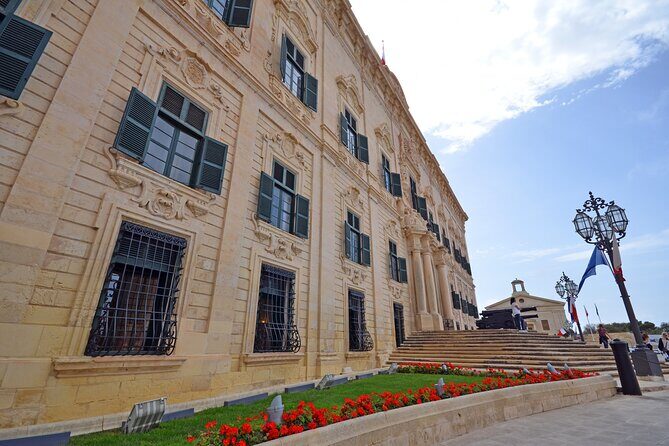
You begin at City Gate (Republic St, Valletta). This matters more than you might think. Starting at a major gateway makes it easier to orient yourself, especially if you arrive by bus or you’re walking in from another neighborhood. At City Gate, you’ll get your first clue, and from there the app starts feeding you directions for the next stop.
From City Gate, the route heads to Palazzo Parisio. This is a place that feels like a step into grander Valletta architecture. For the game, you don’t need admission to play through that stop. But if you decide to actually go inside, you’ll likely need to plan for separate entry, because admission is not included at this stop.
Here’s my practical tip: treat this first stretch like a warm-up. The game gets better once you understand how the app wants you to move and solve. If you’re brand-new to this style of puzzle walk, give yourself a bit of patience at the start. You’ll probably find your rhythm by the time you’re beyond Palazzo Parisio.
Russian Cultural Centre and St. John’s Co-Cathedral: storytelling stops and iconic facades
Next up is the Russian Cultural Centre, where you’ll receive another clue. The practical win here is that you can pause and take in the area at your pace. This stop is listed as requiring no entry ticket for the game.
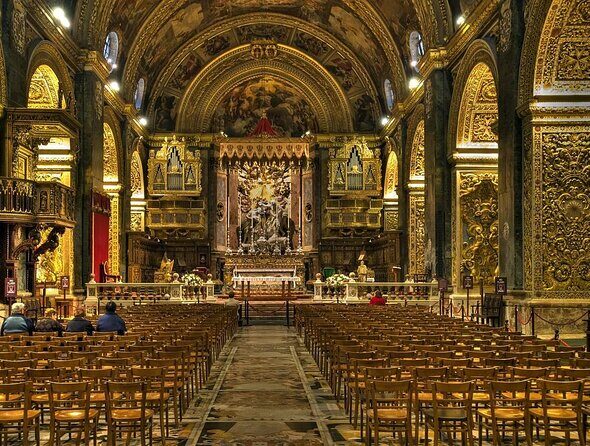
After that, you reach St. John’s Co-Cathedral. This is one of those Valletta landmarks that most people recognize from photos, so it’s a strong checkpoint in the route. The game gives you a clue here, and again you don’t need admission to complete the stop.
What to expect emotionally: because this is a psychological puzzle walk, some of the story themes can lean spooky. That can be fun if you like mild scares and mystery tone. If you prefer straightforward sightseeing, it may feel like the game’s narrative overshadows the facts. Either way, the location choice still gives you a satisfying reason to slow down and look closely at the stonework and surroundings.
If you’re planning your day around photos, this is also a good area to aim for good lighting. The cathedral zone is busy enough that your best shots often come when you stop, look, and wait for a lull.
Courts of Justice and Grandmaster’s Palace: stone power meets problem-solving

From St. John’s, you continue to Courts of Justice for the next clue. This stop is another one that you can handle purely from the street level, which keeps the game moving without forcing you into crowds or ticket booths.
Then the route leads you to Grandmaster Palace. Admission is not included at this stop, so if you want to go inside, you’ll need to plan extra. The good news is you can still use the place as part of the puzzle walk without taking on that extra commitment.
This part of the route tends to feel especially atmospheric. The architecture and setting naturally carry a sense of authority. That makes the puzzles feel more connected to place, even if the game’s story tone isn’t what you’d call historically textbook-style.
My advice: if you’re the type who loves details, take 3 to 5 minutes to just look around before you solve. In tight city spaces, your best puzzle progress can come from noticing something small in the environment that the app is pointing you toward.
You can also read our reviews of more guided tours in Malta






Teatru Manoel and Strait Street: a theater stop and a classic Valletta lane
Next you’ll get a clue at Teatru Manoel. This is a smart stop because it mixes mood and movement. A theater setting gives you a different feel than courthouses or palaces, and the game keeps you active while you’re there.
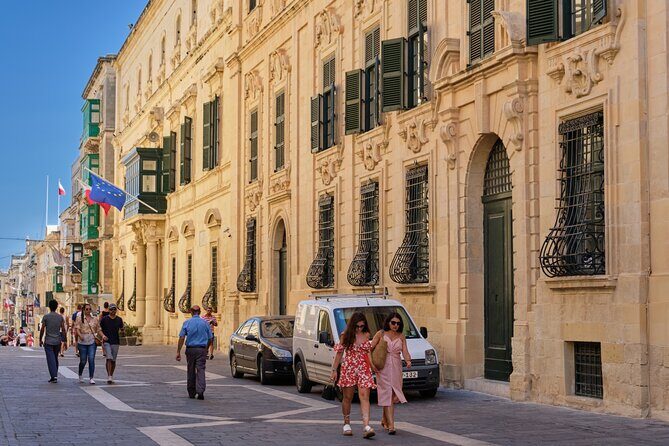
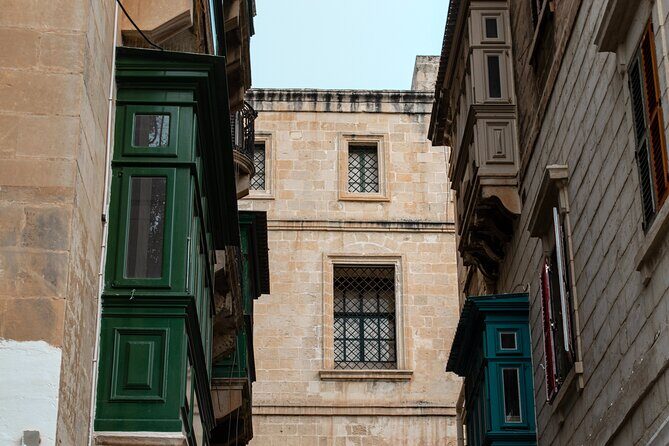
Then comes Strait Street, one of Valletta’s best-known lanes for walking and people-watching. You’ll get the next clue here and can take your time while you work through it. This segment is where the walk starts to feel like a true Valletta stroll, not just a puzzle checklist.
If you’re visiting in warm weather, Strait Street can be a good place to catch your breath. Narrow lanes can heat up, and solving puzzles is mental work. Use that to your advantage: pause, hydrate, and let your phone direction prompts guide you, rather than rushing just to finish.
Greek Catholic Church Our Lady of Damascus and Evans Building: narrow turns and mixed architecture
After Strait Street, you’ll head to Greek Catholic Church Our Lady Of Damascus. Like most stops on this route, the game clue comes with time for you to linger at the location. The area is worth slowing down in because it adds variety to the route. Not every Valletta experience has you moving through every kind of street and facade.
The next stop is Evans Building Valetta (spelling as listed). You’ll get another clue there, and admission is not the focus for completing the experience.
This is also where you want to pay attention to navigation. The app is doing the work of telling you where to go, but it’s still a real walk through real streets. If something nearby is under renovation, you might need to take a slightly different approach to reach what the game wants you to reach. Daytime solves a lot of this.
In practice, I’d treat these mid-to-late stops as your “navigation check.” If the route feels confusing, don’t force it. Pause, widen your search area, and take a calm pass at the app’s directions.
Finish at Fort St Elmo: the story ends where the views start
The final stretch brings you to the National War Museum – Fort St Elmo. This is where both the story and the city exploration game end. Admission is not included at this finish point, so you can decide whether you want to go deeper into the museum after the game is done.
Fort St Elmo is a strong place to wrap up. Even if you’re not heading inside, the fort setting makes the end feel earned. You’ve been moving through the city for about an hour, and now you get an actual payoff location where the atmosphere changes.
If you want to extend your day, this is a great moment to stop solving and start sightseeing the old-school way. Take in the surroundings, then decide if you want museum time, a snack, or just another loop through the lanes.
Pacing, navigation, and when to go: small decisions that change the experience
This is a walk you control. The app may suggest short durations between stops, but you decide how long you linger at each clue location. That flexibility is a plus, especially if Valletta’s hills and cobblestones make you move more slowly than you expected.
A few practical habits help a lot:
- Plan on daylight if you can. Some puzzle segments can be harder if nearby places are under renovation or if street details are harder to read at night.
- Don’t ignore the map cues. One of the real frustration points with puzzle walks is when you’re trying to solve and navigate at the same time. Give yourself a moment to orient before you commit to the answer.
- Expect the story tone to affect your mood. The game can feel ghost-story-like or spooky, which is fine if that matches your taste. If you’re looking for strict factual sightseeing, you may feel pulled away from that.
Also, you can play anytime after booking without needing to reschedule. That’s useful in Malta, where you might want to adjust your plan based on heat, rain, or how your day is going.
Who this puzzle walk is best for
This works best if you like city exploration that feels interactive. You’ll enjoy it if you want an app-led way to learn Valletta’s structure without joining a group tour and without waiting around for a guide.
It’s also good for people who don’t want to burn their whole day on sightseeing tickets. Since the entry tickets to attractions are not required to complete the game, you can keep your day flexible and choose what’s worth paying extra for.
I think it’s less ideal if you strongly prefer a traditional, history-heavy walking tour with an expert explaining what you’re seeing. Some people may find the story focus odd or less informative than they expected. If that’s you, use the puzzle game as a warm-up, then switch to something more factual afterward.
Quick FAQ before you go
FAQ
How long is the Valletta Hidden Minds puzzle walk?
Plan for about 1 hour to 1.5 hours. You can also spend extra time at each stop while you solve and explore.
Where do I start and where do I finish?
You start at City Gate in Valletta and finish at the National War Museum – Fort St Elmo in Valletta.
Do I need entry tickets for the attractions on the route?
No. Entry tickets are not needed to complete the tour. Some stops note that admission is not included if you choose to enter those attractions.
Is there a live guide with this experience?
No. It’s self-guided and relies on the Questo app on your phone.
Can I play the game anytime after I book?
Yes. The experience can be played anytime after booking without rescheduling.
Can I cancel for a refund?
Yes. You can cancel for a full refund if you cancel at least 24 hours before the experience’s start time.
Should you book Valletta Hidden Minds?
Yes, if you want a fun, inexpensive way to learn Valletta’s layout while keeping your own pace. The combination of major landmarks and a short time commitment makes it a smart “first afternoon” plan, especially if you’d rather wander than sit through a group schedule.
I’d hesitate if you dislike app accounts, get annoyed by story-driven puzzle themes, or strongly prefer a straightforward historical tour. If that sounds like you, you might still use this as a practical way to orient yourself, then pair it with a separate, more fact-focused experience later in the day.