REVIEW · MDINA
Mdina and Rabat Private Walking Tour with local pastizzi
Book on GetYourGuide →Operated by City Walking Tours Malta · Bookable on GetYourGuide
Mdina feels frozen in time. This private Mdina and Rabat walking tour is a story-led stroll through Malta’s Silent City, ending with a real street-food break for pastizzi in Rabat. I like how the walk isn’t just “look at this wall”—you get a human explanation for why the palaces, squares, and gates matter.
Two things I particularly love: the way you’re guided past major landmarks like Palazzo De Vilhena and the Cathedral Square, and the fact you’ll pause at the bastions for views over much of the island. One consideration: this is mostly an outdoor walking experience, and entrance fees for churches or museums aren’t included, though you can ask to add options like the Wignacourt Museum, Roman catacombs, and Saint Paul’s Grotto.
The meeting point is easy—your guide waits along the bridge at Mdina’s Main Gate—and the tour is designed as a smooth 2.5 hours on foot. The guide team is licensed and speaks multiple languages (French, English, German, Italian, Spanish), and in guides like Ángeles (mentioned for punctual, well-organized guiding), you get clear pacing rather than hurried sightseeing.
In This Review
- What makes this Mdina and Rabat walk special
- Starting at Mdina’s Main Gate: where the story begins
- Mdina’s fortified streets: palaces, squares, and the feel of a walled city
- Stopping at the bastions for views that actually help you orient
- Mesquita Square to Greeks Gate: religious layers without the lecture
- Rabat’s typical streets and Saint Paul’s Square: slowing down in the everyday
- The pastizzi stop at a local coffee shop: the snack that makes the tour feel real
- Optional add-ons: Wignacourt Museum, Roman catacombs, and Saint Paul’s Grotto
- Price and value: what $324 per group really buys you
- How to get the most out of the 2.5 hours
- Who this private Mdina and Rabat tour suits best
- Should you book this Mdina and Rabat private walking tour?
- FAQ
- Where do we meet for the tour?
- How long is the Mdina and Rabat walking tour?
- Is the tour private, and how many people can be in a group?
- What’s included, and what’s not?
- What languages are available?
- Is it wheelchair accessible?
What makes this Mdina and Rabat walk special

- Mdina’s landmark route: Palazzo De Vilhena, Xara Palace and Council’s Square, Cathedral Square, and more.
- Bastion viewpoints built in: timed stops so you can actually take in the island views.
- A true Rabat street experience: you’ll walk Rabat’s typical lanes rather than only seeing the highlights from one spot.
- Pastizzi, not a souvenir snack: a stop at a local coffee shop to taste Malta’s favorite traditional snack.
- Private group pacing: your route feels flexible inside the overall plan, with time to ask questions.
- Optional deepening: you can add the Wignacourt Museum, Roman catacombs, and Saint Paul’s Grotto if you want more than walking-and-squares.
Starting at Mdina’s Main Gate: where the story begins

The tour kicks off at the Main Gate of Mdina, with your guide waiting along the bridge. From the first minutes, you’ll get a brief introduction to the city’s historical past, which matters because Mdina can look like a set of pretty streets until someone connects the dots.
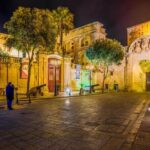
Then you set off through the fortifications—this is where the atmosphere does the heavy lifting. Mdina’s “Silent City” reputation isn’t marketing fluff; the layout encourages slower movement and lots of looking up, down, and around. If you’re the type who likes understanding why a place is arranged the way it is, this start helps you read the walls and buildings as intentional design, not random stonework.
You can also read our reviews of more walking tours in Mdina


Mdina’s fortified streets: palaces, squares, and the feel of a walled city
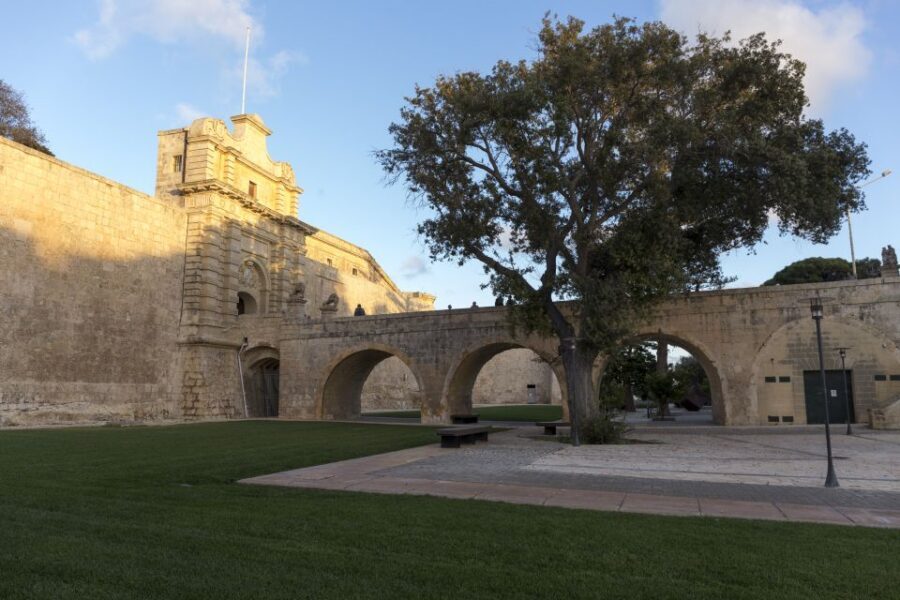
Mdina isn’t a big city by today’s standards, but it packs in major sights because it was built to function like a self-contained world. Your guide will point out the most important palaces lining the typical street, plus the squares that break up the walk and give you natural “pause points.”
A few highlights you’ll pass and learn about:
- Palazzo De Vilhena: You’ll see it in the context of Mdina’s grand yet defensive identity—part residence, part statement.
- Xara Palace and Council’s Square: Great for understanding how civic life worked within the walled perimeter.
- Main street and Cathedral Square: These act like anchors so you don’t just wander—you know where you are and why it’s important.
I like that the route keeps moving, but never feels like a sprint. You’re also taking in architectural details while your guide ties them to the bigger story. It’s a smart way to avoid that common problem on historic city walks: the sightseeing looks impressive, but the meaning goes missing.
Stopping at the bastions for views that actually help you orient
One of the best “practical sightseeing” moments comes at the bastions. You’ll stop along the walls for spectacular views over two thirds of the island, and that big-picture angle changes how Mdina feels.
Here’s why that view is worth your time: once you can see the surrounding layout, the city’s defensive position makes more sense. You start understanding why the walls were necessary and how the city’s layout relates to access points and geography. It’s not just pretty scenery; it’s a quick mental map lesson you carry with you for the rest of the tour.
If you’re traveling with phones full of photos, consider taking two minutes to look without the camera. Mdina’s light and the island’s spread can look different in every direction, and the view tends to “snap” your understanding into place.
Mesquita Square to Greeks Gate: religious layers without the lecture
As you keep walking, you’ll move through Mesquita Square and then toward Greeks Gate. This part of the tour is about layers—different communities and influences showing up in the city’s physical footprint.
Even if you don’t go inside any church or museum on this specific tour (entrance fees aren’t included), the outdoor squares and gate areas still give you a real sense of how Malta’s history shifted over time. You see places that are meant for movement and meeting, not just monuments posed for photos.
This is also a good stretch of the walk for asking questions. If you’re curious about how fortresses adapted as the threat landscape changed, this section is where the guide’s explanations can turn your attention from “what is this building” to “what was this area for.”
Rabat’s typical streets and Saint Paul’s Square: slowing down in the everyday

When the tour transitions from Mdina to Rabat, the mood shifts. Mdina feels like a sealed-in world of stone and angles; Rabat feels more like the living neighborhood around it. You’ll walk through Rabat’s typical street and reach the Square of the Conversion of Saint Paul.
That square is a key stop because it connects Malta’s layers of history with a place that still has daily relevance. You’re not just passing through to check off landmarks—you’re moving into the “other side” of the same region, where the stories don’t only live in old walls.
I find this contrast valuable: a lot of people visit Mdina, then rush out. This tour helps you understand that Mdina and Rabat are meant to be experienced together—one for the fortified identity, the other for the surrounding life that grew around it.
You can also read our reviews of more private tours in Mdina

The pastizzi stop at a local coffee shop: the snack that makes the tour feel real
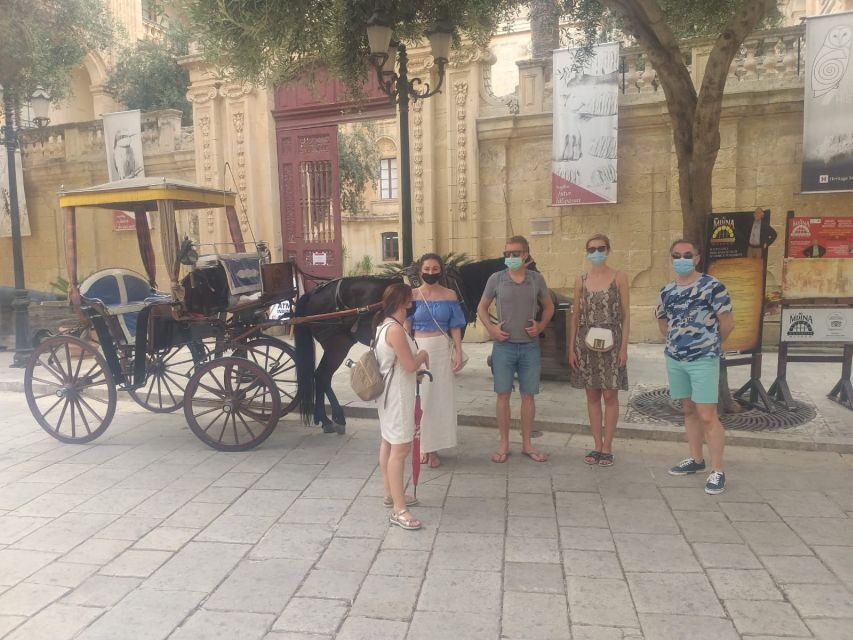
Here’s the moment that turns sightseeing into something more memorable: in Rabat, you’ll stop at a local coffee shop and taste pastizzi. This is included, and it’s a smart inclusion because it connects you to Malta through food, not just architecture.
Pastizzi are Malta’s traditional street snack, and tasting them on the tour is practical for two reasons:
- You get a quick, local flavor break without planning it yourself.
- You experience the food in a setting that feels like it belongs to the neighborhood.
It’s also the right energy reset halfway through the experience. After the walking and viewpoints, having a warm bite makes the return to street-level observation feel easier.
Optional add-ons: Wignacourt Museum, Roman catacombs, and Saint Paul’s Grotto
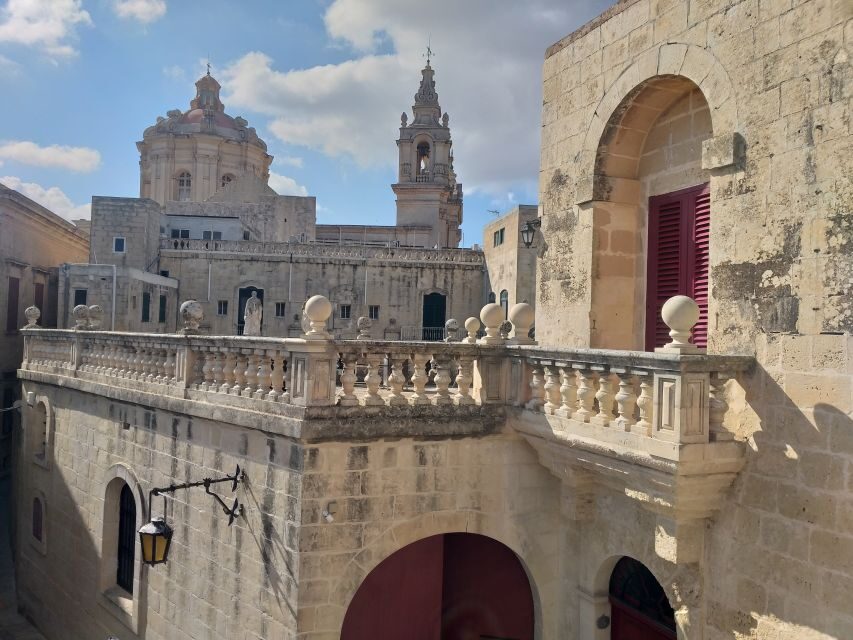
If you want more than squares and views, the tour can be expanded to include visits to:
- Wignacourt Museum
- Roman catacombs
- Saint Paul’s Grotto
This matters because it lets you choose your style. If you enjoy storytelling through walking, you might keep it simple. If you want deeper context through indoor spaces and sites with heavier historical weight, adding these stops turns the outing into a stronger “history day” rather than a light walking circuit.
Just keep in mind that entrances aren’t included for any church or museum on the tour listing you’re booking, so these add-ons may carry extra costs depending on what’s included in the final plan.
Price and value: what $324 per group really buys you
The price is $324 per group up to 4 for a 2.5-hour private tour. That’s not cheap in absolute terms, but the value comes from the format: you’re paying for a licensed guide experience with a private group and a route that hits the best-known parts of Mdina and Rabat without feeling like you’re missing the essentials.
Think of it this way: if you’re traveling as a pair or small group, splitting the cost can make the per-person figure feel much more reasonable. Plus, private pacing helps on stone streets—your guide can adjust the speed and help you focus on what you care about most (views, palaces, gates, or the Rabat transition).
Also, the tour includes the pastizzi snack and doesn’t require you to manage a lot of planning to get to the main sights in the right order. When you’d otherwise spend time figuring out routes, buying tickets separately, and juggling timing, a well-structured private walk is often worth it.
How to get the most out of the 2.5 hours
This is a focused walk, so you’ll get the best results if you show up ready to move and look. Wear comfortable shoes with decent grip—Mdina’s streets are old, and you don’t want to spend the tour thinking about your footing.
Before you go, decide what matters most to you:
- If you want views and orientation, prioritize the bastion stops and take a few minutes to really look.
- If you want architectural storytelling, lean into landmarks like Palazzo De Vilhena and Council-related areas.
- If you want local culture, make sure you’re ready for the pastizzi stop in Rabat (and don’t skip the snack just because you’re busy taking photos).
If you like to ask questions, this private format is great. The guide can answer in the moment, rather than you feeling stuck waiting your turn behind a crowd.
Who this private Mdina and Rabat tour suits best
This tour is a strong match if you:
- Want a guided walk through Mdina’s main fortified sights, not just a self-guided wander.
- Prefer a small, private group experience with time for questions and pauses.
- Like mixing big “icon” landmarks with a real local food moment in Rabat.
- Are short on time but still want the Mdina-to-Rabat connection.
It may be less ideal if you’re expecting a long list of museum interiors as part of the base tour, because church and museum entrances aren’t included. In that case, the optional add-ons are your way to make it deeper.
Should you book this Mdina and Rabat private walking tour?
Yes, if you want the practical best of Mdina and Rabat—palaces, squares, gate areas, and those fortification views—plus a proper pastizzi stop in Rabat. The private format and licensed guide make it easier to turn sightseeing into understanding, and the route hits the main landmarks without bloat.
Book it especially if you’re traveling with up to four people and you’d rather pay once for a guided experience than coordinate multiple stops on your own. If you’re a museum-first traveler, consider adding the Wignacourt Museum, Roman catacombs, or Saint Paul’s Grotto so the day matches your style.
FAQ
Where do we meet for the tour?
You’ll meet your guide along the bridge at the Main Gate of Mdina.
How long is the Mdina and Rabat walking tour?
The tour lasts about 2.5 hours.
Is the tour private, and how many people can be in a group?
Yes, it’s a private group, priced for up to 4 people per group.
What’s included, and what’s not?
Included: a fully licensed tour guide and a local snack of pastizzi. Not included: transport and any entrance fees to churches or museums.
What languages are available?
The live tour guide is available in French, English, German, Italian, and Spanish.
Is it wheelchair accessible?
Yes, the tour is wheelchair accessible.