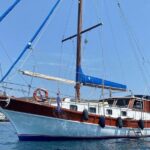
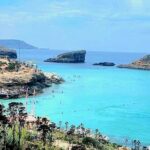
If you like sea caves and bird islands, this one hits. A guided kayak outing from Mistra Bay combines short paddles, a walk-on land break at St Paul’s Island, and a geology stop in crystal-clear water. You’ll also get to see protected wildlife up close, from coral at waterline level to pigeons in a tall cave.
What I like most is the way the guides keep it friendly and well paced. Alan and his colleague are described as friendly, knowledgeable, and considerate, and the route timing matches different comfort levels. Second, the underwater stop is specific, not generic: you can see purple coral at the waterline and bright orange soft coral a few centimeters deeper—both tied to clean, clear conditions.
One thing to consider: this is active. You must be able to communicate in English and you must be capable of swimming (even though swimming is optional, and floatation vests are provided). Also, expect wet gear—bring shoes you don’t mind getting soaked, because water often ends up on seats and bottoms.
In This Review
- Key things to know before you paddle
- From Mistra Bay to your kayak: the setup that keeps it smooth
- Mistra Bay Beach: starting in a protected setting
- Rdum il-Biez and the Tal-Mignuna cave: pigeons, coral, and clear water
- St Paul’s Islands: a quick bird reserve walk and optional water time
- Imġiebaħ Bay: the weather-friendly route for extra paddling and possible sunset
- Pace, fitness, and why the small details matter
- Price and value: what $52.42 buys you in real terms
- What to bring (and how to avoid the wet-seat regret)
- Should you book the guided kayak tour in St Paul’s Islands?
Key things to know before you paddle
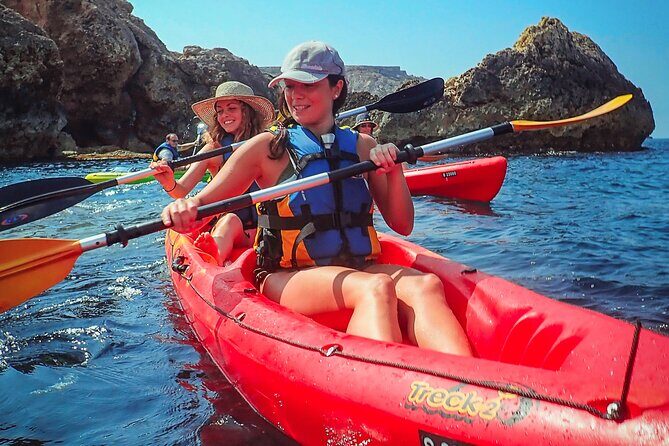
- Coral cue at the right depth: purple coral near the surface, orange soft coral slightly deeper, in clear, unpolluted water
- A vertically tall cave stop: you’ll paddle into a cave area and spot lots of pigeons
- St Paul’s Island time is short but meaningful: a land break plus a quick walk with birdlife and views of Selmun clay cliffs and saltpans
- Weather can reroute the plan: if conditions are off, you may paddle extra along Selmun/Mgiebah coasts instead of going to St Paul’s Island
- Small-group feel (up to 23): plus possible kayak sharing if your group size is odd
From Mistra Bay to your kayak: the setup that keeps it smooth
Your tour starts at Margo’s Mistra Bay (at Palazzo Santa Rosa Mistra Bay), in Il-Mellieħa. It’s near public transportation, and you’ll return to the same meeting point at the end. The total time is about 2 hours 30 minutes, so you’re not stuck on a half-day schedule—ideal if you want something active without eating your whole day.
The vibe here is practical. You’ll sign terms on-site and provide an ID or passport number to participate. The tour is offered in English, and participants are expected to communicate in English, so it helps if you’re comfortable speaking at least a bit. It’s also capped at 23 travelers, which usually means less waiting and fewer bottlenecks at the water.
Gear-wise, plan on getting wet. The tour includes floatation vests, but the comfort comes from what you wear: shoes you can get soaked, and sun protection that won’t melt into your face. Alan and his colleague get credit for being considerate, and you’ll feel that in the pacing—stops are timed in chunks, so you’re rarely left waiting too long.
Finally, a reality check: you need moderate fitness. The guidance is that you should be able to sustain a 2-hour fast-paced walk with occasional rest stops. That’s not “hard climbing,” but it does matter if you plan to do this on a travel day when your legs are already tired.
You can also read our reviews of more guided tours in Malta



Mistra Bay Beach: starting in a protected setting
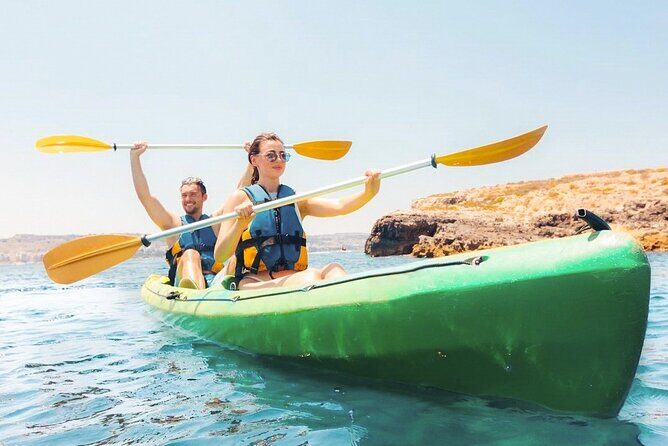
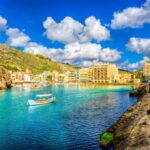
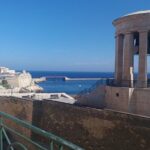
The first stop is Mistra Bay Beach, starting from Mistra. This is a bay of natural importance, tucked in by protective hills. And it’s not just scenic—there’s an 18th-century Military Battery that adds a layer of history to the scenery as you begin.
Expect this part to feel like your warm-up. You’re getting from “land life” into “sea life,” and it sets the tone for the rest of the paddling. The time here is about 30 minutes, and the admission ticket is free.
What makes this stop valuable is the context. Instead of launching immediately into open water with no orientation, you start in a sheltered area. That helps you settle into your kayak rhythm, and it also gives you a calmer first experience of the sea conditions.
If you’re the type who likes seeing how a coastline works (hills shielding bays, built defenses facing the water), this first stretch is a solid foundation before you move toward the more secluded coves.
Rdum il-Biez and the Tal-Mignuna cave: pigeons, coral, and clear water
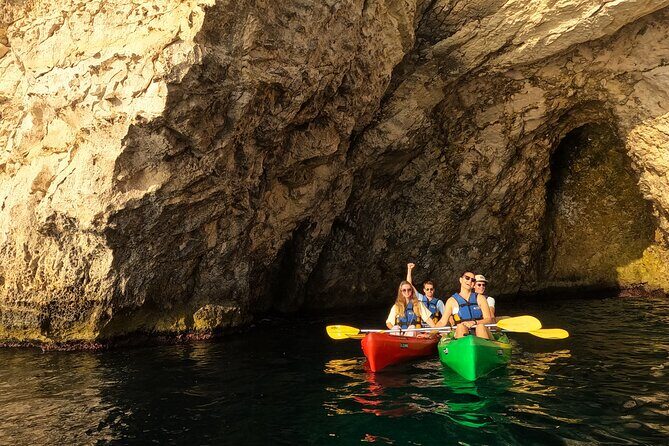
Next comes Rdum il-Biez. Here you kayak through the secluded Tal-Mignuna Bay, also known by Rdum il-Biez, and you’ll get a chance to paddle inside a tall cave. This stop clocks in at about 30 minutes, and it’s another free admission ticket.
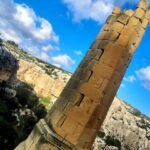
The cave is a highlight because it’s not just “we’re near rocks.” It’s a real change of scale. You’re in and around a vertically tall cave, and it’s home to many friendly pigeons. So even if you’re not a hardcore nature photographer, you’ll likely have something to watch right away besides waves.
Then comes the best part for reef-watchers: you can get up close with purple coral that covers rocks at waterline level. A few centimeters deeper, you may see bright orange soft coral. The tour information ties these corals to unpolluted clear waters, which is a big deal. It means your stop isn’t just “pretty colors”—it’s also an indicator that the conditions are right for marine life to thrive.
One practical note: coral viewing is visual and shallow, not a snorkel-and-float fantasy. You’re still kayaking, so the goal is to observe from the kayak during the stop window, not to hang out underwater. Still, it’s a rare kind of “sea geology” moment for a typical beach-day traveler.
Why this matters: many Malta coastal tours give you a viewpoint. This one gives you a small, guided look at the water’s health—through coral you can actually see.
St Paul’s Islands: a quick bird reserve walk and optional water time
Then you reach St Paul’s Islands for a 25-minute land break. The island is a nature reserve and a home for hundreds of protected birds, so it’s built for quiet observation, not a long party-style visit.
You’ll take a short walk to the top of the island. During that walk, you’ll have time for views toward the Selmun clay cliffs and saltpans. You can also take a selfie with the imposing statue of St Paul.
If you want to mix “bird island” with water time, there’s an alternative: enjoy a refreshing swim break (unsupervised) in St Paul’s Island crystal clear waters. Swimming is optional, but you must be capable of it to join the tour. So if you’re thinking, I’ll just kayak and skip the swim, you can do that—but you still need the ability.
This stop is short, which is a plus for many people. You get the nature reserve experience without losing half your day. The main drawback is simply time: if you want a long linger for photos or bird watching, 25 minutes will feel like a teaser.
Imġiebaħ Bay: the weather-friendly route for extra paddling and possible sunset
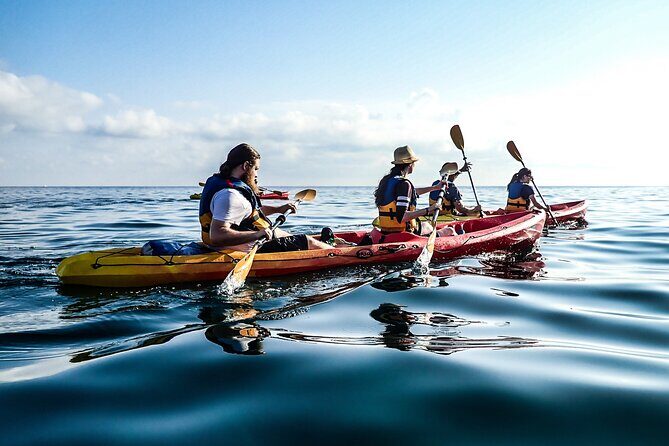
Malta’s coastline can change quickly with wind and chop, so the tour has a smart backup. Occasionally, if conditions aren’t ideal for visiting St Paul’s Island, you’ll instead go to Imġiebaħ Bay. This route can add an extra paddle along the Selmun & Mgiebah coasts with isolated tiny bays.
This part lasts about 30 minutes, and you may still have a land break before watching the sun set from down from your kayaks on the water. In practice, that means the tour can stay “coastal and scenic,” even when the original plan isn’t safe or comfortable.
What I like about this flexibility is that it keeps the experience from turning into a disappointment. Rather than canceling on you immediately, the route adapts while still staying focused on the same strengths: sheltered pockets, coastline scenery, and a nature-based feel.
It’s also why you should treat St Paul’s Island as a strong possibility, not a guarantee. You’ll still get a worthwhile paddle either way, but the exact mix of land vs. water time can shift based on conditions.
A few more Malta tours and experiences worth a look
Pace, fitness, and why the small details matter
This tour asks for moderate physical fitness. The guidance is that you should handle a 2-hour fast-paced walk with occasional rest. That’s your best indicator for whether the day will feel fun or like work.
On the water, paddling is active but structured. Stops are timed, and the guides pace things to participant ability—something that came up in the best reviews. So if you’re not a champion athlete, you’re not expected to sprint between coves.
The “moderate fitness” requirement is mainly about land movement and transition time—getting from the meeting point to the water, short walk segments, and getting in/out of the kayak safely and calmly.
Also pay attention to the social side of kayaking. If your group size is odd, you’ll be assigned double-seater kayaks plus one single-seater. That means you might share a double kayak with another participant, depending on reasons like medical or other needs. Sharing isn’t a bad thing, but it does mean you should be ready to coordinate your seating and paddle rhythm without drama.
Finally, English communication is required. That’s not just a “nice to have.” If you can’t follow basic instructions, you’ll feel stressed on a tour where safety and pacing matter.
Price and value: what $52.42 buys you in real terms
At $52.42 per person, this isn’t a budget-only outing—but it’s also not priced like a luxury private tour. For the money, you get a guided experience with multiple stops, a nature reserve land break, and a marine-focused cave/coral moment that’s not typical of standard beach kayaking.
You also get a fixed time window—about 2.5 hours—so it’s easy to slot into a day around beaches or sightseeing. With a maximum of 23 travelers, you’re unlikely to feel like you’re part of a huge herd.
Most importantly, the value is in the specificity. You’re not just paying to “be on the water.” You’re paying for:
- guided timing and pacing,
- a cave stop with pigeons,
- coral viewing tied to clear water conditions,
- and a bird reserve walk with views and the St Paul statue.
That’s why the experience earns its high rating: it’s not vague. It has distinct moments.
What to bring (and how to avoid the wet-seat regret)
Here’s the practical stuff that can make or break your comfort.
Bring:
- 2 litres of water per participant (and yes, you really need that much for a sun-and-water day)
- Sun protection
- Shoes you don’t mind getting wet
And note the key catch: water isn’t available for purchase at the bay. So don’t count on grabbing a bottle once you’re there. I’d treat this as non-negotiable—especially in warm months.
One of the strongest “do this next time” tips from the experience: wear something that can handle splashes. You should expect water on the seats/bottom area, and you’ll likely end up with some wet gear anyway. The most comfortable approach is to wear swimwear or quick-dry layers and shoes designed for wet surfaces.
Also consider bringing:
- a small dry bag (if you have one),
- a hat you won’t lose when you’re adjusting on the kayak,
- and sunglasses if you can tolerate salt spray.
None of this is flashy, but it turns a fun paddling day into a comfortable one.
Should you book the guided kayak tour in St Paul’s Islands?
If you want a guided kayak day that feels like real nature time—coral colors you can spot, a tall cave with pigeons, a quick bird-reserve walk, and a coastline paddle that can swap to Imġiebaħ Bay when weather changes—then this is a strong yes.
Book it especially if:
- you like structured pacing (not “go paddle on your own”),
- you’re comfortable with active travel days and short walks,
- you can swim and you’re okay with the idea that you might get wet.
Skip it if:
- you’re not comfortable with English instructions,
- you can’t meet the swimming requirement,
- or you hate getting splashed and don’t have suitable wet-shoes/layers.
The biggest tell is the combination of guided care and clear, memorable stops. With Alan and his colleague running the show, you’re paying for a smooth, thoughtful day on the water—not just a random paddle.