REVIEW · MALTA
Kayak Tour Golden Hour at St Paul’s Island 2 hours 30 minutes
Book on Viator →Operated by Kayak Tours Malta · Bookable on Viator
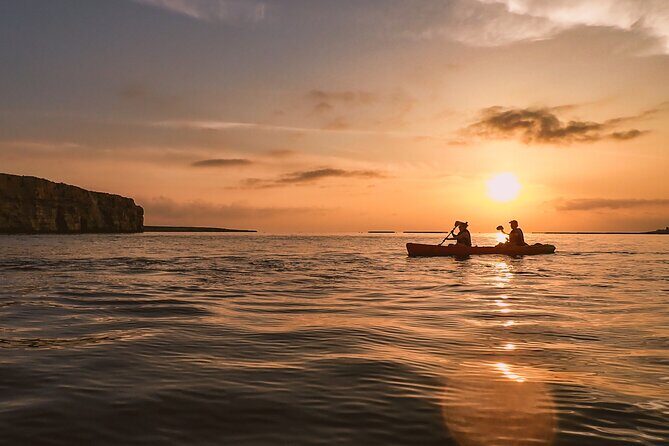
Golden hour looks great from a kayak. This beginner-friendly tour from Mistra Bay turns a simple paddle into a guided coastal walk with a coral cave stop and photo time at St Paul’s Island when the sky warms up. You’ll get a basic lesson up front, then move at a leisurely group pace with frequent stops, so it feels more like a guided adventure than a workout grind.
I especially like two things: the relaxed guiding style (your leaders calibrate pace and distance to the group), and the chance to see unusual details up close—purple and orange coral around a vertically tall cave plus WWII remnants along the route. One thing to plan for: you must be able to swim, and you’ll also need to bring your own 2 litres of water, since there’s no water for purchase at the bay.
If you’re hoping for an easygoing way to experience Malta’s shoreline, this hits the sweet spot. It’s short enough to stay fun, but structured enough that you won’t feel lost in open water.
In This Review
- Key highlights you’ll care about
- Golden hour from Mistra Bay: the vibe and the payoff
- Price and value: what $50.71 buys you
- Meeting at Margo’s Mistra Bay and starting with real instruction
- Mistra Bay to Rdum il-Biez: coast-hugging, caves, and WWII leftovers
- The cave stop: purple and orange coral you’ll actually be able to see
- St Paul’s Island break: birds, statue photos, and a cross from 1845
- If weather shifts: Imġiebaħ Bay and sunset-on-the-water
- Pacing, fitness, and the reality of sharing kayaks
- What to bring (and how to avoid the annoying day-of surprises)
- Who should book this kayak tour (and who should skip)
- The bottom line: should you book it?
- FAQ
- FAQ
- How long is the Kayak Tour Golden Hour at St Paul’s Island?
- Where does the tour start?
- Is this tour suitable for beginners?
- How far will we paddle?
- Do I need to know how to swim?
- What are the main stops?
- What should I bring?
- Is water available to buy at the bay?
- What happens if the weather is poor?
- How many people are on the tour?
Key highlights you’ll care about
- Beginner lesson at Mistra Bay before you start paddling for real
- A vertically tall cave stop with colorful coral you can spot at waterline level
- St Paul’s Island break with a statue and a cross dating back to 1845
- Optional swim time during the island stop, plus plenty of rest breaks
- Golden timing—you paddle back before sunset, and sometimes watch sunset from the water
- Small-group feel with a maximum of 23 people
Golden hour from Mistra Bay: the vibe and the payoff
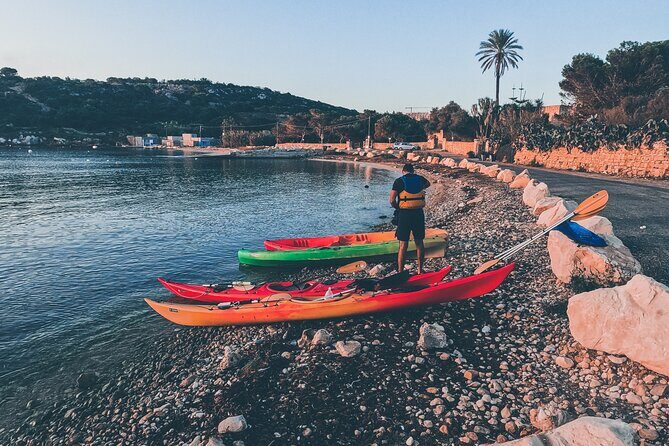
This is a “you’re on holiday, so take it easy” type of kayaking tour. You start at Mistra Bay, get a basic kayak lesson, then follow a coastal route at a leisurely group pace with lots of pauses. That matters more than you’d think, because it turns kayaking from a constant effort into something you can actually enjoy—especially when you’re learning.
The payoff is the timing. The whole idea is to be out along the coast as the day shifts toward golden-orange light. The route brings you to St Paul’s Island for photo-friendly views and a calm land break, and you paddle back before sunset so the end feels planned rather than rushed.
You’ll also cover a modest distance—about 4–5 km total—so most people can focus on scenery, not stamina. It’s not a racing tour. It’s a guided way to see a specific stretch of Malta from the water.
A few more Malta tours and experiences worth a look
Price and value: what $50.71 buys you
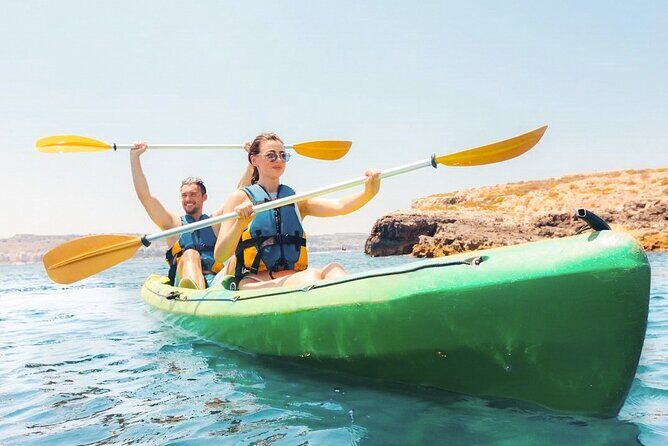
At $50.71 per person for about 2 hours 30 minutes, you’re paying for more than “a kayak and go.” You’re paying for the guide-led structure: a beginner lesson, group pacing, and the specific stops that include cave access and time on St Paul’s Island.
The small-group cap (up to 23) is part of the value. It keeps the tour from feeling crowded, and it helps your leaders adjust pace and distance to match what the group can handle.
Also, every stop you’ll make includes free admission for the listed areas. You’re not paying extra at each location. That helps keep the total cost predictable.
Meeting at Margo’s Mistra Bay and starting with real instruction
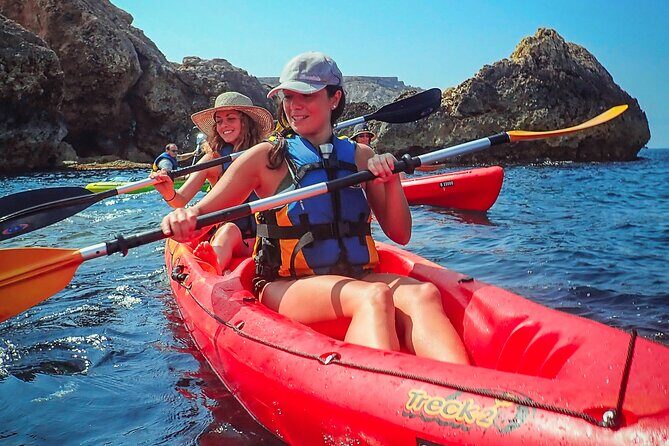
You meet at Margo’s Mistra Bay, Palazzo Santa Rosa, Mistra Bay (MLH0000), Il-Mellieħa, Malta. The location is noted as near public transportation, which is useful if you’re planning your day around bus or ferry connections rather than renting a car.
Before you paddle far, you start with a basic kayak lesson at the beach. For first-timers, that’s huge. You’re not dropped into open water and told to figure it out. Your leaders guide you and then move into the coastal hugging route.
One practical point: you’ll need to sign terms on-site and provide an ID number or passport number. Bring the right ID with you, because that’s part of getting on the water.
Mistra Bay to Rdum il-Biez: coast-hugging, caves, and WWII leftovers
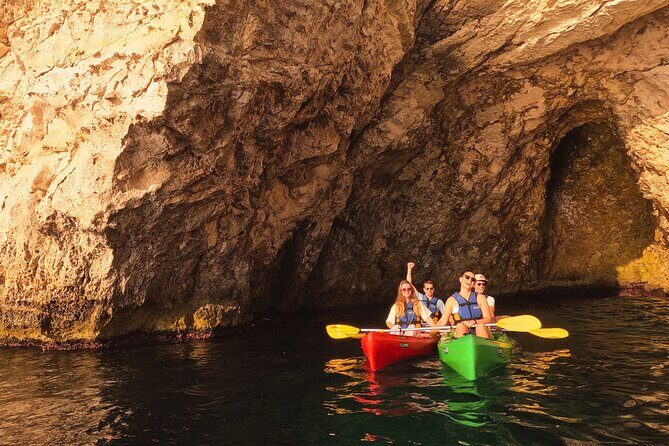
After the lesson, you paddle out and hug the rugged coast. The route goes from Mistra Bay up toward Rdum il-Biez Bay, keeping the coastline close enough for comfortable navigation.
Along the way, the waters are described as vivid blue, and you’ll pass areas with interesting history, including several remnants of WWII. That’s not something you’ll spot from shore, so seeing it from the kayak makes the whole route feel more specific and alive.
At this stage, you’ll also notice how often the tour stops. It’s not constant paddling. It’s paddling, pause, look, then paddle again. That rhythm is what makes it doable for beginners without turning into a boring boat ride.
The cave stop: purple and orange coral you’ll actually be able to see
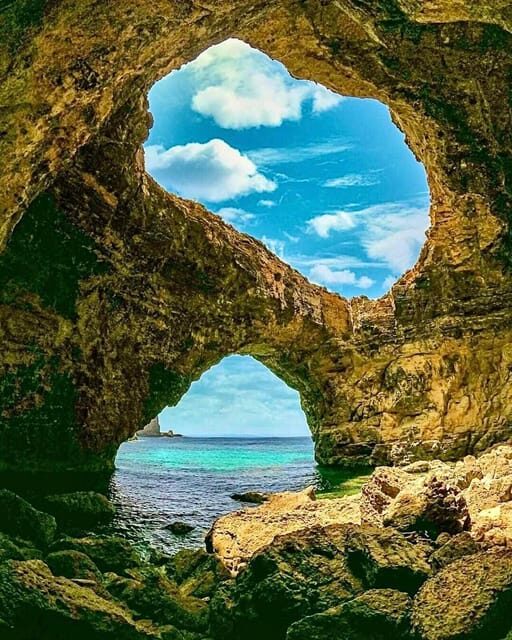
The Rdum il-Biez stop includes time to hop inside a vertically tall cave. This is where the tour earns its name Golden Hour in a different way: the light plus the clear water makes the coral colors easier to pick out.
You’re looking for two coral types mentioned for this area:
- Purple coral at waterline level
- Orange soft coral a few centimeters deeper
What makes this worth your time is the clarity. These corals are described as able to grow only in unpolluted, clear waters, so the cave stop is also a quiet reminder of what responsible waterways look like. If you like seeing small natural details instead of just big scenic views, this will be your favorite moment.
Also, you’ll encounter friendly pigeons in the area described as Tal-Mignuna / Rdum il-Biez. It’s a small thing, but it adds that “you’re in a real place” feeling rather than a staged photo stop.
A few more Malta tours and experiences worth a look
St Paul’s Island break: birds, statue photos, and a cross from 1845
Next comes the 25-minute break on St Paul’s Island. This is the anchor of the tour. You cross a 100-meter channel to reach the island, then you get two choices during that land break.
Option one: short walk to the top. The island is a nature reserve and home to hundreds of protected birds. You also get the statue of St Paul for photos, and a big cross dating back to 1845. The timing is excellent here because your photos are framed as the sky turns golden orange.
Option two: enjoy a refreshing swim break in crystal-clear water. It’s described as unsupervised, so you’re responsible for your own safety and comfort level in the water.
This is also one of those rare moments where the tour gives you something active (walking to viewpoints) plus something relaxing (swim or just float and breathe). That balance is why people often call it relaxing, not exhausting.
If weather shifts: Imġiebaħ Bay and sunset-on-the-water
The tour has a weather plan. If conditions aren’t right for the St Paul’s Island stop, you may go to an extra route instead, heading past Selmun and Mgiebah coasts with lots of isolated tiny bays.
This alternative includes time that can include a land break and—when conditions allow—watching the sunset from down from your kayaks on water. Even when it changes the plan, the goal stays the same: keep the golden-hour experience without forcing it into unsafe conditions.
You should think of this as flexible coastal paddling rather than a “must-hit-everything” checklist. That’s usually what you want on the sea.
Pacing, fitness, and the reality of sharing kayaks
The physical level is described as moderate physical fitness. The organizers give a practical guideline: participants should be able to sustain a 2-hour fast-paced walk with occasional rest. That doesn’t mean you’ll be walking for two hours, but it tells you the tour expects you to handle some sustained effort.
You’ll paddle about 4–5 km total, and the leaders adjust pace and distance to abilities. Still, you should expect enough paddling to feel like kayaking, not just sitting in a boat. If you’re expecting a gentle drift, this might feel more active than you pictured.
One logistics note that matters: for odd numbers of participants, you’ll get a mix of double-seater and single-seater kayaks. You might also need to share a double-seater kayak with another participant for medical or other reasons. That’s normal for small group tours, but it’s good to know upfront.
And here’s the big non-negotiable: participants must be capable of swimming. Floatation vests are provided, but inability to swim is not accepted. The tour notes that swimming is optional during the island stop, but the requirement to be able to swim still stands.
What to bring (and how to avoid the annoying day-of surprises)
Bring:
- 2 litres of water per participant
- Sun protection
- Shoes you don’t mind getting wet
And yes, it’s important: water isn’t available for purchase at the bay, so don’t plan on buying a bottle on arrival.
Also, arrive ready for wet conditions. The coast route and possible swim breaks mean your feet and lower gear are likely to get salty. Wet-friendly shoes keep you comfortable during land breaks too.
Who should book this kayak tour (and who should skip)
Book it if you want:
- A beginner-friendly guided introduction to kayaking in clear coastal water
- A tour with frequent stops so you can actually see the details
- A golden-hour photo window at St Paul’s Island, including a famous statue and a cross dating back to 1845
- The option to walk or swim during the island break
Skip it if you:
- Can’t swim (required even though vests are provided)
- Don’t want any sustained effort at all (the fitness guideline is based on a long fast walk)
- Prefer tours where you can buy basic supplies on the spot (here, you need your own water)
If you’re traveling with teenagers, note that youth aged 12–17 need to be accompanied by two adults. If you’re solo and worried about sharing, keep in mind the tour can mix single and double kayaks depending on numbers.
The bottom line: should you book it?
I’d book this if you want a guided, manageable kayak day that mixes coastal paddling, a standout cave stop, and a calm St Paul’s Island break during golden light. The structure is the strength: lesson first, then a pace that matches the group, then meaningful time on land and in the water.
If you’re comfortable swimming and can handle moderate effort, you’ll likely enjoy how relaxed it feels while still delivering real sea views. If not, the tour’s safety rules and fitness expectations make it a poor match.
FAQ
FAQ
How long is the Kayak Tour Golden Hour at St Paul’s Island?
The tour lasts about 2 hours 30 minutes.
Where does the tour start?
You meet at Margo’s Mistra Bay, Palazzo Santa Rosa, Mistra Bay (MLH0000), Il-Mellieħa, Malta, and you return to the same meeting point.
Is this tour suitable for beginners?
Yes. It’s described as beginner friendly and includes a basic kayak lesson at Mistra Bay Beach before you paddle.
How far will we paddle?
You paddle a total of about 4–5 kilometers.
Do I need to know how to swim?
Yes. Participants must be capable of swimming in order to participate. Floatation vests are provided, and swimming is optional during the island break, but you still must be able to swim.
What are the main stops?
You’ll start at Mistra Bay, paddle to Rdum il-Biez for a cave stop, cross to St Paul’s Island for a 25-minute land break (walk or swim), and then either return or continue to Imġiebaħ Bay depending on weather.
What should I bring?
Bring 2 litres of water per participant, sun protection, and shoes you don’t mind getting wet.
Is water available to buy at the bay?
No. The tour notes that water is not available for purchase, so you should bring it in advance.
What happens if the weather is poor?
This experience requires good weather. If it’s canceled due to poor weather, you’ll be offered a different date or a full refund.
How many people are on the tour?
The tour has a maximum of 23 travelers.