REVIEW · VALLETTA
Aviation Museum, Mosta Church, WWII Shelters inc. Platter
Book on GetYourGuide →Operated by Supreme Travel Limited · Bookable on GetYourGuide
A single bus ride, three chapters of Malta. What I like is the Xarabank experience and the chance to stand under the Mosta Dome knowing the church survived a WWII bomb that failed to explode. One thing to think about: the schedule is tight, so you may feel rushed if you want extra time inside the museum or church.
You also get a clean, guided flow that keeps the history understandable: aviation at Ta’ Qali first, then the Mosta story, then air-raid shelters under the church area. A licensed English-speaking guide helps connect the dots, and the added Maltese platter gives you a simple taste of local food.
In This Review
- Key Things To Know Before You Go
- A 4-hour Malta loop that ties transport, air power, and survival
- Climbing aboard the Xarabank: why the bus is part of the story
- Malta Aviation Museum at Ta’ Qali: three hangars on the island’s airfield past
- Mosta Rotunda: standing under the dome and the WWII bomb story
- WWII Shelters in Mosta: the family refuge dug by hand in 1940
- The Maltese platter, coffee, and how the food fits the day
- Price and value: is $57 for this mix a fair deal?
- Who this tour suits best (and who should consider a different plan)
- Should you book this Malta Aviation, Mosta, and WWII Shelters tour?
- FAQ
- What’s included in the tour price?
- How long is the tour?
- What stops are on the itinerary?
- What kind of transport do you use?
- Is the tour guided in English?
- Is the tour suitable for people with mobility impairments?
- What should I wear or bring?
Key Things To Know Before You Go

- A classic Xarabank ride: You’ll travel by a traditional bus style many locals remember from earlier decades.
- Ta’ Qali Aviation Museum, not just planes on walls: Three hangars on the former RAF airfield, with aircraft-related preservation/restoration.
- Mosta Dome is more than pretty: The WWII bomb incident and related displays give the visit real weight.
- WWII shelters are practical history: Dug by hand in 1940, with an exhibition tied to old trades tools.
- Short-and-sweet timing: 4 hours covers a lot, but don’t plan on long browsing.
A 4-hour Malta loop that ties transport, air power, and survival

This tour is built like a fast Maltese snapshot. You start with a ride that feels like an artifact itself, then move to stories of aircraft and war, and end with the Mosta area’s shelter network. It’s a solid choice if you’re in Malta for a short time and want big sights without running around on your own.
The best part of the format is how it keeps you moving through Malta’s 20th-century story in a way that’s easy to follow. The aviation stop at Ta’ Qali explains what Malta’s airfield meant in WWII and afterward. The Mosta Rotunda visit adds a specific, dramatic event from 9 April 1942, when a German bomb pierced the dome during Mass but did not detonate. Then the WWII shelter stop shows where families hid while raids continued.
The main trade-off is simple: 4 hours doesn’t allow slow wandering. If you love museums and want to read every label, you’ll likely wish for more time at Ta’ Qali and inside Mosta Dome.
You can also read our reviews of more museum experiences in Valletta
Climbing aboard the Xarabank: why the bus is part of the story

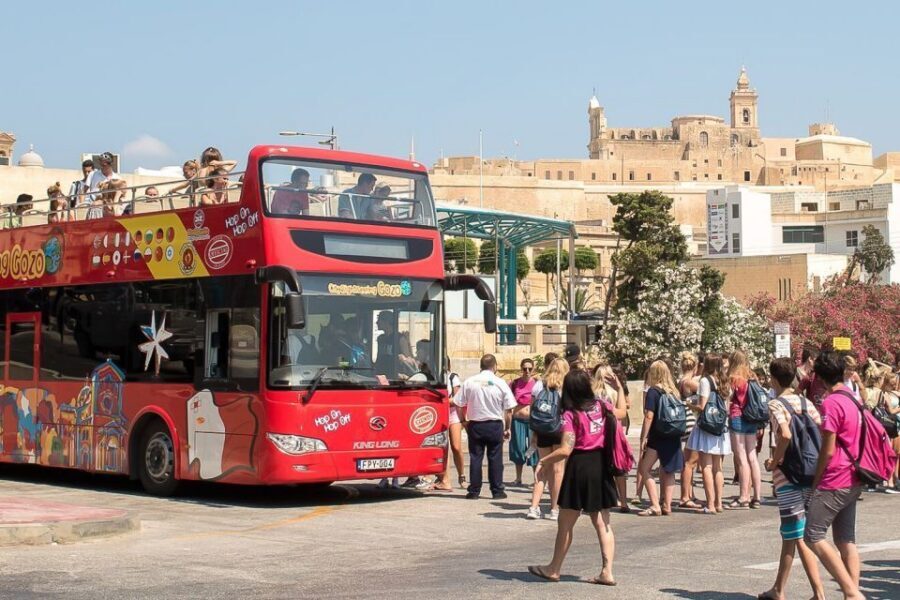
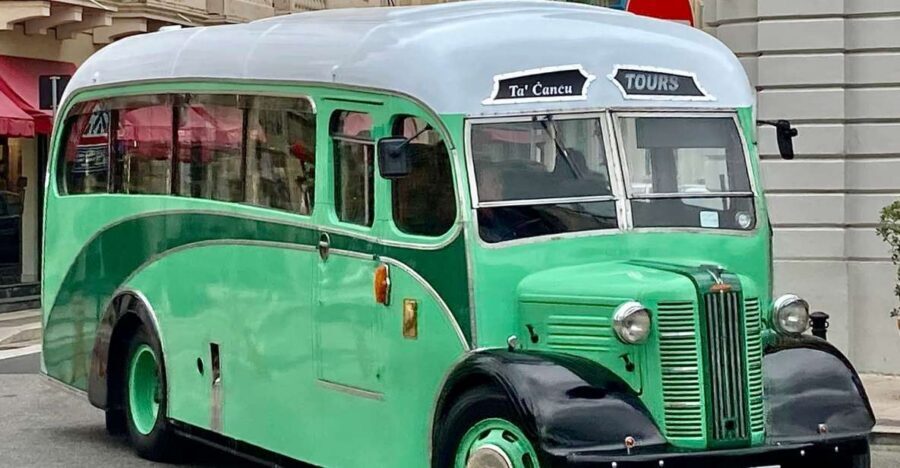
You’ll ride a traditional Maltese bus locals call Xarabank. These buses were built by Maltese bus builders during the 1950s through the 1970s, and they came in different colors by locality. That wasn’t just style. The decoration helped overcome illiteracy, so passengers could recognize routes and identity even if reading was a challenge.
Look closely and you’ll see the design logic: painted patterns, typography, passenger messages on the inside and outside, names of patron saints, song lyrics, slogans, and plenty of chrome and accessories like flags and good-luck symbols. Over time, bus numbers became more standardized, and the classic decorated look became rare. Today, you mostly see these buses on special occasions such as weddings and tourist events.
Why that matters for you: this isn’t a generic transfer. It’s a moving slice of local design history, and it sets the tone before you even reach the museum. If you want one memorable “Malta feels like Malta” moment that isn’t just architecture, the ride helps deliver that early.
Practical note: wear comfortable clothes. You’ll be on the bus, then walking between stops, and you don’t want sore legs stealing attention from the sights.
Malta Aviation Museum at Ta’ Qali: three hangars on the island’s airfield past
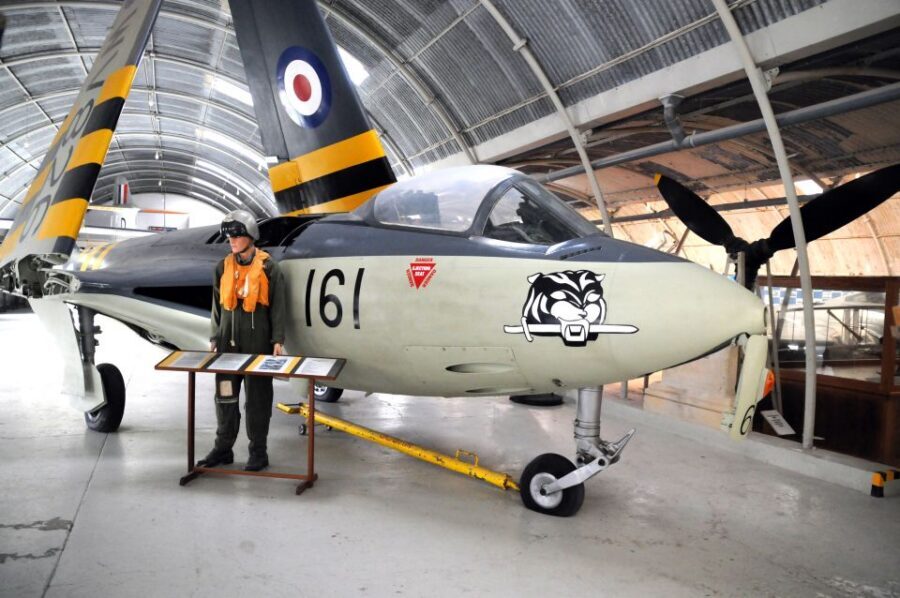
Your first major stop is the Malta Aviation Museum at Ta’ Qali, located on the site of the former Royal Air Force airfield. The museum is based in three hangars, which makes the visit feel grounded in real place, not just a collection shipped in from somewhere else.
What you’re looking at is the history of aviation on the island, with special emphasis on the Second World War and post-war periods. The displays focus on aircraft and the aviation story, and the museum is also involved in preservation and restoration of aircraft, including some that are airworthy. Even if you’re not an aircraft expert, the combination of wartime context and restoration work is a meaningful way to understand why these objects still matter.
This is also where the tour’s “4 hours” pace can be a little noticeable. Some people find the museum visit just the right amount of time; others feel there isn’t enough space to linger. If you’re the kind of visitor who reads every caption, plan to skim with intention: pick a few sections that interest you most, then ask your guide what to focus on.
One more perk: the guided approach helps. You’re not just staring at metal. You’re getting the connections between Malta’s airfield role and what you’ll see later at Mosta.
Mosta Rotunda: standing under the dome and the WWII bomb story
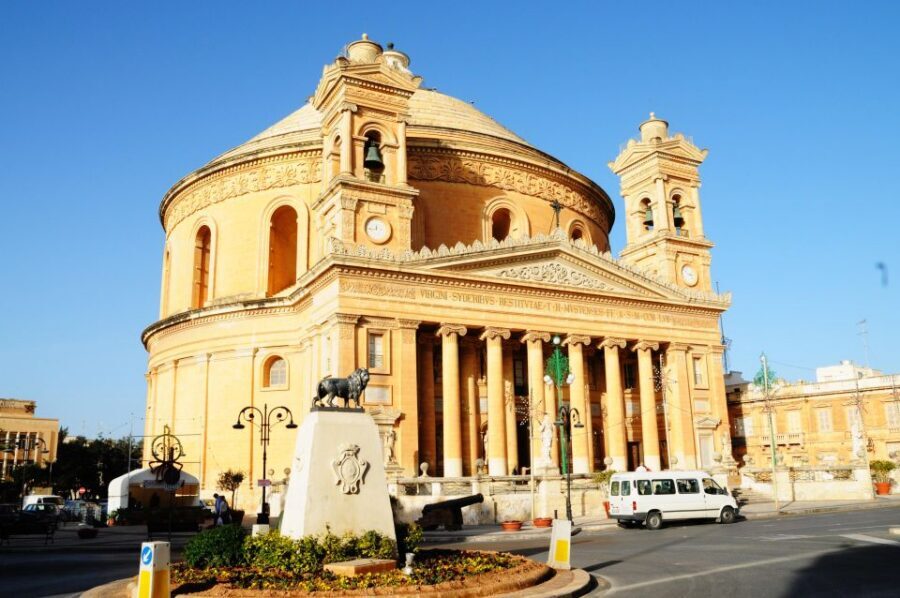
Mosta Dome, officially the Mosta Rotunda, is dedicated to the Assumption of Our Lady. Its design is based on the Pantheon in Rome, and the dome is famous for its scale—described as Malta’s largest and most famous church, with the third largest unsupported dome in the world.
The WWII angle is what turns the visit from impressive to unforgettable. On 9 April 1942, a German aerial bomb pierced the dome during Mass and fell into the church, but failed to explode. In Maltese tradition, that outcome was interpreted as a miracle. And you’ll see displays tied directly to the incident, including a replica of the bomb.
During your visit, you’ll admire areas such as the sacristies and objects of prestige. There’s also a large-scale model of the church, which helps you understand the structure while you’re inside. The tour also includes going up to the portico and visiting the bell tower, plus entering the inner gallery.
For many visitors, this is the emotional center of the whole itinerary. One common reaction is that it feels like a must-see while you’re in Malta. Still, remember the time constraint: the experience can feel a bit rushed if you want to spend extra time taking in details or sitting longer to absorb the atmosphere.
Tip that helps: use the model and the bomb-related displays to orient yourself early. Once you understand the layout and the incident, the rest of the dome visit clicks faster and feels more rewarding.
WWII Shelters in Mosta: the family refuge dug by hand in 1940
Your last stop is the World War II Shelter that skirts the Mosta Church parvis. This shelter complex opened recently and has a strong, specific origin story: it was dug by hand in 1940 by 15 highly skilled workmen.
That detail matters. You’re not looking at an abstract memorial. You’re seeing a space that was created in real time for families trying to survive air raids. The tour frames how people used shelters during continuous bombing, which helps you visualize what safety meant when the skies were active and danger was constant.
The shelter complex also includes an exhibition of tools and implements related to old trades. That mix of wartime survival space and everyday-work history is a useful contrast. It reminds you that this wasn’t only about war stories; it was also about how communities kept functioning.
You’ll likely find the shelter stop a strong closer because it ties the whole tour together. Aviation explains how the threat arrived. The dome visit gives you one dramatic moment from 1942. The shelters show the practical reality for families living through repeated raids.
One consideration: this tour isn’t for people with mobility impairments. Since the activity specifies it’s not suitable, plan to choose a different option if you need fully accessible movement.




The Maltese platter, coffee, and how the food fits the day
At the end, you’ll enjoy local savouries plus a Maltese platter, with coffee and water included. This is a “taste Malta” addition rather than a full meal stop, and that’s part of the value equation for a 4-hour tour.
The platter has a reputation for being delicious and a good way to sample traditional Maltese food. At the same time, there’s a fair caution: some people describe the platter as basic and on the smaller side. If you’re arriving hungry from a morning of walking or you have a bigger appetite, you might want to eat something light before the tour.
The bright side is that the food doesn’t hijack your schedule. It gives you a local taste while you’re still in Mosta, and it keeps the tour from ending on an empty stomach.
Price and value: is $57 for this mix a fair deal?
The price is listed at $57 per person for about 4 hours. For that, you get hotel or nearest-point pickup and drop-off, a licensed English-speaking guide, museum entrances at Malta Aviation Museum and Mosta Dome, WWII shelters admission, plus the Maltese platter with coffee and water.
Here’s how I’d judge the value: you’re paying for convenience (pickup, guided transitions) plus ticketed entry costs to three separate sites. You’re also getting the distinctive bonus of the traditional Xarabank ride, which is harder to replicate if you’re traveling independently.
Where value can dip is time. If you’re the type who wants slow, detailed museum browsing, the 4-hour structure can feel like you’re paying for highlights rather than deep reading. If you’re okay with a guided hit list and want to see a lot without logistics stress, the price becomes easier to justify.
Also keep in mind that the included food is helpful, but it’s not a guaranteed big lunch. That affects value if you’re a “feed me” traveler rather than a “taste me” traveler.
Who this tour suits best (and who should consider a different plan)

This tour fits best if you want a guided overview with memorable structure: bus ride first, aviation museum next, then Malta’s standout church moment, then the WWII shelter story. It also works well for a mixed group with kids, because the pace is manageable and the stops are visually strong.
It may be less ideal if you:
- have mobility constraints, since it’s not suitable for people with mobility impairments
- want extended time in the museum or inside Mosta Dome
- expect a full sit-down meal from the platter
If you’re visiting Malta on a tight schedule, this is the kind of day plan that lets you cross off major sights without feeling like you’ve been stuck in transit all day.
Should you book this Malta Aviation, Mosta, and WWII Shelters tour?
I’d book it if you want a guided way to connect Malta’s wartime story—from aircraft history to one dramatic church event to the shelters where families hid. The Xarabank ride adds character, and the combination of Mosta Dome’s dome story with the WWII shelter stop gives the 4 hours real meaning.
I’d hesitate if your top priority is slow museum reading and long quiet time inside churches. In that case, you’ll probably want a more flexible option or a longer dedicated visit.
One last practical tip: when you book, include your hotel name since the pickup point and pickup time are sent by email one day before the excursion date. That small step helps the day run smoothly.
If you can handle a packed schedule and you like guided “highlights with context,” this one is a strong value for seeing Malta’s 20th-century story in a single afternoon.
FAQ
What’s included in the tour price?
The tour includes pickup and drop-off at your hotel or nearest point, a licensed English-speaking guide, entrance to the Malta Aviation Museum, entrance to the Mosta Dome, entrance to the Mosta WWII Shelters, and a Maltese platter with coffee and water.
How long is the tour?
The duration is 4 hours.
What stops are on the itinerary?
You visit the Malta Aviation Museum at Ta’ Qali, the Mosta Dome (Mosta Rotunda), and the World War II Shelters in Mosta. The tour also includes the Maltese platter.
What kind of transport do you use?
You travel on a traditional Maltese bus known by locals as Xarabank.
Is the tour guided in English?
Yes. The tour includes a live English-speaking guide.
Is the tour suitable for people with mobility impairments?
No, it is not suitable for people with mobility impairments.
What should I wear or bring?
Bring comfortable clothes, since you’ll be moving between stops and spending time at each site.