REVIEW · ST PAUL S BAY
Malta: PADI Discover Scuba Diving Experience
Book on GetYourGuide →Operated by New Dimension Scuba · Bookable on GetYourGuide
Breathing underwater changes how you see Malta. This PADI Discover Scuba try session mixes quick prep with guided time on a local reef. You’ll get calm, patient coaching and a small-group setup that keeps things friendly.
I especially like the online theory before you arrive, so you start the water portion with less guessing. I also like that the team builds skills first on the house reef before you go farther out, which makes the whole experience feel more controlled. The main drawback to consider is that the medical rules are strict, and the activity isn’t suitable for many common conditions.
In This Review
- Key highlights worth knowing
- Why this Malta try session feels safe and personal
- The 2.5-hour timeline: online prep to water time
- Equipment orientation: what you don’t have to worry about
- House reef skill practice: comfort first, then exploring farther
- Exploring Malta’s underwater seascapes with a PADI instructor
- Optional second session: another guided experience up to 12 meters
- Price and value: what $85 actually buys you
- Who should skip it: age and medical limits that matter
- What to bring and how to act in the water
- Should you book this Malta scuba try session?
- FAQ
- How long is the PADI Discover Scuba experience?
- Do I need to complete online theory before I arrive?
- What equipment do I need to bring?
- How many people are in the group?
- Where do I meet the instructor?
- Is there a second option after the first session?
- Is the instruction available in English?
- What are the main rules during the activity?
Key highlights worth knowing
- Online theory first: you complete it before the activity, then build confidence with an in-water briefing
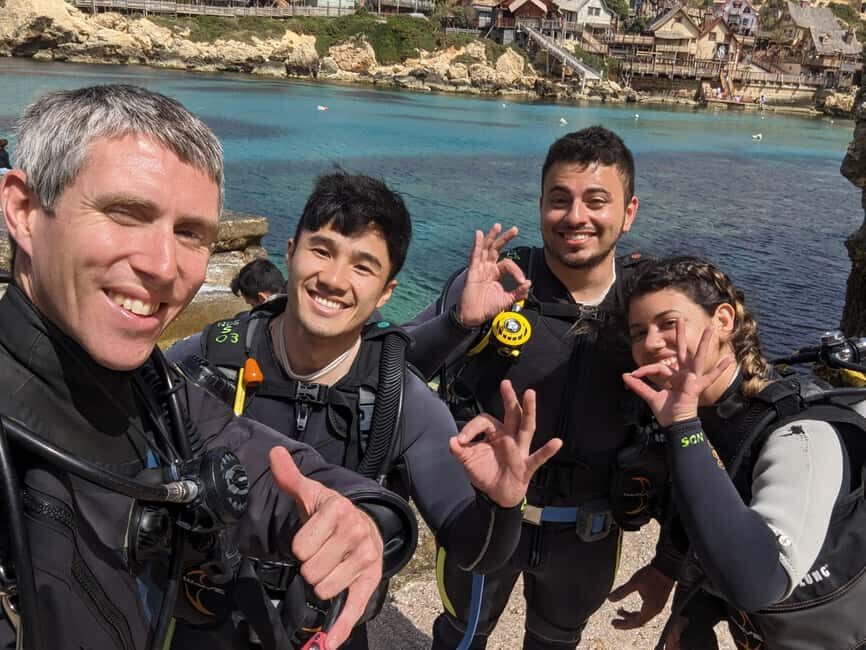
- Small group of up to 3: more personal attention and a calmer pace
- House reef skill practice: shallow, confined practice comes before open-water exploration
- Equipment orientation included: you don’t have to sort gear on your own
- Optional second session: you can add another guided experience up to 12 meters
- English instruction: guidance is delivered in English throughout
Why this Malta try session feels safe and personal
If you’ve ever wondered what it feels like to breathe underwater, this is a smart, low-stress way to find out. Malta’s clear water is great for first-timers, but what really makes the experience work is the teaching style. The session is designed to be calm and patient, and the instructors focus on keeping you safe while also making it enjoyable.
The small group size is a big deal. Limited to 3 participants, you’re not competing for attention with a crowd. That means you can ask questions, get corrected quickly, and settle into the basics without feeling rushed. And the overall vibe matters on a try experience: you’re learning something new, and nerves are normal.
There’s also a practical safety structure to the plan. You’re not thrown into the deep end. Instead, the day flows from basics, to equipment orientation, to shallow skill work, and then to further exploration. That sequence helps your brain do the job of learning instead of panicking.
Also, you’ll have a guide focused on your enjoyment, not just checking boxes. That matters because the best first underwater memories feel effortless—even when you’re learning the fundamentals.
You can also read our reviews of more scuba diving tours in St Paul S Bay
The 2.5-hour timeline: online prep to water time
This experience runs about 2.5 hours (you’ll want to check available starting times). The flow is simple:
First, you complete online theory before you go. That pre-work is what makes the in-water time more than just a fun swim. It helps you understand how scuba basics fit together before you ever step into the water.
When you arrive, you meet at New Dimension Scuba. Look for the New Dimension Scuba logo in grey and yellow above the door. It’s just up the hill from the swimming pool, in front of the tower. The activity ends back at the same meeting point.
From there, the day includes an equipment orientation and a pre-dive briefing. Think of this as the moment when you get your bearings: what you’ll wear, how your gear should feel, what you’re supposed to do during the water time, and how the instructor will guide you.
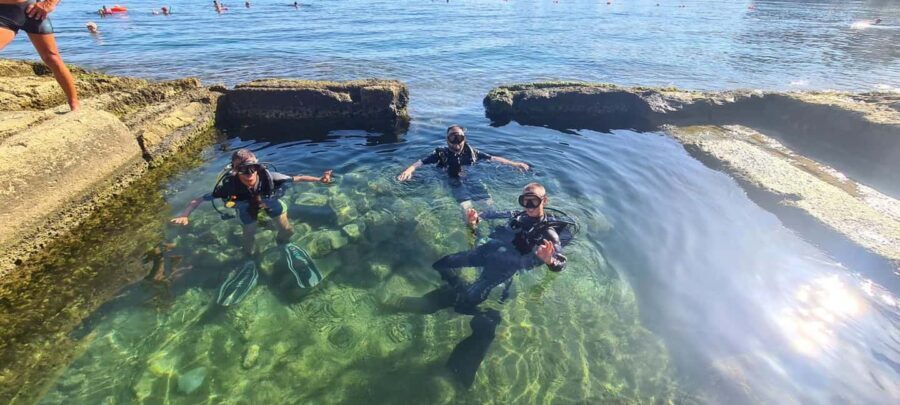
Then you head to the water for a short session on the house reef. The plan specifically includes shallow confined skill practice before moving farther out. That pacing is key for first-timers. You build comfort first, then you explore.
Finally, everything wraps up and you return to the meeting point. If you choose to add a second session later, that’s an optional add-on rather than something automatically built in.
Equipment orientation: what you don’t have to worry about
One of the best things about this try session is how much is handled for you. All equipment needed for your underwater experience is provided. That means no last-minute shopping, no trying to rent the wrong size, and no showing up with gear you don’t fully understand.
Still, having gear provided doesn’t mean you’re left to figure it out. You’ll get an equipment orientation and a pre-session briefing before you enter the water. This is the part that makes the learning curve gentler.
For you, the practical benefit is time and confidence. When the instructor shows you how everything works together, you get fewer surprises. And because this is a small group (up to 3), the instructor can tailor explanations to what you’re actually doing in the moment.
Another benefit: you can focus on the experience itself. You’re learning how breathing feels underwater, how to move comfortably, and how to follow guided instructions. With gear handled and explained, you’re not juggling a dozen tasks at once.
If you’re someone who gets anxious with new equipment, this format is usually a relief: you’re taught what matters and then guided through it.
House reef skill practice: comfort first, then exploring farther
The heart of the learning process happens on the house reef. This is where shallow, confined skill practice takes place before you head out further for open-water exploration.
That matters more than it sounds. Shallow practice gives you space to get used to basic movements and the feel of breathing underwater without feeling overwhelmed by distance or depth. It’s the moment where you go from thinking to doing.
And because it’s confined and shallow, you also get a better sense of balance and control. You’ll likely feel your confidence rise as the instructor confirms what you’re doing and helps you adjust.
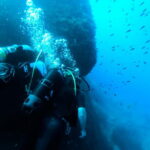
Once skills feel steadier, the plan takes you farther out for exploration. You’ll still be guided the whole time, but you get to shift from learning mode to noticing mode: light patterns, the shape of the reef, and the sense of space you only get once you’re off the training portion.
Malta’s underwater seascapes are part of the payoff. You’re not only collecting a new skill. You’re also experiencing the coast from a different angle, with a PADI instructor acting as your translator of what you’re seeing.
Exploring Malta’s underwater seascapes with a PADI instructor
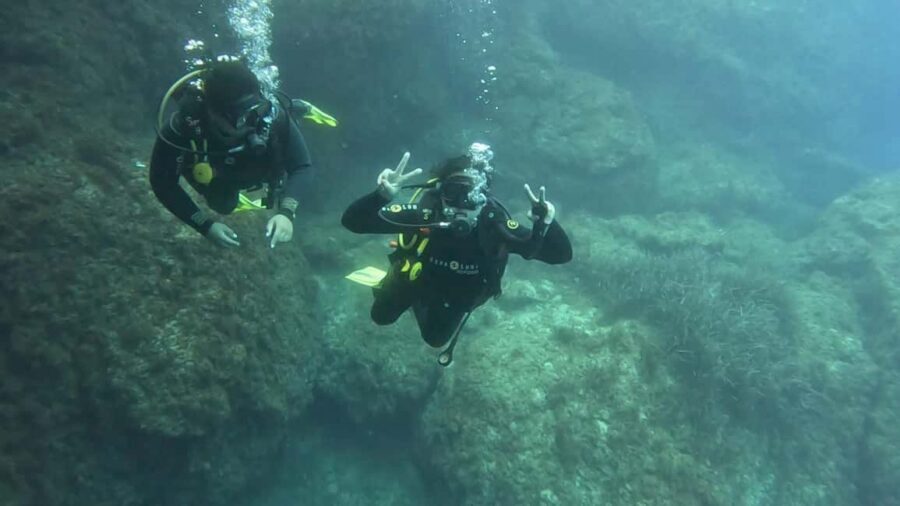
After the initial shallow practice, you’ll continue on a guided reef experience with your PADI instructor. The goal is not just to move forward. It’s to make the experience safe while also letting you appreciate what Malta looks like underwater.
The instruction team is described as experienced and focused on both safety and enjoyment. That combination is what keeps first-timer experiences from becoming stressful. In a good session, the instructor’s job is to help you stay calm and help you keep breathing smoothly while you look around.
You’ll also want to pay attention to how you behave in the water. You’re in a marine environment, and part of respectful scuba is simple: watch, don’t grab. Touching marine life isn’t allowed, so keep your hands to yourself and treat the reef like a museum exhibit.
Malta is ideal for this kind of learning because the day’s structure makes it possible to see something special without requiring a long commitment. It’s a short, guided introduction, not an all-day technical course. You walk away with the basics and the feeling that you can picture yourself doing more later.




Optional second session: another guided experience up to 12 meters
After your first Discover Scuba try session, you can complete a second session with your PADI instructor. This is optional, not automatic.
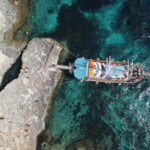
If you add it, you can do the second session at another dive site. The maximum depth mentioned for this second session is 12 meters.
This is a nice option if you want a little more time with instruction while your confidence is still fresh. The first session is about learning comfort and core skills. The second can feel like the reward phase—more exploration, less uncertainty—because you’ve already gotten through the initial learning steps once.
Just note what’s not promised: the information provided only sets the maximum depth for the second session, not the exact depth for the first. If depth comfort is a key concern for you, ask the provider about what range they plan for the first session when you check your schedule.
Price and value: what $85 actually buys you
At $85 per person, this is positioned as an introduction experience rather than a long training program. So the real question is: what’s included, and what do those inclusions mean for value?
Here’s what you’re getting:
- Online theory you must complete before the activity
- Equipment orientation and a pre-session briefing
- All needed equipment
- A guided session on a local reef
From a value perspective, the big win is that you’re paying for instructor time plus full gear support plus guided underwater coaching. Many activities like this can cost more once you add equipment rental and instructor-led instruction. Here, those pieces are bundled.
Also, the small group of up to 3 is part of what you’re paying for. It’s not the same experience as a larger group where you wait your turn for corrections.
If you’re comparing costs, don’t just compare the price tag. Compare what’s included and how much attention you get. For a first underwater experience, attention and coaching quality are often what determine whether you walk away excited or frustrated.
Who should skip it: age and medical limits that matter
This activity isn’t for everyone, and that’s not a small point. You must be at least 10 years old and medically fit to dive. The provider also says to check medical screening questions before booking. If you answer yes to certain items, you may need a doctor’s approval of fitness to dive before participating.
If you’re trying to decide quickly, here are the clear “not suitable” situations listed:
- Children under 10 years
- Children under 14 years
- Pregnant women
- People with back problems
- People with heart problems
- People with respiratory issues
- People with epilepsy
- People with diabetes
- People with a cold
- People with pre-existing medical conditions
- People with high blood pressure
- People with recent surgeries
That’s a lot of exclusions. The practical takeaway: if you’re borderline medically, don’t treat this as a casual activity. The safety screening exists for a reason, and you should take it seriously.
Age matters too. Even if you’re curious, the session is only appropriate for those meeting the age guidance and the medical fitness requirements. If you’re traveling with kids, check their eligibility early so your schedule doesn’t get derailed on arrival.
What to bring and how to act in the water
This one is refreshingly easy to pack for. Bring:
- Swimwear
- A towel
- Water to drink
That’s it. Everything else is provided, including the scuba equipment. You don’t need to worry about assembling gear or buying specialty items.
In terms of behavior, there are clear rules:
- Alcohol and drugs are not allowed
- Touching marine life is not allowed
Those are standard but important. Your job is to observe and enjoy, not to interact with the reef. It also protects the marine environment and keeps the experience smoother for everyone.
One more practical tip: if you’re coming from sightseeing, plan for a change of clothes. You’ll likely want to arrive in swimwear or at least be ready to change fast.
Since the instructor speaks English, it helps if you’re comfortable understanding safety instructions and quick coaching in English. If that’s a concern, you can still ask questions during the briefing, but this is an English-led experience.
Should you book this Malta scuba try session?
I’d book this if you want a structured first underwater experience with small group attention, clear pre-work (online theory), and shallow practice that builds confidence before you explore farther out. The package value is strong for the price because it includes equipment, orientation, and guided reef time, not just a basic introduction.
I’d skip it if any medical screening category applies to you, or if you’re traveling with someone who doesn’t meet the age and suitability guidance. Also skip it if you’re currently sick; a cold is listed as not suitable.
If you’re the kind of traveler who likes learning a new skill with a guide rather than trying to figure things out on your own, this format fits well. You get to see Malta underwater, but in a way that’s designed to be safe and calm.
In short: if you’re medically eligible and you want a first-time scuba experience that feels guided and manageable, this is a good bet.
FAQ
How long is the PADI Discover Scuba experience?
The experience is listed as 2.5 hours. Starting times depend on availability.
Do I need to complete online theory before I arrive?
Yes. Online theory must be completed before the activity.
What equipment do I need to bring?
You don’t need to bring scuba gear. All equipment needed for the dive is provided, and you only need a towel, swimwear, and some water.
How many people are in the group?
It’s a small group limited to 3 participants.
Where do I meet the instructor?
You meet at New Dimension Scuba, identified by the grey and yellow logo above the door. It’s just up the hill from the swimming pool and in front of the tower.
Is there a second option after the first session?
Yes. After your first Discover Scuba experience, you can complete a second Discover Scuba session with your instructor. It can be at another dive site and goes up to a maximum depth of 12 meters.
Is the instruction available in English?
Yes. The instructor is listed as English.
What are the main rules during the activity?
Alcohol and drugs are not allowed, and you must not touch marine life.