REVIEW · MALTA
Medina, Rabat and the pastizzi experience
Book on Viator →Operated by Silvia -Excursiones en Malta · Bookable on Viator
Pastizzi is waiting around the next corner. This guided walk threads Mdina and Rabat together, so you get cathedral legends, medieval power, Roman leftovers, and then a proper snack break at Is-Serkin Crystal Palace Bar. It’s history with your shoes on, and it moves at a human pace.
I love how clearly the tour connects the places you see to the bigger story of Malta. You start at St. Paul’s Cathedral, set on a site with layers going back to ancient times, then you work through the city’s civic and religious landmarks in a way that’s easy to follow.
A second thing I really like is the guide energy. Guides such as Julia (and sometimes Silvia) bring the facts with personality, mixing Maltese culture and food talk into the walk. One possible drawback: the experience depends on weather, and Mdina streets can feel cold and windy when conditions are rough.
In This Review
- Key Highlights You Should Know
- Entering Mdina: A Wall-to-Wall Mix of Power and Prayer
- St. Paul’s Cathedral: Why This Church Is the Big One
- The Universitas Law Courts: Medieval Rules, Up Close
- Mdina’s Fine-Art House: One of the Oldest Spaces in the City
- Malta’s Only Roman Museum: Roman Melita in One Stop
- Rabat: Where the Roman City Meets Christianity
- The Christian Catacombs Stop
- Is-Serkin Crystal Palace Bar: Pastizzi, Done Right
- What makes the pastizzi stop feel worth it
- Price and Value: What You Get for $65
- Pacing, Dressing, and What to Do If the Weather Turns
- Who This Tour Fits Best
- Should You Book the Mdina, Rabat, and Pastizzi Tour?
- FAQ
- How long is the Mdina, Rabat, and pastizzi tour?
- Where does the tour start?
- What is included with the pastizzi stop?
- Are tickets included for the Rabat part of the tour?
- How big is the group?
- Is this tour suitable for most people?
- What is the cancellation policy?
Key Highlights You Should Know
- Small group size (max 6) for a relaxed pace and more back-and-forth with the guide
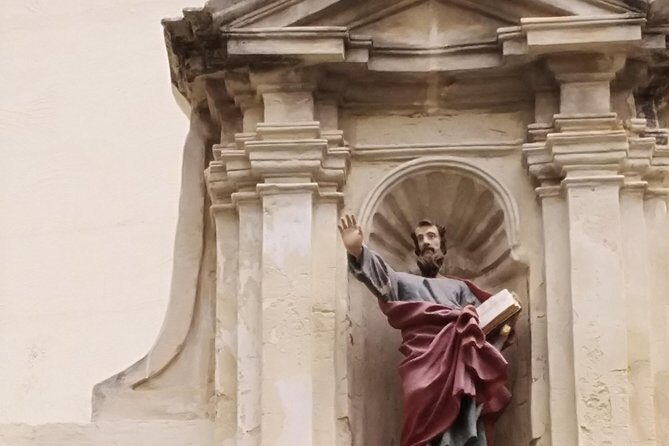
- St. Paul’s Cathedral at Mdina ties you to centuries of Malta’s religious life, starting from 9th century B.C.
- Universitas law courts shows how medieval feudal government shaped everyday life
- Malta’s only Roman museum plus Rabat’s Roman city connection to Melita
- Rabat catacombs connect Christianity’s roots to the sites most associated with burial in Rabat
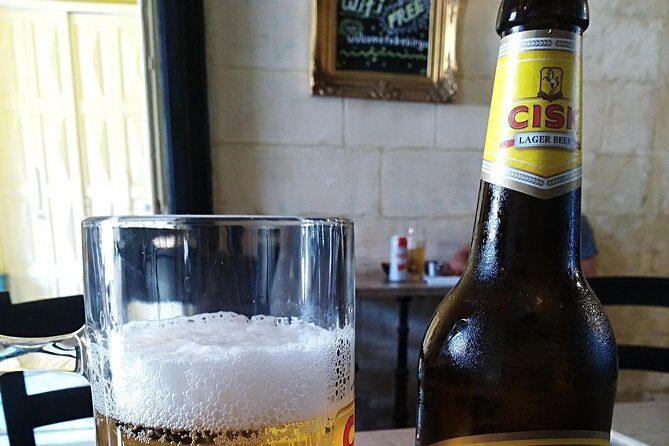
- Is-Serkin pastizzi stop included, with tea/coffee in cooler months and beer in warm weather
Entering Mdina: A Wall-to-Wall Mix of Power and Prayer
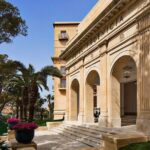
Mdina is one of those places where you feel the quiet before you even understand why. The city has that postcard look, but what makes this tour click is that it doesn’t just point at pretty stones. It explains how Mdina’s religious authority and medieval civic life stacked on top of each other over time.
You begin near Mdina Gate, and the walk is designed to keep you moving without rushing you. At around 2 hours 30 minutes, you’ll cover multiple sites across Mdina and then slide into Rabat for the Christian and Roman chapters. If you’re the kind of visitor who wants more than one photo stop, this format works well because you get context while you’re still on your feet.
There’s also something practical here: the group is capped at 6 people. That means the guide can answer questions without turning the walk into a loud sprint. It’s especially helpful at older sites where you’ll naturally want a little time to look closer.
You can also read our reviews of more tours and experiences in Malta.



St. Paul’s Cathedral: Why This Church Is the Big One

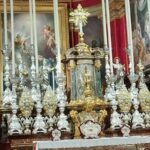
The tour’s opening anchor is St. Paul’s Cathedral, described as the most important church among Malta’s 365 churches. That number alone gets your attention, but the real reason it matters is the long timeline.
The cathedral sits on a location that’s been used since the 9th century B.C. Over history, that same site has carried different meanings and different rulers, and the tour frames it as Malta’s habit of layering stories on the same ground. Even if you don’t memorize every date, you’ll come away with a sense of continuity: Malta’s past isn’t locked in a museum case. It’s built into the places you walk by.
What to expect on the ground: you’ll get a guided orientation that helps you see the church not just as a building, but as the seat of the Diocese. In practice, that gives the stop weight. You’re not simply looking at architecture; you’re learning why this place has stayed central for so long.
The Universitas Law Courts: Medieval Rules, Up Close
Next you move from church authority to medieval government. The tour takes you to the old law courts of the Universitas, described as the feudal government in medieval times.
This is a great stop because it changes your frame. Mdina often gets talked about as if it’s only about temples and towers. Here, you learn that the city also functioned like an administrative hub. The courts weren’t abstract. They shaped how people lived, because legal power and local governance were part of daily life.
A small caution: this is more “learn and observe” than “gasp at relics.” You’ll get more out of it if you stay curious and ask yourself what kinds of decisions were made there. But if you enjoy social history, this stop is a strong payoff.
Mdina’s Fine-Art House: One of the Oldest Spaces in the City
After the civic stop, the tour turns to a calmer, more intimate setting: a fine-art museum housed in one of the oldest houses in Mdina.
This matters because it shifts you from public institutions to domestic space. You start thinking about what it meant to live inside the walls, and how a city like Mdina evolved not just in power, but in household life and taste. Even without getting technical, you’ll likely notice how the tour uses this stop to slow down the tempo before moving you back into larger themes.
Practical takeaway: give yourself a moment here to look at the details. In older homes turned museums, small design choices and preserved spaces often tell a story as clearly as the labels do.
Malta’s Only Roman Museum: Roman Melita in One Stop
Then comes the Roman thread, and it’s one of the tour’s key reasons to exist. The itinerary includes the only Roman museum in Malta.
You might think Roman Malta would be scattered across many sites, and in a way it is. But this museum gives you a concentrated place to anchor what you’re seeing later in Rabat. By the time you reach the suburb, you’ll already have a mental “Roman reference point,” so the Roman connections don’t feel random.
The tour also links Mdina and Rabat to a shared Roman identity. Both were the Roman city of Melita, with Rabat often discussed as part of the broader ancient urban landscape.
If you like structure in your sightseeing, this stop is a smart bridge. It helps you connect themes instead of collecting disconnected facts.




Rabat: Where the Roman City Meets Christianity
Rabat is where the walk turns from “past as layers” into “past as roots.” The tour describes Rabat as the suburb of Medina and highlights that both cities were the Roman Melita.
It also frames Rabat as the cradle of Christianity in Malta. That’s a big statement, but the route supports it: you go from the broad Roman context to sites tied directly to burial and early Christian history.
The Christian Catacombs Stop
A major highlight here is the visit connected to the Christian catacombs of Rabat. The tour describes the catacombs as burial places, and notes that the vast majority of Malta’s catacombs are found in Rabat.
This part of the experience tends to land emotionally, even when you’re learning dates and names. Catacombs are physical reminders that history wasn’t just about politics or temples. It was about people living, hoping, and leaving traces.
One practical angle: this stop is listed with 45 minutes allocated for Rabat, and the tour notes that the Rabat admission ticket is free. That makes it easier to justify the tour value if you’re doing this as one compact afternoon plan.
Is-Serkin Crystal Palace Bar: Pastizzi, Done Right
Now for the part that makes this tour feel like a real Malta experience instead of a history lecture with a snack at the end.
You finish at Is-Serkin – Crystal Palace Bar for pastizzi, and the tour doesn’t just call it a snack. It calls pastizzi the most delicious and one of the cheapest ways to eat in Malta. Most importantly, it’s the kind of food stop that actually matches the day: after walking Mdina and Rabat, you want warmth, flavor, and something simple.
What makes the pastizzi stop feel worth it
This stop is 20 minutes, and the admission is included, which matters more than it sounds. It prevents the classic problem where you do all the work of sightseeing and then still have to sort out food logistics on your own.
The tour also gives you the seasonal pairing idea:
- In colder weather, pastizzi is paired with hot tea or coffee.
- In warmer weather, it’s paired with cold beer.
That seasonal logic is smart. It keeps the food stop feeling local and not like a generic snack break. If you’re traveling with someone who thinks food should be a core part of the day, this stop gives you that.
And yes, it’s the kind of meal you can actually enjoy without pulling out a whole picnic setup. Pastizzi is built for travel: quick, satisfying, and easy to share.
Price and Value: What You Get for $65
At $65 for a roughly 2.5-hour walking tour, the value hinges on two things: access and inclusion.
First, you’re getting a guided route that connects multiple major sites in Mdina and then expands into Rabat for the catacombs connection and Christian roots. Walking tours can be light on content, but this one targets the major identity pillars: diocesan history, medieval governance, Roman context, and Christian catacombs.
Second, the tour includes the key food moment. Pastizzi is part of the experience with admission included at Is-Serkin Crystal Palace Bar. That snack factor is not small. If you were buying it separately after sightseeing, you’d still be paying for it, so the inclusion makes the total cost feel less abstract.
There’s also the group size logic. A max group of 6 usually helps quality. You’re more likely to get a clear explanation instead of listening from the back.
Finally, the tour requires good weather. That can be a value risk if your trip schedule is tight. Still, good-weather dependence often means the operator expects you to enjoy the walk comfortably rather than endure a miserable scramble.
Pacing, Dressing, and What to Do If the Weather Turns
Based on the tour tone and what’s described, the pacing feels easy rather than aggressive. The route is short enough to stay enjoyable, but it’s long enough that you should dress like you’re walking in historic stone streets.
If it’s windy or cold, Mdina can feel sharper than you expect. A simple fix is coming prepared with layers and something wind-resistant if you have it. Comfortable shoes matter here too, because Mdina streets can be uneven and Rabat involves a continued walk after you’ve been on your feet.
Also keep an eye on meals and time. The pastizzi stop comes at the end, so plan to eat something earlier in the day if you’re hungry right away.
Who This Tour Fits Best
This is a strong match if you:
- want a compact way to see Mdina and Rabat in one go
- like history that ties places together through a single storyline (Roman Melita, then Christianity)
- enjoy food stops that feel specific to Malta, not generic
- prefer smaller groups and guides who explain with personality
It’s less ideal if you prefer a longer, slow museum-style experience where you linger for long periods at each indoor stop. This tour is structured. You’ll learn a lot, but you’re not meant to spend half a day wandering on your own.
Should You Book the Mdina, Rabat, and Pastizzi Tour?
I’d book this tour if you want a well-paced afternoon that combines St. Paul’s Cathedral, medieval Universitas history, a focused Roman museum stop, Rabat’s Christian catacombs connection, and an included pastizzi finish at Is-Serkin Crystal Palace Bar.
Skip it if your main goal is deep time in just one museum, or if your schedule is so tight that a weather-dependent plan would stress you out.
If your timing works and you’re ready for a walk that mixes culture with food, this is one of those Malta experiences that feels efficient without feeling rushed.
FAQ
How long is the Mdina, Rabat, and pastizzi tour?
The tour lasts about 2 hours 30 minutes.
Where does the tour start?
It starts at Mdina Gate (VCM3+V9W), Mdina, Malta.
What is included with the pastizzi stop?
Pastizzi is included at Is-Serkin – Crystal Palace Bar, along with a drink pairing of hot tea or coffee in winter, or cold beer in summer.
Are tickets included for the Rabat part of the tour?
The Rabat section is listed with free admission ticket.
How big is the group?
The tour has a maximum of 6 travelers.
Is this tour suitable for most people?
The tour states that most travelers can participate.
What is the cancellation policy?
You can cancel for a full refund up to 24 hours before the experience start time. If you cancel less than 24 hours before, the amount paid is not refunded.