REVIEW · MDINA
Mdina: The Knights of Malta Museum Entry Ticket
Book on GetYourGuide →Operated by Robert Arrigo & Sons Limited · Bookable on GetYourGuide
Mdina’s Knights tale plays in 3D. The Knights of Malta Museum at Casa Magazzini uses a 13-language audio-visual show to set the stage, then you walk through 34 three-dimensional tableaux that bring the Crusader Knights’ world back to life.
I like how fast it works: in about 40 minutes, you get a clear storyline, not just random objects. My main caution is that the format is mostly staged scenes, so if you want deeper, text-heavy history or a long Q and A, the experience can feel a bit short and repetitive.
In This Review
- Knights of Malta Museum: the $8 value you can finish in one go
- Casa Magazzini check-in and what happens when you arrive
- The 3D show in 13 languages: how to get your bearings fast
- The 34 tableaux walkthrough: staged scenes that actually teach
- 1530 and the gates of Mdina: why L’Isle Adam matters here
- Knights, compassion, and the hospital scene
- Siege fears and Ottoman enemies: the darker side of the era
- When the Knights inspire Valletta: why architecture shows up
- Audio-visual tech and comfort: timing, sound, and attention
- Price check: does $8 buy you real value?
- What I’d do if I’m short on time (and still want impact)
- Who should book the Knights of Malta Museum ticket?
- Final decision: should you book this $8 Mdina ticket?
- FAQ
- How long does the Knights of Malta Museum experience take?
- What does my ticket include?
- What languages are available on the audio guide?
- Is there a live guide included?
- Can I use the ticket on any day during my visit?
- Does the ticket allow re-entry?
- Is the museum wheelchair accessible?
- Are strollers allowed?
- What about pets, and is the museum suitable for hearing-impaired visitors?
- Where can I confirm opening hours?
Knights of Malta Museum: the $8 value you can finish in one go
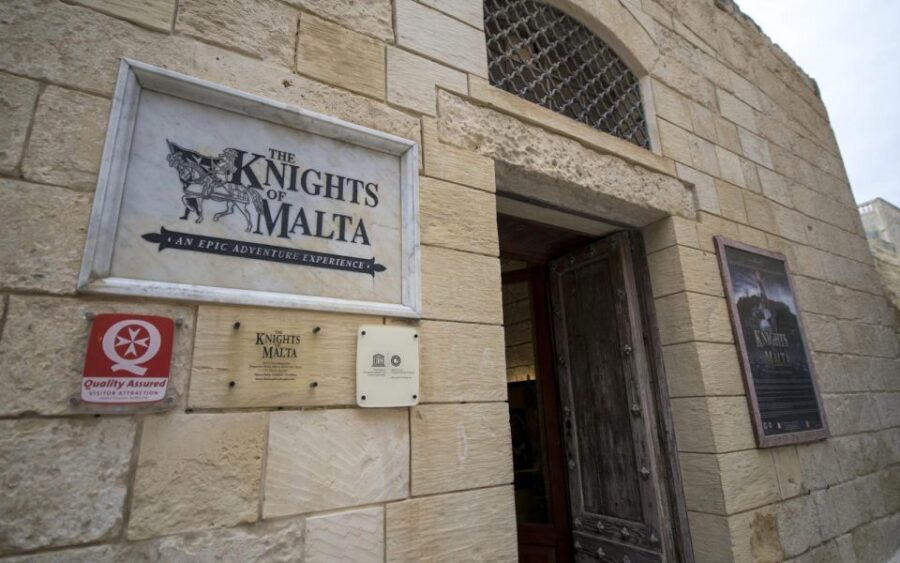
For $8 per person, this is one of the easiest history stops in Mdina to fit into a tight day. It is not a long guided tour. It’s an audio-visual presentation plus a self-paced walkthrough that helps you see the Knights of Malta era rather than just read about it.
You’re also in a smart location. Casa Magazzini sits inside Mdina, so you can pair the visit with a stroll on the walls and the honey-colored stone streets outside. The museum is open Monday through Sunday all year, except Christmas Day.
Casa Magazzini check-in and what happens when you arrive
When you get to the theatre, you check in at the reception area of the venue. From there, the museum runs its show and then you move into the galleries at your own pace.
A few practical notes matter here. Pets are not allowed, and the museum is not wheelchair accessible. It also is not stroller accessible, though the venue sets aside a secure spot to store strollers; for very young kids, an infant harness is advised.
A few more Mdina tours and experiences worth a look


The 3D show in 13 languages: how to get your bearings fast
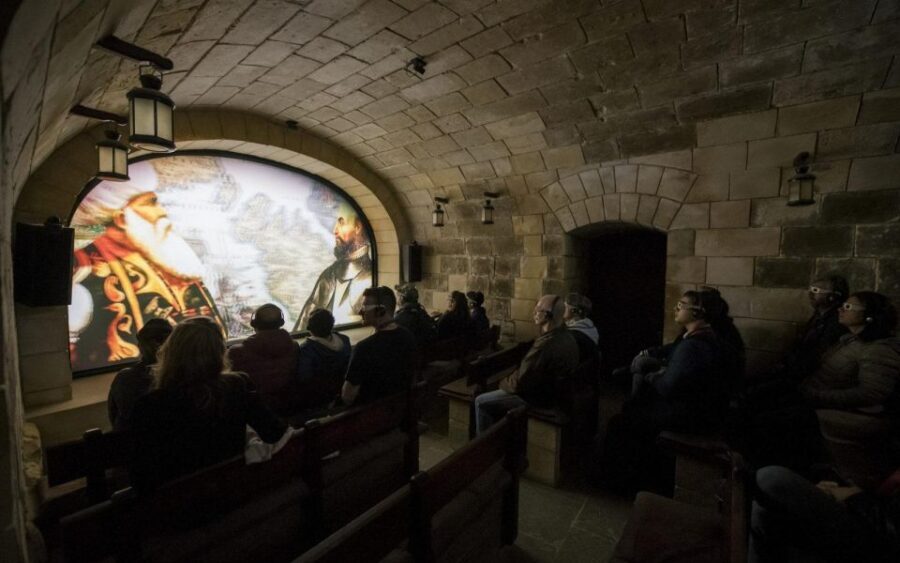
The experience starts with an introductory 3D digital audio-visual presentation. It is designed to give you the timeline and key themes before you start walking the scenes.
You’ll get narration through an audio guide that includes 13 languages: English, German, French, Dutch, Spanish, Italian, Russian, Greek, Swedish, Danish, Norwegian, Japanese, and Maltese. The audio guides match the show, with simultaneous multilingual commentaries.
What I think you’ll appreciate is the pacing. The museum doesn’t wait until the end to explain context. It sets up names, places, and conflicts up front so the tableaux make sense as you go.
The 34 tableaux walkthrough: staged scenes that actually teach
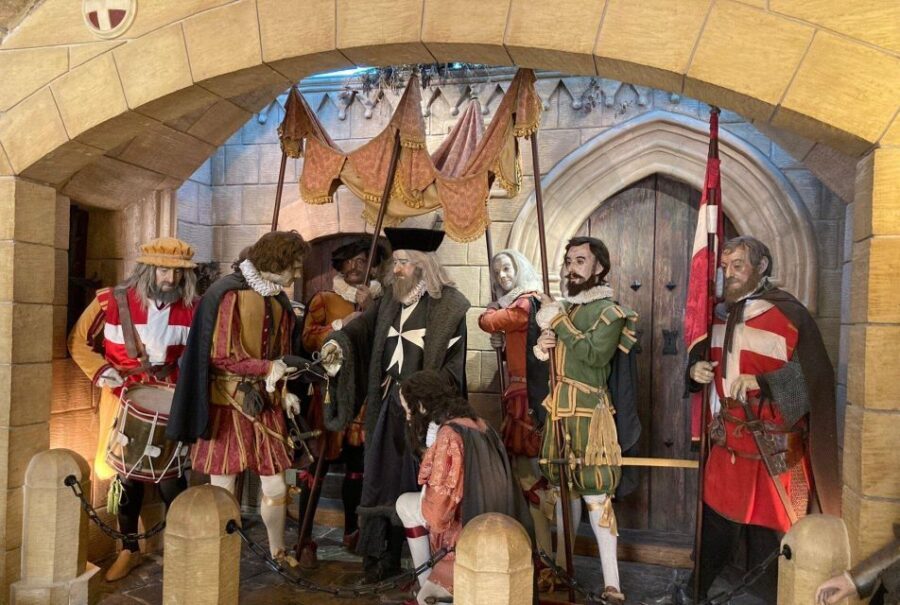
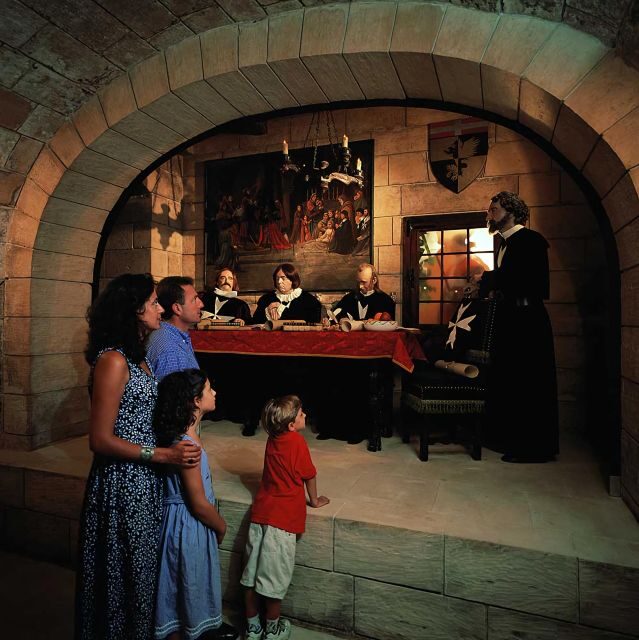
After the intro show, you move through a set of 34 tableaux—full-size, three-dimensional chronicles made to look like chapters. The museum focuses on the Knights of Malta and the life around them during roughly 200 years of rule over the islands.
The storytelling covers a wide range of situations, not only battles. You see moments of public life where Knights and Grand Masters meet each other or appear alongside ordinary people. You also see the grim side: piracy and sieges are part of the story, along with disasters like the 1693 earthquake in Mdina.
A helpful detail: the scenes are presented as a visual pageant with full-size figures, so even if you only catch pieces of narration, you still understand what is happening in each room.
1530 and the gates of Mdina: why L’Isle Adam matters here
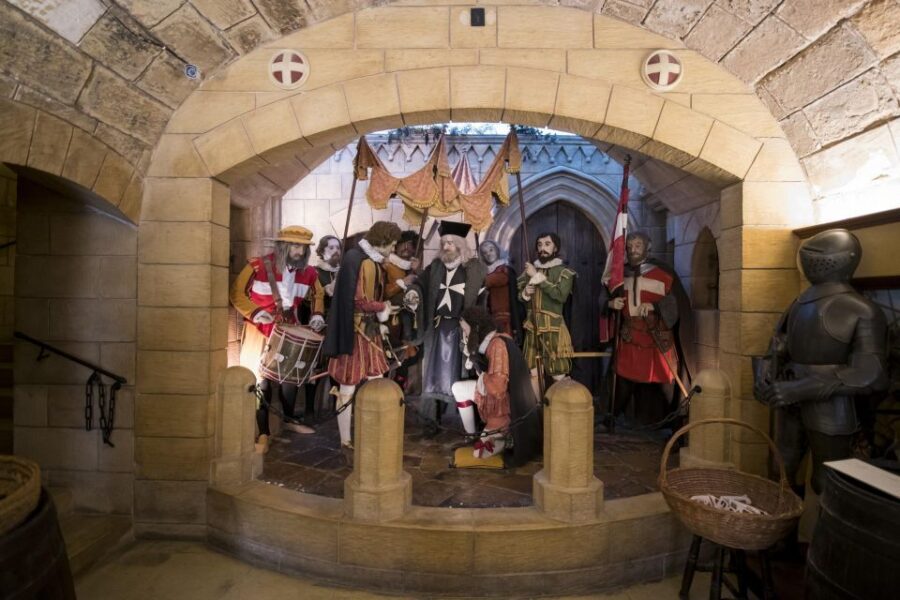
One specific anchor point gets highlighted: in 1530, Grand Master L’Isle Adam entered the gates of the fortified city of Mdina. The museum uses special effects and dramatic lighting to recreate that arrival feeling—like you’re stepping into the moment rather than reading a description of it.
That matters because the Knights’ story in Malta is not just “fighting.” It’s about power, administration, and how a city adapts to new rulers. By the time you reach the walking sections, you’ll understand why Mdina, in particular, is tied to the Knights’ presence.
Knights, compassion, and the hospital scene
Not every scene is armor and chaos. One of the strongest parts of the walkthrough is the look at the order’s compassion and service.
You can see them offering help to the sick through the Order’s hospital. It’s a reminder that the Knights weren’t only a military force. They also shaped care, logistics, and public life in the cities where they worked.
If you like historical institutions—how people organized hospitals, relief, and everyday services—this section is a good reality check.




Siege fears and Ottoman enemies: the darker side of the era
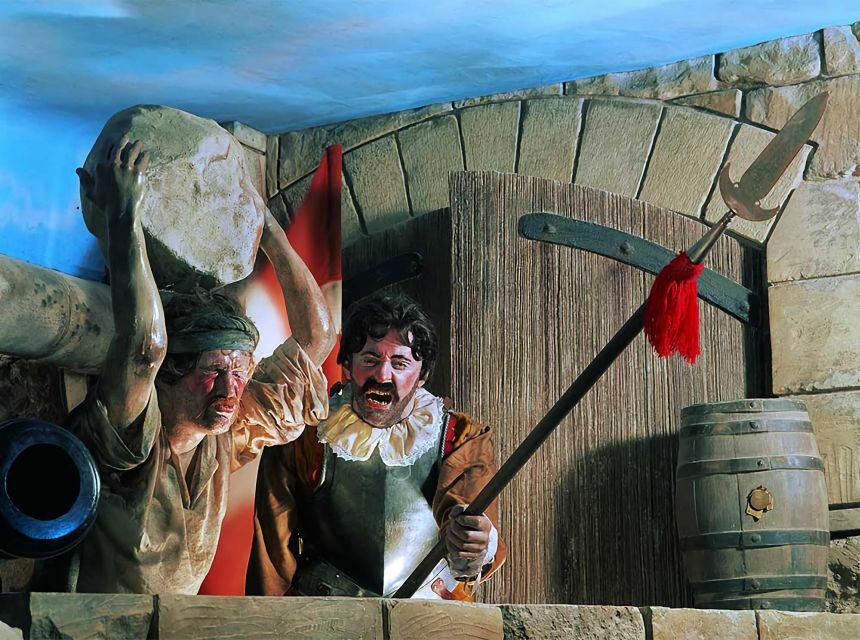
The museum doesn’t treat conflict as background noise. It takes on the terrors of siege and the threat from the Ottoman enemy.
You’ll find dramatic battle scenes mixed with coping with disasters. The goal isn’t to scare you for its own sake. It’s to show what constant pressure did to society—how leadership, defense, and survival plans shaped the islands.
If you’re visiting with kids, this kind of direct visual storytelling often lands better than a slow lecture. It’s still intense, but it’s understandable because you can see what’s happening.
When the Knights inspire Valletta: why architecture shows up
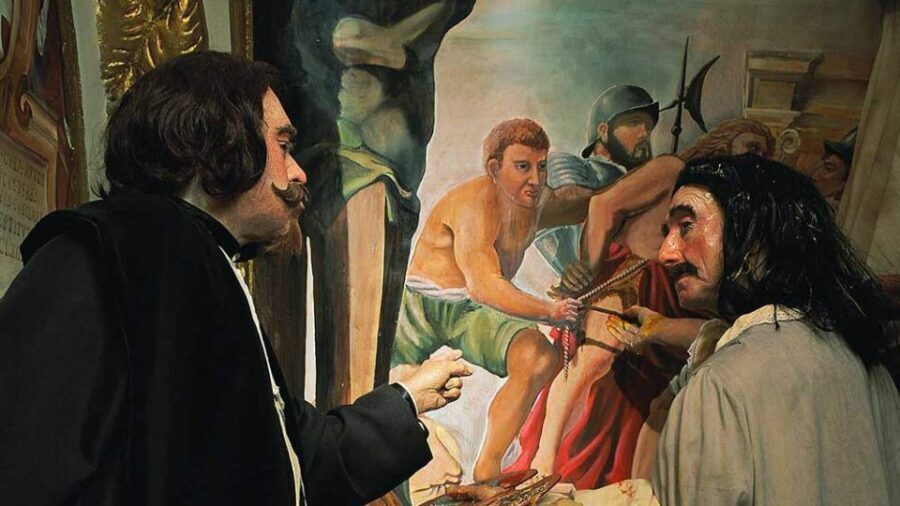
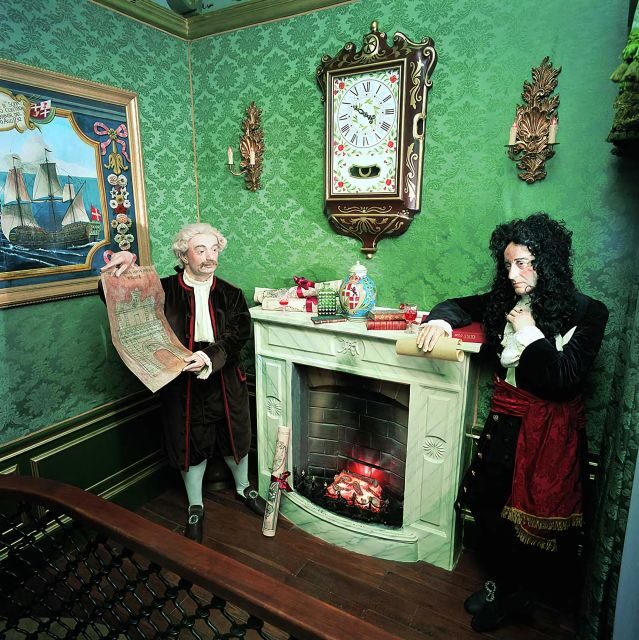
One theme I found especially useful is how the museum connects the Knights to the built environment of Malta. You’ll see how the Knights’ vision inspired top architects and artists, leading to the creation of Valletta, often described as the city for gentlemen.
This is one of the reasons the ticket feels more worthwhile than a purely theatrical show. It gives you a reason to look at Valletta’s streets and monuments later with sharper eyes. Instead of treating the city as just scenery, you get a line of cause and effect.
Audio-visual tech and comfort: timing, sound, and attention
The museum presentation is about 40 minutes total, including the intro show and the walkthrough. That makes it ideal as a pre-dinner plan or a midday reset when Mdina’s streets get warm.
The pacing is also why the museum works for many ages. It’s structured enough to keep attention, but short enough that you’re not stuck for hours.
One important caution: the museum is not suitable for hearing-impaired people. Since the experience is narration- and sound-based, plan accordingly.
Price check: does $8 buy you real value?
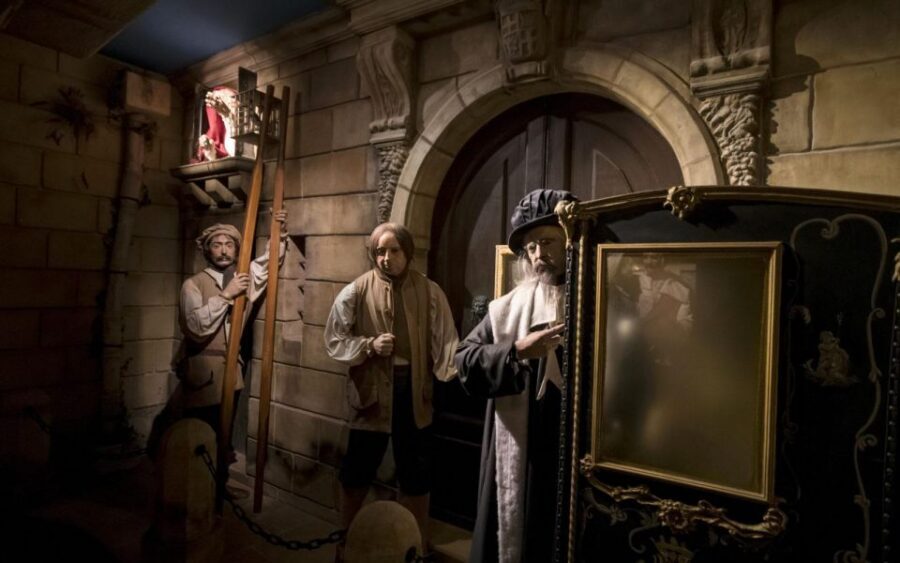
At $8 per person, you’re paying for two things: a 3D show and a guided-style route through 34 staged scenes. That is solid value in a place like Mdina, where many short attractions can cost more and still leave you hungry for context.
Here’s the tradeoff. Some parts of the experience rely heavily on a single visual style: tableaux, lighting, and staged interaction. That can feel efficient, but it can also feel repetitive if you’re expecting lots of different formats or deep scholarly explanations.
So I see the value as best for visitors who want:
- a clear overview,
- strong visual storytelling,
- a quick start on the Knights of Malta chapter of Maltese history.
What I’d do if I’m short on time (and still want impact)
If you have limited time in Mdina, aim for this ticket early enough that you can still wander outside afterward. After the museum, go look at the streets and walls with new context.
Also, plan for attention time. You do not want to rush through the tableaux because the museum is built on sequential scenes. If you’re the kind of person who likes to stop for a photo, do it, but don’t let it pull you away from the story order.
Who should book the Knights of Malta Museum ticket?
This fits best if you want a simple, structured history experience that doesn’t require a guide. You’ll likely enjoy it if you like:
- clear timelines and key historical moments,
- visual storytelling,
- a mix of military conflict and civic life (like the hospital and public roles).
It may be less satisfying if you’re hunting for very detailed academic history. The museum’s approach is dramatic and scene-based, and one drawback that can come up is that it may feel short or a bit repetitive for visitors expecting more varied teaching formats.
Final decision: should you book this $8 Mdina ticket?
I’d book it if you want a low-cost, time-efficient way to understand the Knights of Malta era before you tour the rest of Malta. The 3D intro show, the 13-language audio guide, and the walkthrough through 34 scenes give you a strong overview that’s easy to carry with you as you explore Mdina and then connect the dots to Valletta.
Skip it if you need a deep text-led museum, a guided lecture, or if you’re relying on accessibility features not offered here. Also, if you’re especially sensitive to repetitive formats, go in knowing the museum leans heavily on the same visual presentation style throughout.
FAQ
How long does the Knights of Malta Museum experience take?
The duration is approximately 40 minutes, including an introductory 3D digital audio-visual presentation and the walkthrough.
What does my ticket include?
Your ticket includes admission to the Knights of Malta Museum and the audio-visual intro show with audio guide commentary in 13 languages.
What languages are available on the audio guide?
The audio guide is available in: English, German, French, Dutch, Spanish, Italian, Russian, Greek, Swedish, Danish, Norwegian, Japanese, and Maltese.
Is there a live guide included?
No guide is included with the ticket.
Can I use the ticket on any day during my visit?
Yes. It is an open ticket, and you can use your entry ticket on any day within the museum’s opening hours.
Does the ticket allow re-entry?
No. The ticket is valid for one-time entry only, and no re-entry is allowed.
Is the museum wheelchair accessible?
No. The venue is not wheelchair accessible.
Are strollers allowed?
The venue is not stroller accessible. A secure place is set aside for stroller storage, and for very young kids an infant harness is advised.
What about pets, and is the museum suitable for hearing-impaired visitors?
Pets are not allowed. The museum is not suitable for hearing-impaired people.
Where can I confirm opening hours?
Opening hours can change, so if you want to confirm during your stay, you should contact the service provider. The museum is open every day Monday to Sunday all year excluding Christmas Day (25th of December).