REVIEW · MALTA
Best of Valletta Walking Tour
Book on Viator →Operated by City Walking Tours Malta · Bookable on Viator
Valletta feels like a living museum. This walking tour pulls together the big story of the Knights of Malta, then breaks it up with views, markets, and the city’s everyday rhythms. I like that the guide keeps the tour grounded in real buildings you can actually stand in front of, not just a history lecture.
Two things I especially appreciate: you get a fully licensed guide, and the pacing works for most people—long enough to understand what you’re seeing, not so long that you’re cooked at the end. The main caution is simple: St. John’s Co-Cathedral entrance isn’t included, so you’ll need to plan a bit if you want to go inside.
You’ll also walk a fair amount for 2 hours 30 minutes, and the tour is geared toward people with moderate physical fitness. If you’re sensitive to hills or standing around viewpoints, wear good shoes and be ready for some up-and-down during the garden and square stops.
In This Review
- Key highlights you’ll feel on this walk
- Starting at the New Parliament Building: how the story gets framed
- Valletta first: get your bearings fast before the landmarks stack up
- Auberge d’Italie: reading power through stone
- Upper Barrakka Gardens: the view that makes the walking worth it
- Merchant Street Market: where elegance meets daily life
- St. John’s Co-Cathedral: walk past today, decide on the entrance
- Republic Street and Café Cordina: the city breathes here
- Grand Master’s Palace: where the timeline stretches
- Castellania and the Knights’ law courts: justice by architecture
- The Pub and Oliver Reed: history with a wink
- Republic Square: Queen Victoria, the Library, and the central pulse
- Our Lady of Victories Church: from auberge to today’s Prime Minister’s office
- Guides, pace, and the small comfort wins that matter
- Price value: $24 for an organized overview, with one ticket decision
- What to wear and what to expect on the ground
- Who should book this Valletta walking tour
- Should you book this tour?
- FAQ
- How long is the Best of Valletta Walking Tour?
- What does the tour cost?
- Where does the tour start and end?
- Is the tour offered in English?
- Is there a mobile ticket?
- Do I need to pay admission during the tour?
- What’s included in the price?
- How many people are in each group?
- Is the tour suitable for everyone physically?
- Can I bring a service animal?
- Can I cancel for a refund?
Key highlights you’ll feel on this walk
- Licensed guiding that connects each landmark to how Valletta became Malta’s capital
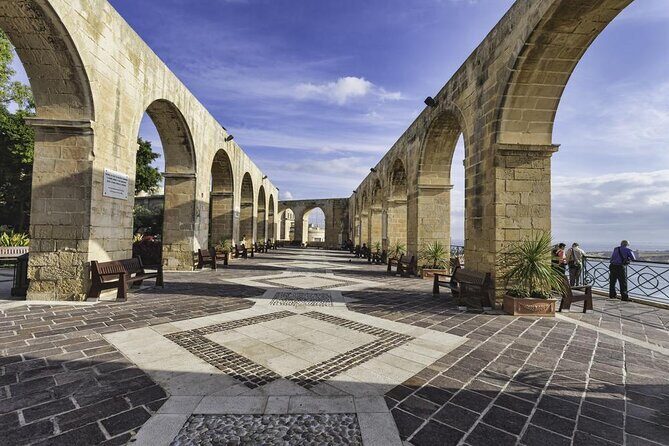
- Upper Barrakka Gardens for a high-impact look over the Grand Harbour
- A route built for comfort, including shaded spots and practical breaks mentioned by past walkers
- Republic Street and Republic Square for classic café culture and the iconic Queen Victoria statue
- The Knights of Malta core sites, from auberges to the Grand Master’s Palace area
- Small group size (max 30), which helps you hear the guide and ask questions
Starting at the New Parliament Building: how the story gets framed
The tour begins at the New Parliament Building on Republic Street in Valletta. That location matters because it’s already part of the modern city center, so the guide can jump quickly from today into the Knights era without making you feel like you’ve been dumped into a lecture.
From the start, the tour focus is clear: how the Knights shaped Valletta and how Malta’s capital took shape over time. You’ll get “what to notice” instructions right away, which pays off later when the guide points out details on façades and plazas that most people would miss.
I also like that the meet-up is in a central, recognizable area. Ending near St. George’s Square, close to the Grand Master’s Palace, makes it easy to keep exploring right after the tour without a long scramble across town.
You can also read our reviews of more walking tours in Malta


Valletta first: get your bearings fast before the landmarks stack up
Stop one is Valletta itself, with a guide-led introduction that sets context for the rest of the walk. This is where you learn what the Knights were building and why this city layout still feels so distinctive today.
This first stop is a smart move for two reasons. First, it gives you a timeline so later names and buildings make sense. Second, it helps you orient yourself so the streets and squares feel connected instead of random.
The duration here is about 20 minutes. That’s a good length: enough to start seeing patterns, not enough to lose momentum before you head into the more specific sites.
Auberge d’Italie: reading power through stone
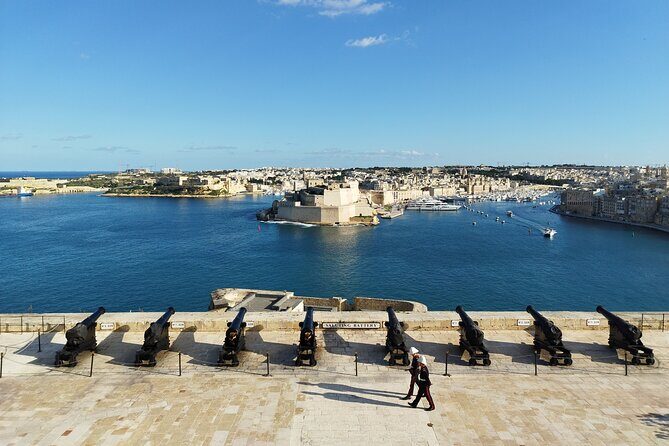
Next comes Auberge d’Italie. This stop is short, but it’s designed to show you how some of Valletta’s most imposing buildings tie back to the Knights’ organization. You’re not just looking at a historic façade—you’re learning the purpose behind the style.
Even on a quick pass, the guide will point out what makes an auberge feel like more than “an old building.” It’s part of the city’s institutional identity. That helps you connect what you see with what you learned at the very first introduction stop.
This is about 10 minutes. If you tend to rush through architecture photos, don’t. This is one of those stops where a minute of “what to look for” changes your whole photo set.
Upper Barrakka Gardens: the view that makes the walking worth it
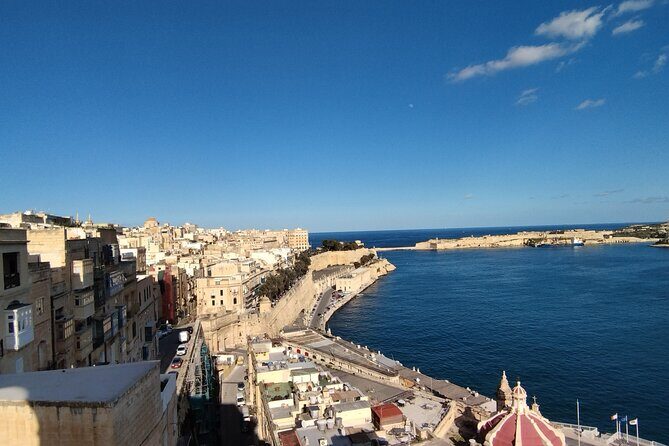
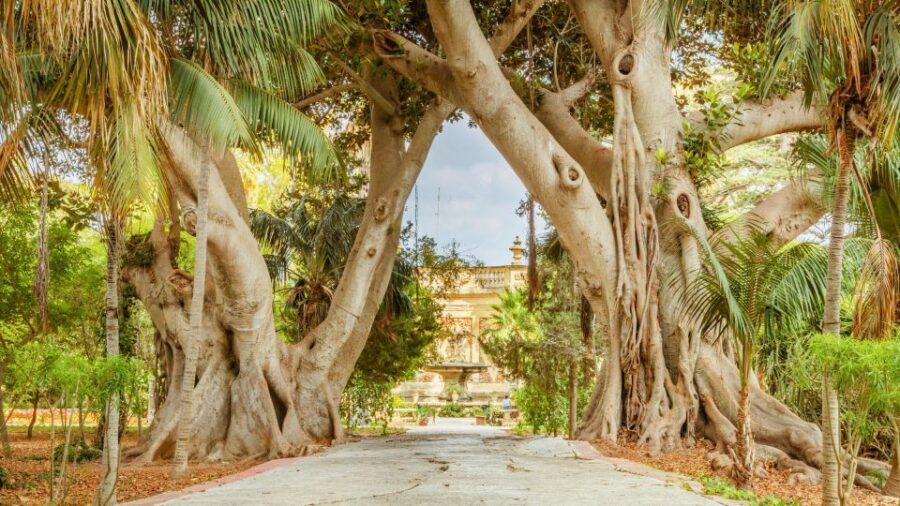
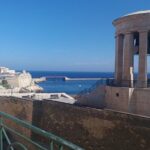
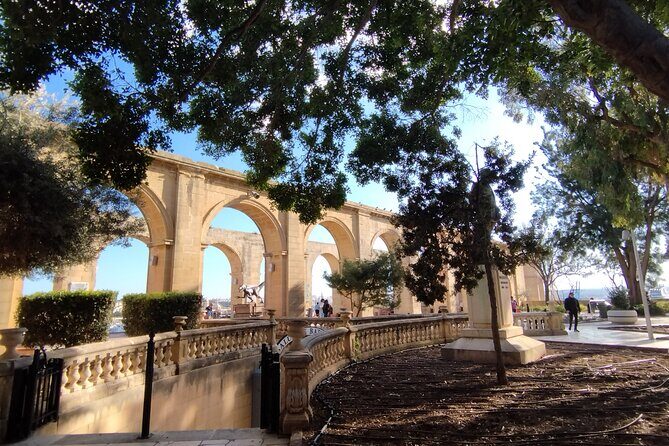
Upper Barrakka Gardens is one of the most memorable parts of the tour, and the timing is intentional. You’re given time—about 15 minutes—to take in the terrace view over Malta’s historic Grand Harbour, described as the largest natural harbour in the Mediterranean.
This is the moment when the tour shifts gears from street-level details to the bigger map in your head. Once you see the harbour from this angle, the city’s layout makes more sense. You can also appreciate why the Knights cared so much about control, visibility, and seaborne connections.
One practical note: gardens and viewpoints can mean standing and a bit of up-close looking. Wear shoes you’re comfortable in, and use the time to slow down. This stop is a natural reset before the tour transitions into busier streets and markets.
Merchant Street Market: where elegance meets daily life
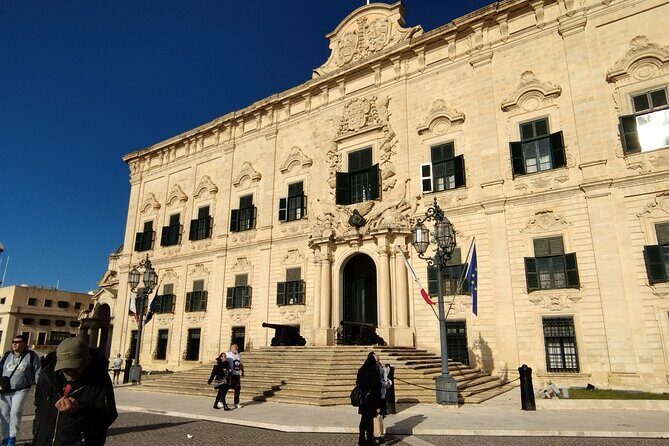
The Merchant Street Market stop is about 15 minutes. The guide brings past and present history into focus while you walk along this elegant street.
Why this works: it’s not only about what something used to be. You get to see the city as it is now, which makes the history feel less like a sealed-off past and more like something still shaping everyday life.
If you like places where you can snack, browse, and look without committing to a museum ticket, this stop is a good match. It also gives you movement through the center of Valletta, keeping the tour from becoming a sequence of only “look and move” stops.





St. John’s Co-Cathedral: walk past today, decide on the entrance
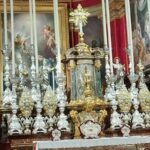
The tour next runs past St. John’s Co-Cathedral at the heart of Valletta. Expect a quick, about-10-minute orientation to the conventual church of the Knights of Malta and why it’s a national gem.
Here’s the trade-off. Entrance to the church is not included. So you’ll see and learn from the outside and the immediate area, but if you want to go in, plan for the extra ticket decision on your own.
I like that the tour doesn’t pretend everyone wants the same thing. Some people want the inside experience; others are happy with the walk-by plus context so they can spend their time elsewhere afterward.
Republic Street and Café Cordina: the city breathes here
Republic Street is where the tour leans into modern Valletta. You’ll spend about 10 minutes here, with the guide pointing out the square-life vibe and the most popular coffee shop, Café Cordina.
This stop is short, but it’s helpful because it shows how the city’s historic core supports daily routines. You get a sense of where people linger and why the central streets feel livelier than just “a sightseeing corridor.”
If you want to do it right, treat this as your cue to think about a break. Whether you grab a coffee before the next big monument area or simply enjoy the atmosphere, this is the right spot to pause mentally.
Grand Master’s Palace: where the timeline stretches
The biggest concentrated history stop comes next: Grand Master’s Palace. Plan for about 30 minutes here, and the focus is on the Grandmasters of Malta and the history of the square from the Knights era into the colonial period.
This is valuable for two reasons. First, the guide has enough time to connect what you’re seeing to multiple eras without rushing you. Second, if you’re trying to understand Valletta as a whole, this is where the city’s leadership story feels the most tangible.
In many cities, palace areas are just backdrops. In Valletta, this stop helps you read the square as a working stage—power, ceremony, and later layers of rule. Once you’ve got that, the other stops start to click as supporting chapters instead of isolated sights.
Castellania and the Knights’ law courts: justice by architecture
After the palace area, you’ll hit Castellania, the former law courts of the Knights of St. John, for about 10 minutes. Even though it’s not the largest building on the route, it’s a strong reminder that governance was built into the city’s architecture.
This stop is the one for people who enjoy “function” details. The guide helps you see why legal and administrative buildings matter, not just military or religious ones.
The Pub and Oliver Reed: history with a wink
Then you’ll pass The Pub, where Oliver Reed had his last drink. It’s only about 10 minutes, but it’s a fun contrast to the big stone-and-squares theme.
This is the kind of detail that turns a walking tour from pure facts into something you remember. It also makes the city feel current, because it acknowledges that places keep collecting stories even after the original purpose fades.
If you like travel that has both context and personality, this is a nice pause point before Republic Square.
Republic Square: Queen Victoria, the Library, and the central pulse
Republic Square is about 10 minutes and includes the iconic statue of Queen Victoria and the Library. The guide connects what you’re seeing to the shifting layers of Valletta’s identity.
This stop is best if you take a breath and let the space work on you. Squares can feel like “just a stop” on tours, but here the central placement makes it useful as a wayfinding tool. After you understand how the square sits in relation to the nearby monuments, the rest of your self-guided wandering feels easier.
Also, Republic Square is one more instance of the tour mixing old and new. You’re not only looking at the Knights’ era; you’re seeing how Malta added different eras on top of the same urban bones.
Our Lady of Victories Church: from auberge to today’s Prime Minister’s office
The final stop is Our Lady of Victories Church, spent about 10 minutes. The tour frames it as the former Auberge of Castille, Leon and Portugal, and today it functions as the Prime Minister’s office.
That change of use is the big takeaway here. You’re seeing how Valletta reuses important spaces rather than wiping the slate clean. It’s a quick stop, but it lands with a strong point: buildings can outlive the original system that created them.
When you finish around St. George’s Square near the Grand Master’s Palace area, you’re basically dropped back into the core zone. That’s helpful because you can keep going in either direction—toward more viewpoints, toward cafés, or toward lingering where something sparked your curiosity.
Guides, pace, and the small comfort wins that matter
The best part of this tour is the human delivery. Guides like Angeles and Nadine show up in the experience with a style that’s easy to listen to and strong on answering questions. There’s also mention of route choices that use shade when possible, plus the tour includes practical stops such as benches and toilet breaks.
You’ll also want to pay attention to how the tour handles audio. Earphones are used, which helps a lot in busy streets or when you’re near groups of people. That’s not a small detail—missing words can make a landmark feel like it was just “passed” instead of understood.
Group size stays capped at 30 travelers, which helps keep the pacing calmer. In a city built for pedestrians, that matters. You’re not stuck watching the guide through a shoulder wall.
Price value: $24 for an organized overview, with one ticket decision
At $24 per person for about 2 hours 30 minutes, this is a solid value if you want structure. You’re getting a fully licensed guide, a mobile ticket, and a planned route through major Valletta landmarks tied to one storyline.
Most stops list admission ticket free, which helps you keep the tour cost predictable. The one exception you should plan around is St. John’s Co-Cathedral, where entrance is not included. If you want to go inside, you’ll need to budget for that separate decision.
In practical terms, you’re paying for a guided, efficient overview that saves you from piecing together the Knights story on your own while walking around anyway. If you only have a day or two in Valletta, this is the kind of ticket that can make your later solo exploring more meaningful.
What to wear and what to expect on the ground
This is a walking tour, so bring comfortable shoes. The tour is geared for a moderate physical fitness level, which usually means you should be fine with sustained strolling and some standing at viewpoints and squares.
Malta in the sun can be a factor, and the route planning is designed with shade in mind when possible. Still, it’s smart to bring water and a hat, then use the scheduled breaks to recover.
Finally, the tour is offered in English and is near public transportation, so it’s easy to slot into a day that includes other sights.
Who should book this Valletta walking tour
Book it if you want:
- A guided overview of Valletta’s Knights of Malta landmarks without rushing.
- A route that connects buildings to a larger story, then keeps you moving through the city.
- A small-group experience with time for questions and clear audio support.
Consider something different if:
- You know you want a long, inside-only museum style day at St. John’s Co-Cathedral. This tour is mainly a walk-by with context, with entrance decided separately.
- You need a very low-walking option. With 2.5 hours on your feet, plan for steady movement.
Should you book this tour?
I’d book it for most first-time visitors to Valletta. It’s priced reasonably for a licensed guided overview, and it focuses on the places that help you understand the city quickly—Grand Harbour viewpoints, the Knights’ power sites, and the central squares where Valletta actually feels alive.
If you’re the type who likes to ask questions, this is even better. The tour is built around stops where the guide can explain what you’re seeing right now, not just name-drop history from a distance.
If you want to see inside St. John’s Co-Cathedral, check your plans for that extra ticket separately, then you’ll get the best of both worlds: the guided route plus the option to go deeper.
FAQ
How long is the Best of Valletta Walking Tour?
It lasts about 2 hours 30 minutes.
What does the tour cost?
The price is $24.00 per person.
Where does the tour start and end?
It starts at the New Parliament Building on Republic St, Valletta, Malta. It ends in the center of the city close to the Grandmasters Palace, at St. George’s Square (Republic St area).
Is the tour offered in English?
Yes, the tour is offered in English.
Is there a mobile ticket?
Yes, it uses a mobile ticket.
Do I need to pay admission during the tour?
Most stops list admission as free, but entrance to St. John’s Co-Cathedral is not included.
What’s included in the price?
You get the services of a fully licensed tour guide.
How many people are in each group?
The tour has a maximum of 30 travelers.
Is the tour suitable for everyone physically?
It’s marked for travelers with moderate physical fitness level.
Can I bring a service animal?
Yes, service animals are allowed.
Can I cancel for a refund?
Yes. You can cancel for a full refund if you cancel up to 24 hours in advance of the experience start time.