REVIEW · VALLETTA
Valletta: The Malta Experience & Tour of Sacra Infermeria
Book on GetYourGuide →Operated by The Malta Experience · Bookable on GetYourGuide
Want history fast? The Malta Experience in Valletta uses panoramic visuals and headset audio to speed you through 7,000 years. I really like the widescreen show and the headset commentary that keeps the story moving without lectures.
My second favorite part is the follow-up guided tour of the Sacra Infermeria, where guides like Anna bring the Knights’ hospital ward to life. One practical thing to watch: the show runs through individual headsets, so if yours has issues, tell staff right away (there have been reports of headphones not working).
In This Review
- Key highlights to look for
- A 7,000-Year Orientation in Valletta’s Mediterranean Conference Centre
- How the Malta Experience Works: Panoramic Screen + Headset Audio
- From Prehistoric Malta to St Paul: The Big Turning Points
- Knights, Sieges, and Valletta’s Birth
- Napoleon, British Rule, and the Second Great Siege in WWII
- Sacra Infermeria Tour: Europe’s Longest Hospital Ward
- How Long You’ll Spend (and why the pace is intentional)
- Price and Value: Is $24 Worth It?
- Practical Rules and Logistics That Help You Enjoy It
- Who This Fits Best (and who should think twice)
- Should You Book the Malta Experience and Sacra Infermeria?
- FAQ
- Where does the Malta Experience take place?
- How long is the experience?
- How much does it cost?
- What’s included in the ticket?
- Is there audio available, and what languages are offered?
- Can I take photos or record video inside?
- Are food and drinks allowed during the show or tour?
- Is smoking allowed indoors?
- Is it wheelchair accessible?
- Is it suitable for visually impaired people?
- Can I cancel for a full refund?
Key highlights to look for
- 7,000 years in one sitting: prehistoric roots to WWII, all in one place in about 1.5 hours.
- Headset audio in up to 17 languages: pick your language via the provided viewer headset.
- St Paul and the spread of Christianity: a standout moment in the big-screen timeline.
- Knights of St John and the Great Siege of 1565: Valletta’s origin story is right in the show.
- Sacra Infermeria guided tour: a narrated walk through Europe’s longest Hospital ward built by the Knights of St John.
- Guides such as Anna: many visitors praise the storytelling and questions-friendly style.
A 7,000-Year Orientation in Valletta’s Mediterranean Conference Centre
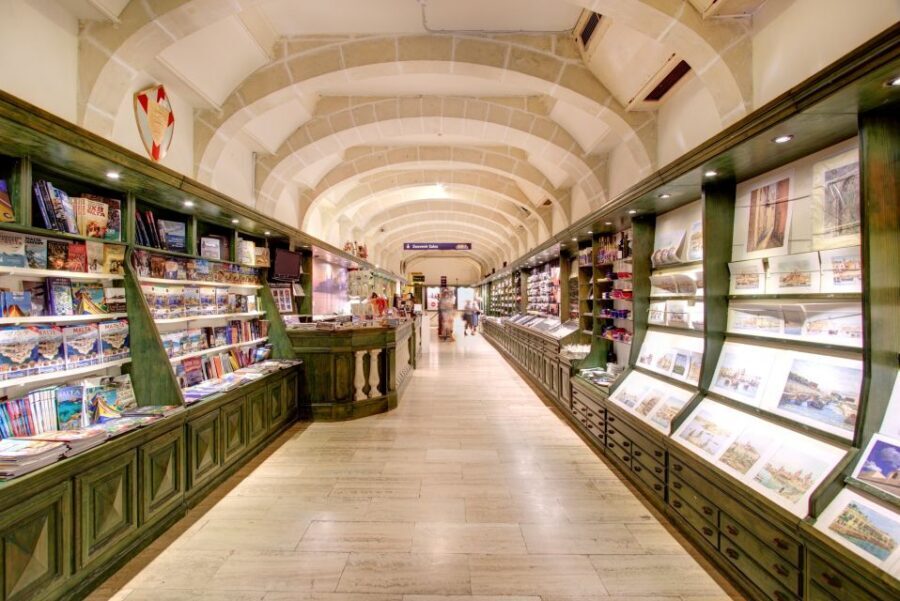
If you’re spending even a short time in Valletta, this is one of the quickest ways to make the rest of your day click. The Malta Experience is an audio-visual show housed in a purpose-built theatre at the Mediterranean Conference Centre. That building used to be the Holy Infirmary of the Order of St John of Jerusalem, so you’re starting inside a place with real weight.
The show covers Malta’s story from the prehistoric inhabitants through invaders, colonisers, and the big turning points that shaped the island. You’re not just looking at dates—you’re watching events connect. And because it’s designed for different language choices through headset audio, it’s easy to stay oriented even if you arrive without much background.
Then you step out into the building’s history with the guided tour of the Sacra Infermeria. It’s the kind of pairing that helps you understand why Valletta looks the way it does: first you get the timeline, then you see the structure that helped support daily life during the Knights’ era.
You can also read our reviews of more tours and experiences in Valletta.


How the Malta Experience Works: Panoramic Screen + Headset Audio
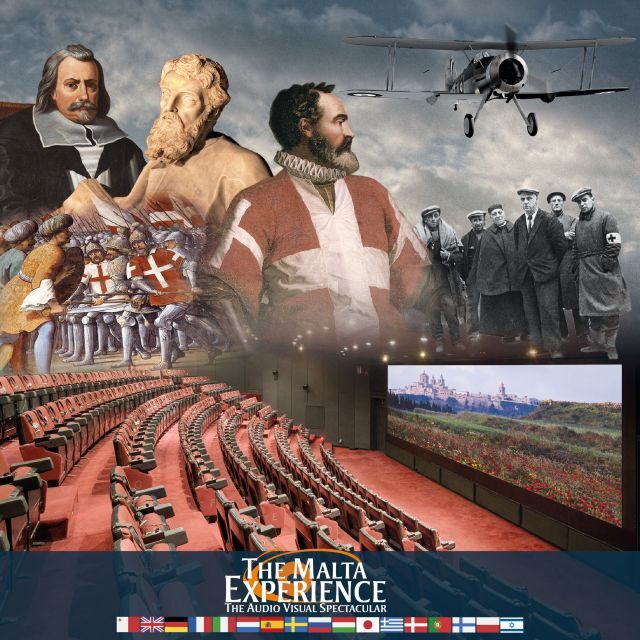
The heart of the experience is a large panoramic screen plus a soundtrack that does a lot of the emotional work. The commentary is available in a choice of seventeen languages, selected using the headset you’re given (or associated with your seat/viewer). In other words, you’re not relying on subtitles or crowd translation.
I like that the pace stays readable. It starts with the prehistoric legacy of Malta and Gozo, then moves forward through wave after wave of invaders and colonisers. The show doesn’t feel like one long speech. It’s more like a guided timeline with visuals doing the heavy lifting.
English is supported in the audio guide setup too. And while that means it should be straightforward for English speakers, the bigger win is the language choice system: it’s built for people traveling as couples, families, or mixed-language groups.
One thing to keep in mind: video recording and photography inside aren’t allowed. That’s a good reminder to sit back and watch instead of trying to capture every frame like it’s a museum TikTok reel.
From Prehistoric Malta to St Paul: The Big Turning Points
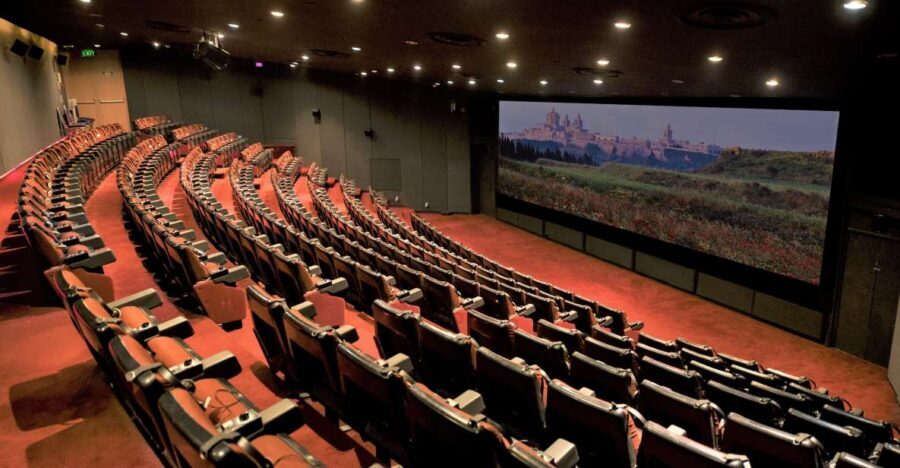
The show opens with the prehistoric inhabitants of Malta and Gozo, which is a clever way to reset your brain before the centuries stack up. It’s also a reminder that Malta didn’t start with knights, sieges, or ships—there were communities here long before the famous names.
Then the story tracks the arrival of key religious and political shifts. A highlight is St Paul’s dramatic arrival on Malta and the subsequent spread of Christianity. Even if you don’t know the details, the show gives you enough context to understand why religion became so tied to the island’s identity.
From there, the narrative zooms in on the Knights of St John, who ruled for about 250 years. The story doesn’t just celebrate them. It chronicles their rise and fall, which makes later events—especially the sieges and construction choices—feel less random.
For me, the most useful part of this segment is that it gives you mental labels for what you’ll see later across Valletta. When you walk past historic buildings afterward, you’re not staring at stone blanks. You’re placing them on a timeline.
Knights, Sieges, and Valletta’s Birth
If Valletta is the destination, the Knights are the engine. The Malta Experience explains how their rule shaped the city and why the island became such a strategic stage.
A major moment in the show is the Great Siege of 1565 and the building of Valletta. You’ll get a sense of what was at stake and why the city’s construction wasn’t just city-planning. It was a response to conflict.
This matters because Valletta’s architecture can feel intimidating if you don’t know what problem it solved. When the story connects the Siege of 1565 to the growth of the city, you can see how defensive thinking and urban design blended together.
The show continues through later upheavals, including the coming of Napoleon and the imposition of British rule. By the time you reach the next heavy chapter—war and occupation—it doesn’t feel like the island jumps topics. It feels like history layering on history.
Napoleon, British Rule, and the Second Great Siege in WWII
The timeline doesn’t stop in the 1500s, which is a big reason the show earns its must-see reputation. It goes forward to the dark days of the Second Great Siege during World War 2, testing the population’s bravery and endurance to the limit.
You’ll likely notice a pattern: invasions aren’t just plot points. They change the island’s day-to-day life, its priorities, and the kinds of buildings it builds. That’s why seeing WWII events right after the earlier sieges is more than dramatic storytelling. It’s a way to understand Malta as a place repeatedly pressured to defend itself.
The show ultimately covers 7,000 years of Maltese history, and that “all in one place” approach is genuinely useful. If you’re trying to choose between a half-day activity and spending that time wandering without context, this gives you context up front.
Just don’t expect a documentary that goes microscopic. It’s broad and designed for orientation, which is exactly why it works.


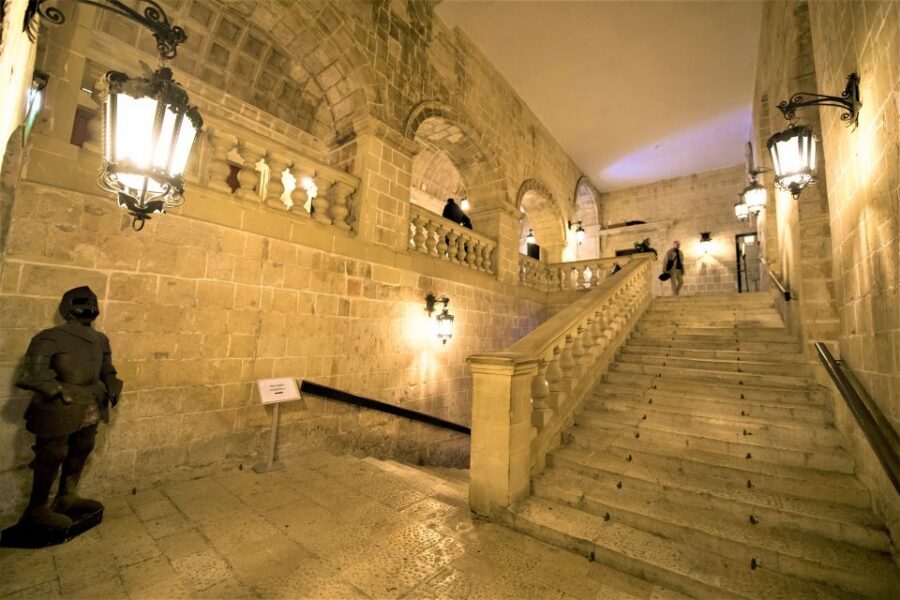
Sacra Infermeria Tour: Europe’s Longest Hospital Ward
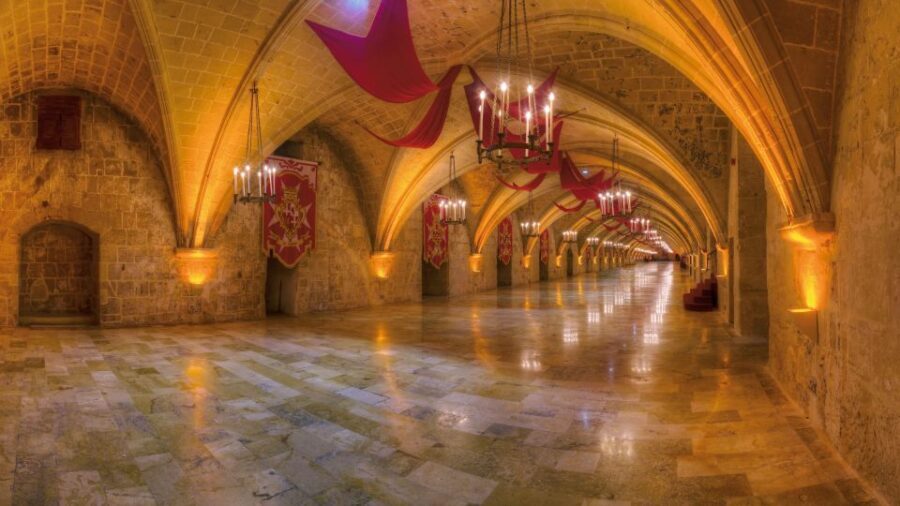
After the show, you get the physical payoff with the guided tour of the Sacra Infermeria—known as the Holy Infirmary. This is one of the most imposing buildings of Valletta, and it’s not only impressive from the outside.
The tour is narrated by knowledgeable guides and focused on the building itself. It’s described as Europe’s longest Hospital ward built by the Knights of St John, and you can see why that detail matters. A place built for long-term care and organization isn’t a small chapel or a quick stop. It’s a working structure with a plan.
What makes this part click is the narration. In the tours I’ve learned from, guides like Anna are praised for making the building’s stories feel real—often with facts plus the human angle of what it meant to care for people over long spans.
The one drawback is that the Sacra Infermeria segment can feel a little short if you’re the type who wants to linger in every corner. It’s also described as a place of work for many people, which naturally limits how long you can roam.
Still, you’ll leave with a stronger sense of why this building is tied to Malta’s identity, not just the Knights’ reputation.
How Long You’ll Spend (and why the pace is intentional)
The full experience is about 1.5 hours, combining the Malta Experience show with the Sacra Infermeria guided tour. That’s a smart length for travelers who want a big cultural hit without burning half a day.
The show portion works like a primer. It gives you enough timeline to start recognizing names and themes, not enough to replace a deep-dive museum visit. Then the hospital-ward tour gives you a check against what you just learned.
If you’re worried about rushing, here’s the practical truth: the pacing matches the goal. This is built for first-day orientation and history context. If you go in expecting “tour of every room,” you’ll likely feel slightly unsatisfied. If you go in expecting a guided timeline plus a narrated walk in an important building, it lands well.
Also note: there are no food or drinks allowed inside, and smoking indoors isn’t allowed. So plan on a coffee stop before or after, not during.
Price and Value: Is $24 Worth It?
At $24 per person for roughly 1.5 hours, the value comes from the combo. You’re paying for two things at once: a major audio-visual show plus a guided interior tour of the Sacra Infermeria.
A show like this can be hit or miss in some cities, depending on how scripted it feels. Here, the consistent praise focuses on presentation quality and the guides. That’s important because it means the experience isn’t just “turn on the screen and hope.” The story is structured, and the follow-up tour adds real context you can’t get from the visuals alone.
You also get a fast orientation tool. If you’re doing multiple heritage stops around Valletta afterward, understanding the Knights, the sieges, and St Paul’s place in the narrative makes it easier to connect the dots.
Bottom line: $24 is reasonable if you’re the type who likes history, structure, and a guide’s explanations. If you’re only interested in one specific era and you hate headsets, you might prefer a smaller, single-site visit instead.
Practical Rules and Logistics That Help You Enjoy It
A few ground rules are spelled out, and knowing them ahead of time keeps things smooth:
- No photography or video recording inside the attraction.
- No food and drinks inside.
- Smoking indoors isn’t allowed.
On top of rules, there are small comfort issues that matter. Because the show uses individual headsets, it’s worth checking that yours is working before you settle into the plot. There are reports of headset problems, so if something feels off, alert staff quickly rather than waiting until the story has moved on.
Meeting and entry can also be confusing in older buildings with multiple entrances. One practical tip: if instructions seem unclear, go inside the ticket office area and ask where to check in rather than trying to guess from the sidewalk. It’s faster, and you avoid losing time.
Good news if you hate lines: skip-the-ticket-line is included. And the site is wheelchair accessible, which is helpful for mobility needs.
One more note: the experience isn’t suitable for visually impaired people. So if that applies to you, it’s better to look for a different format that works for your needs.
Who This Fits Best (and who should think twice)
This is a strong match for:
- History buffs who want the big milestones fast.
- First-time visitors who need context before wandering Valletta.
- Travelers who like multimedia as a learning tool, not a distraction.
- Anyone who enjoys a guided narrative in addition to the show.
It may be less ideal if:
- You’re sensitive to show rules like no recording or no food/drinks.
- You’re expecting a slow, room-by-room exploration of the Sacra Infermeria.
- You need an experience that works well for visual impairments, since it isn’t suitable for visually impaired people.
Also, consider going earlier in your day. The show covers the characters and conflicts that pop up across the city. If you start here, you’ll understand what you’re seeing later.
Should You Book the Malta Experience and Sacra Infermeria?
Yes, I think you should book it if you want the best kind of history shortcut: a guided timeline plus a meaningful building tour. For $24 and about 1.5 hours, it’s hard to beat the value of getting oriented to Malta’s biggest eras all in one sitting.
But book with the right expectations. This isn’t a slow museum crawl. It’s a structured audio-visual story with headset commentary, followed by a narrated walk through the Knights’ hospital ward. If that format sounds like your kind of learning, you’ll feel the payoff quickly.
If you want one thing to do on your Valletta itinerary that makes the rest easier to understand, this is it.
FAQ
Where does the Malta Experience take place?
It takes place in Valletta, Malta, at the Mediterranean Conference Centre in a purpose-built theatre.
How long is the experience?
The duration is 1.5 hours.
How much does it cost?
The price is $24 per person.
What’s included in the ticket?
You get the Malta Experience audio-visual show and a guided tour of the Sacra Infermeria (the Knights of St John Holy Infirmary).
Is there audio available, and what languages are offered?
The show commentary is available in a choice of seventeen languages selected via the viewer’s headset, and an English audio guide is included.
Can I take photos or record video inside?
No. Video recording and photography inside are not allowed.
Are food and drinks allowed during the show or tour?
No. Food and drinks are not allowed.
Is smoking allowed indoors?
No. Smoking indoors is not allowed.
Is it wheelchair accessible?
Yes, the experience is wheelchair accessible.
Is it suitable for visually impaired people?
No, it is not suitable for visually impaired people.
Can I cancel for a full refund?
Yes, you can cancel up to 24 hours in advance for a full refund.